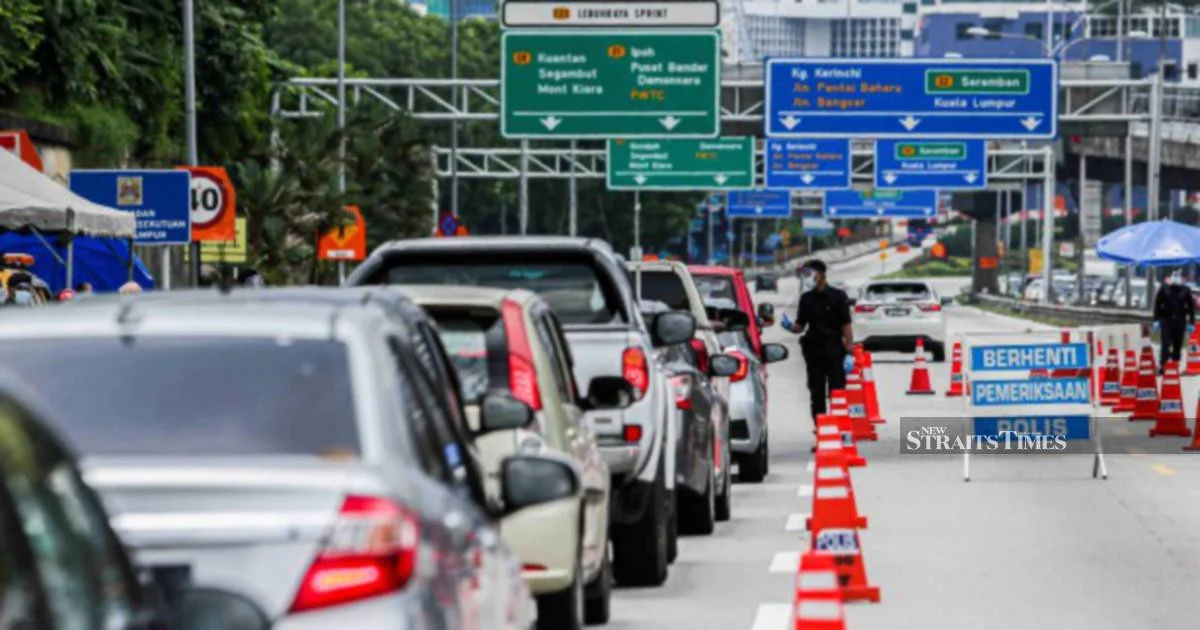
Malaysian motorists face substantially steeper penalties for traffic violations if parliament approves sweeping amendments to the Road Transport Act 1987. The proposed changes would raise the maximum compound rate to RM500 for more than 700 distinct road traffic offences, representing a significant tightening of enforcement across the nation's highways and urban roads.
The scale of the overhaul underscores a comprehensive rethinking of how traffic violations are penalised. With over 700 offences currently on the books, the uniform increase to RM500 would affect an enormous range of infractions, from minor speeding to more serious dangerous driving behaviours. This breadth suggests authorities view enforcement as integral to improving road safety standards nationwide.
For Malaysian drivers, the financial implications are substantial. A doubling or tripling of fines—depending on the current maximum for specific offences—would make traffic citations considerably more costly. Regular commuters who accumulate minor violations could face significantly higher annual costs. The change would be felt most acutely by those in commercial driving sectors, where multiple fines can rapidly erode profit margins on delivery services, public transport, and logistics operations.
The timing of this legislative push coincides with ongoing concerns about road safety in Malaysia and the region. Traffic fatalities and injury rates have remained stubbornly high despite previous enforcement initiatives. Government officials likely view steeper financial penalties as a deterrent that will reinforce compliance, working alongside public education campaigns and technological enforcement systems like speed cameras and red-light detection.
For public transport operators and taxi services already managing thin profit margins, the increase could trigger cost-of-doing-business adjustments. Fleet operators who experience accumulated fines may need to factor higher compliance expenses into their operational budgets. This could theoretically translate to pressure on fares, though regulatory oversight would likely constrain such increases.
The legislative mechanism through which these changes would occur—amendments to Act 333—reflects the formal process required for such updates. The Road Transport Act 1987 has been amended periodically to reflect evolving traffic conditions, technology, and policy priorities. This proposed amendment would represent one of the more impactful adjustments in recent years, particularly given the sheer number of offences affected.
Comparative analysis with regional traffic enforcement frameworks reveals that Malaysia's proposed maximum would place it within the range of other Southeast Asian nations, though specific comparison depends on individual country metrics and currency values. Singapore and Thailand, for instance, maintain their own fine schedules that vary by offence severity. Malaysia's standardisation to RM500 represents a departure from what may be a more granulated system previously in place.
From a broader road safety perspective, researchers remain divided on whether financial penalties alone effectively deter dangerous driving behaviour. Some evidence suggests that certainty of enforcement matters more than fine magnitude—drivers who believe they will be caught are more likely to comply than those facing higher penalties with lower detection likelihood. Authorities would ideally pair this measure with visible, consistent enforcement presence to maximise deterrent effect.
The transition period before parliament votes could see discussion about whether the RM500 ceiling should differentiate between violation categories. Minor infractions like parking violations might arguably warrant different treatment than dangerous overtaking or driving under the influence. However, legislative simplicity often prevails in such debates, and a uniform rate reduces administrative complexity while maintaining clear communication to the public about penalty expectations.
Malaysian motorists should prepare for the likelihood of these amendments passing, given that such measures typically receive cross-party support on road safety grounds. Insurance companies may eventually factor increased penalty risk into premium calculations, particularly for younger drivers and those with violation histories. Fleet operators and transport businesses should review their enforcement policies and driver training protocols to avoid unexpected compliance costs once the new regime takes effect.
The RM500 maximum, once implemented, would establish a new baseline for road traffic enforcement across Malaysia. Any future amendments would likely reference this figure, making it effectively a watershed moment in the nation's approach to deterring driving violations. For policymakers, the change represents an escalation in the government's commitment to using financial levers to improve road safety outcomes and reduce the human and economic costs of traffic collisions.