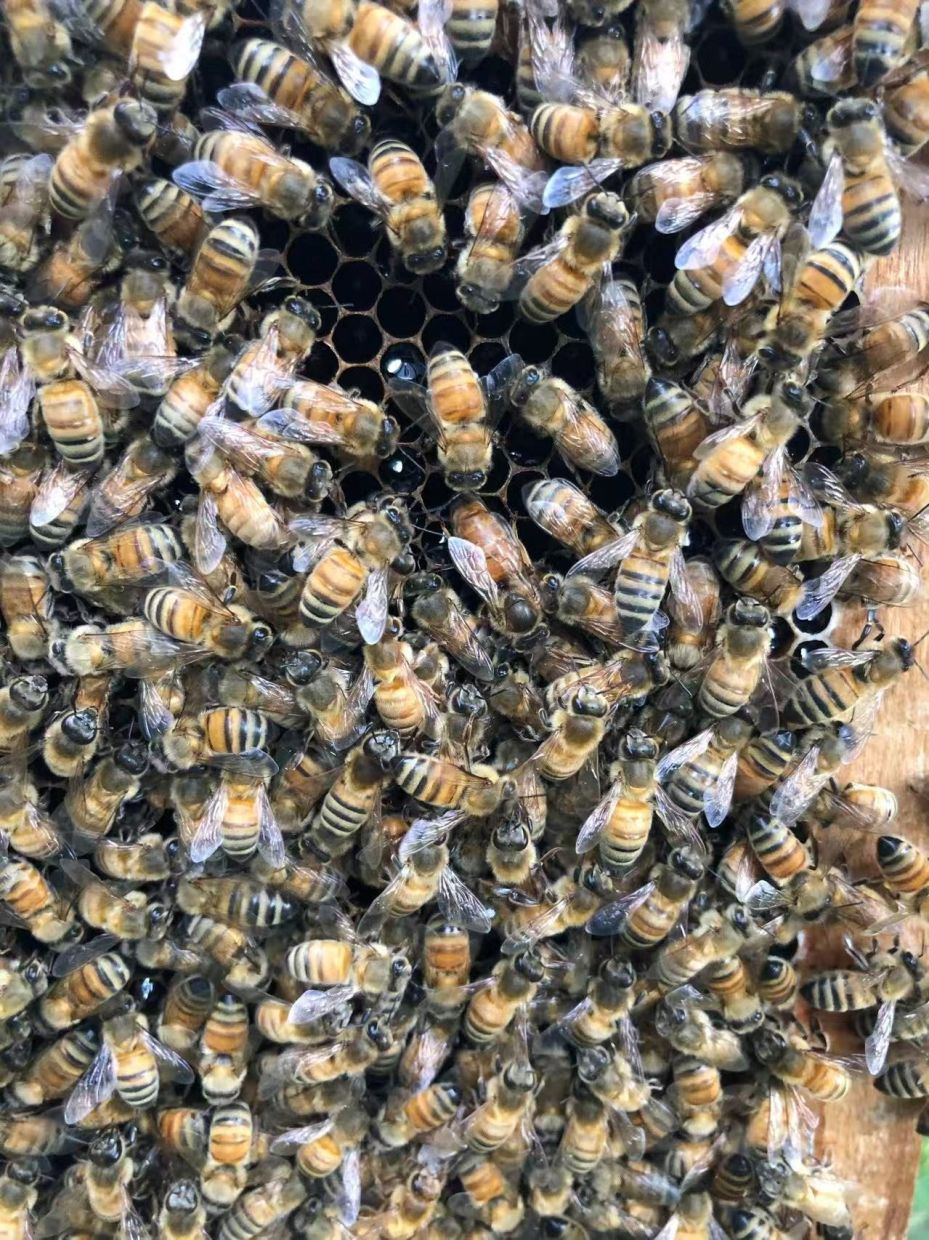
For generations, scientists have understood that honeybee queens arise from the same fertilised eggs as ordinary worker bees, yet follow a radically different developmental path. Researchers long attributed this transformation entirely to royal jelly, a nutrient-rich secretion that worker bees provide to select larvae. But fresh findings published in Nature suggest this explanation tells only half the story. A comprehensive study led by Kai Wang of the Institute of Apicultural Research at the Chinese Academy of Agricultural Sciences demonstrates that the physical and chemical properties of the wax chamber itself play an equally vital role in determining whether a larva becomes a queen or a worker—a discovery that fundamentally reshapes understanding of how insect colonies regulate their own development.
The typical honeybee nest comprises countless hexagonal cells crafted from beeswax, each serving specific functions: storage for pollen and honey, or nurseries for developing worker larvae. Yet colonies construct a third, visibly distinct chamber type for their future queens. These structures, resembling small peanut shells that dangle downward from the honeycomb framework, have long caught the attention of beekeepers as harbingers of swarming or queen replacement. Historically regarded as passive containers—little more than architectural afterthoughts—these royal chambers have now been reframed by Wang and his colleagues as sophisticated, deliberately engineered "smart incubators" that actively participate in the developmental process.
The revolutionary insight emerged through rigorous examination of the western honeybee, one of the world's most economically significant insect species. Researchers discovered that royal wax possesses markedly different characteristics from ordinary worker-cell wax. The royal chambers feature softer walls, a higher melting point, and a distinctive chemical composition that releases a unique olfactory signature. These seemingly minor physical differences carry profound biological consequences. The increased wall softness likely affords the developing larva additional space to expand and grow, while the specific chemical compounds present in the royal wax may trigger hormonal cascades that guide the larva toward queenly development. Wang and his team demonstrated that even when supplied with generous amounts of royal jelly, larvae reared in ordinary worker-cell wax exhibited severely compromised development and substantially elevated mortality rates, strongly suggesting that both the sensory experience and tangible texture of royal wax prove essential for successful queen formation.
Perhaps most intriguingly, the research exposed the extraordinary biological mechanisms that worker bees employ to manufacture these specialized chambers. The bees responsible for constructing queen cells operate at anomalously high body temperatures, with their thoraxes reaching above 39 degrees Celsius—comparable to running a fever—as they engage in the laborious process of secreting and shaping this heat-resistant wax. This physiological exertion accompanies measurable shifts in gene expression patterns, temporary alterations in how their DNA operates that facilitate the processing and manipulation of this specialized material. Wang characterised these remarkable workers as "living furnaces," ordinary young bees conscripted into temporary specialised roles through transient genetic adjustments, rather than members of a permanently distinct biological caste.
What renders these findings particularly striking is that the bees constructing royal chambers are not dedicated specialists but rather "ordinary, flexible young workers" cycling through brief shifts of this demanding labour. While simultaneously manufacturing queen cells, these same individuals continue performing routine hive duties—sharing food with nestmates, attending to younger larvae, and conducting inspections of other cell structures. Wang described them as "the ultimate multitaskers," capable of switching between different physiological states and behavioural programs as colony needs dictate. This flexibility stands in sharp contrast to the rigid caste systems of some social insects, suggesting that honeybee colonies possess remarkable adaptive capacity in how they allocate labour and resources during critical periods.
For Wang, this investigation challenged what he termed the "deeply rooted dogma" of nutritional determinism—the longstanding conviction that royal jelly represented the singular decisive factor in queen development. The discovery that physical architecture and chemistry work in concert with diet to shape a queen represents a fundamental reconceptualisation of how honeybee colonies orchestrate their own reproduction and internal organisation. The study does not yet pinpoint the precise molecular mechanisms responsible for these effects, nor does it identify the specific chemical scents or physical properties that signal to a developing larva's DNA that "you are destined for queenship." Wang and his colleagues have outlined the next research frontier: identifying this molecular switch, the critical trigger or combination of triggers that activate the developmental pathways leading to queenly transformation.
The implications extend beyond the western honeybee. Wang suggests that similar principles likely operate throughout the insect world. Termite colonies may use their architectural designs to regulate caste development; paper-making wasps might harness nest chemistry to control reproductive roles; and the intricate waxen structures built by stingless bee species could conceal parallel mechanisms governing development and social organisation. This perspective encourages entomologists to examine the built environment not as static background but as an active participant in the biological processes of colonial insects—a fundamental shift in how researchers conceptualise the interaction between organisms and their self-constructed spaces.
Beyond pure scientific interest, these findings carry immediate practical implications for global agriculture and food security. Modern beekeeping places enormous emphasis on queen production, since colony health depends critically on maintaining vigorous, productive queens. Boris Baer, a University of California, Riverside professor specialising in pollinator health and a key collaborator on the study, emphasises that managed honeybees provide pollination services for more than 80 major agricultural crops worldwide. As beekeeping operations in the United States and other regions report alarming rates of colony collapse and worker mortality, understanding the natural mechanisms by which honeybee colonies themselves produce high-quality queens offers a pathway toward more resilient, sustainable apiculture. Rather than relying solely on artificial breeding techniques, beekeepers might leverage insights into optimal chamber architecture and environmental conditions to support the colonies' own queen-rearing capabilities.
The research ultimately reveals the honeybee colony as what biologists term a "superorganism"—an entity in which thousands of individual organisms function collectively as a single integrated system, with emergent properties that transcend any individual's capacities. Through their coordinated construction efforts, worker bees reshape the trajectory of a single ordinary larva, transforming it into the colony's mother, the sole reproductive female upon whom colony survival depends. This process involves not merely biochemistry but architecture, not just nurture through feeding but spatial engineering that shapes development from multiple directions simultaneously. Wang's aphorism captures the essence of this insight: "Eating well is important, but living in the perfect home is what truly changes your destiny." The research suggests that developmental fate emerges not from any single factor in isolation but from the intricate interplay of nutrition, chemistry, temperature, and physical environment—a lesson with resonance extending far beyond apiaries into fundamental questions about how organisms develop and how communities guide individual members toward collective purposes.