Thailand is moving decisively to streamline its immigration framework in an effort to remove foreign criminals more rapidly, addressing longstanding bottlenecks that have kept detainees in the system for extended periods. The overhaul reflects growing alarm within government circles that legal procedures under the existing Immigration Act have created opportunities for offenders to exploit procedural delays, appeal mechanisms, and diplomatic channels to prolong their stays. Prime Minister Anutin Charnvirakul has tasked Deputy Prime Minister Pakorn Nilprapunt with coordinating a comprehensive review of immigration statutes alongside the Royal Thai Police, the Immigration Bureau, and the Interior Ministry, with particular focus on Sections 54 and 55 of the Immigration Act of 1979 governing the removal of foreign nationals.
The initiative emerged from an uncomfortable realisation that Thailand's security infrastructure had become vulnerable to exploitation by transnational criminal networks operating from within its borders. Authorities conducted an assessment of how foreign offenders gained entry and established themselves, uncovering systemic gaps that accumulated over time. A significant contributing factor was the 60-day visa exemption programme introduced in July 2024 under the previous Srettha Thavisin administration, which permitted nationals from 93 countries and territories to enter Thailand without advance visa applications. This arrangement eliminated the customary screening processes that Thai embassies would normally conduct, meaning criminal histories, financial backgrounds, and security flags were never checked before visitors crossed the border.
The consequences of this permissive entry regime became apparent as enforcement agencies documented patterns of abuse. Some individuals exploited the absence of visa-based restrictions by conducting repeated border runs—leaving and re-entering Thailand at short intervals—to reset their stay duration without returning home. This loophole allowed foreign nationals to establish de facto residency while circumventing standard immigration protocols. Intelligence gathering revealed that such individuals subsequently engaged in illegal employment, competing with Thai workers in sectors including restaurants, resort operations, and entertainment establishments. Property acquisition through nominee arrangements, participation in international call-centre fraud operations, money laundering schemes, and involvement with grey-capital networks rounded out the documented offences.
Major tourist destinations became focal points for these activities, with law enforcement agencies documenting concerning concentrations of foreign criminal activity in Pai within Mae Hong Son Province, Pattaya in Chonburi, Koh Phangan in Surat Thani, and Bangkok itself. These areas, which depend heavily on tourism revenue and international visitor flows, became inadvertent havens for organised transnational crime. The Anutin government accordingly elevated the suppression of such networks to a matter of national security, issuing directives to immigration, police, and interagency units to strengthen screening protocols and enforcement operations. Four concrete measures were implemented, including intensified scrutiny of individuals entering and departing Thailand with unusual frequency and insufficient documented purpose, enhanced vetting of arrivals from high-risk jurisdictions, deeper integration of international criminal databases with Interpol and Thai security agencies, and administrative actions to eliminate overlapping visa privileges that could be manipulated.
The political response crystallised in May 2026 when the Cabinet of the Anutin 2 government approved cancellation of the 60-day visa exemption affecting all 93 nations. Thailand is reverting to bilateral country-by-country visa arrangements, with most international visitors now limited to maximum stays of 30 days. Government officials justified this recalibration by arguing that Thailand's strategic interests lay in attracting quality tourism and serious investors rather than maximising raw arrival numbers. The previous scheme, they contended, had failed to demonstrably boost tourist volumes or spending while materially elevating security exposure across multiple threat vectors. This policy shift represents a calculated trade-off prioritising domestic security over accessibility.
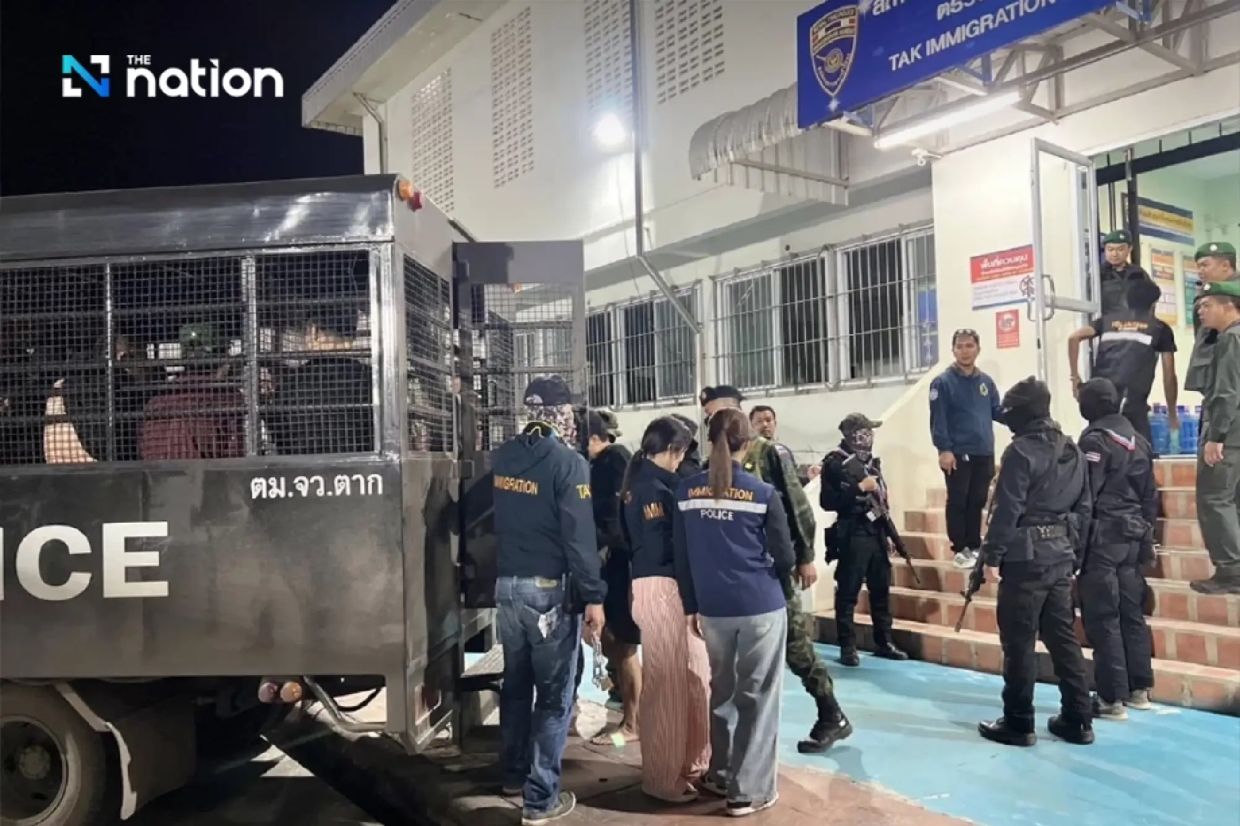
Simultaneously, security apparatus intensified operational activities targeting illegal foreign residents. Coordinated operations involving military personnel, police units, and administrative officials conducted systematic inspections and arrests of foreign nationals residing in Thailand without valid documentation or proper visa status. These enforcement sweeps generated increasing numbers of apprehensions and inaugurated deportation proceedings. However, officials quickly recognised that apprehension alone represented only the initial phase of a protracted and complicated process. Numerous foreign detainees found themselves trapped in bureaucratic and legal machinery, unable to be speedily returned to their home countries despite conviction or deportation orders.
The stalling points in current procedures are multiple and reinforcing. Financial constraints prevent some detainees from purchasing return travel, necessitating Thai authorities to negotiate with embassies for repatriation funding—a process frequently characterised by diplomatic inertia and competing bureaucratic priorities. More significantly, the Immigration Act of 1979 permits foreign nationals receiving deportation orders to file appeals within 48 hours of notification, complete with supporting evidence and legal arguments. During the pendency of such appeals, deportation typically remains suspended except in exceptional serious cases. Additionally, detainees may petition the Immigration Commission to defer removal or secure extended temporary stays on humanitarian or legal grounds, creating further procedural extensions. Anutin himself acknowledged that this architecture had proven counterproductive, observing that extended delays created perverse incentives whereby convicted offenders could resume relatively normal lives while legal proceedings remained outstanding, thereby inviting additional criminal activity.
The government's reform agenda aims to compress deportation timelines while maintaining compliance with Thailand's international human rights commitments. This balancing act presents genuine complexity, as Pol Lt Gen Trairong Phiwpan, spokesman for the Royal Thai Police, explained in considerable detail. Thailand maintains extradition treaties with some countries but not others, producing divergent procedural pathways. Where treaties exist, the attorney-general must evaluate cases before forwarding them to courts for extradition orders. Absent such agreements, the Foreign Ministry submits requests to the attorney-general, who then petitions courts for extradition orders. Human rights considerations permeate every stage—detainees retain court petition rights, may oppose removal, and can request temporary release on humanitarian grounds. Thailand's membership in the United Nations Human Rights Council and ratification of eight major international human rights treaties covering children, women, civil-political rights, economic-social rights, racial discrimination, torture prevention, disability, and enforced disappearance protection create additional legal layers that cannot be simply removed.
Trong acknowledged that reform efforts should focus on abbreviating timeframes, eliminating redundant procedural steps, and constraining unnecessary delays without dismantling the substantive protections these mechanisms provide. The challenge lies in distinguishing cases by severity—illegal entry and visa overstay differ materially from transnational organised crime or international scam networks—and calibrating procedural efficiency accordingly. He noted that repatriation can proceed more expeditiously when detainees forgo human rights procedures and counterclaims, but the moment such challenges are filed, courts must deliberate, necessarily extending timelines.
For Malaysian readers and Southeast Asian observers, Thailand's recalibration carries significant implications. The region shares interconnected security concerns regarding transnational crime, with Malaysia itself battling call-centre fraud operations, money laundering networks, and illegal foreign workers competing in local labour markets. Thailand's recognition that visa regime permeability creates exploitable security gaps resonates with ongoing policy debates in other ASEAN nations regarding the balance between tourism facilitation and domestic safety. The country's decision to tighten visa-exempt entry reflects a regional trend toward more selective immigration management. Additionally, Thailand's commitment to respecting human rights frameworks while pursuing faster deportations—despite obvious tensions between these objectives—provides a cautionary template for other Southeast Asian governments considering similar reforms.
Deputy Prime Minister Pakorn's forthcoming consultations with the Interior Ministry, Royal Thai Police, and related agencies will determine whether reforms ultimately modify substantive legal rights or merely streamline administrative processes. Malaysia and other regional neighbours will monitor whether Thailand successfully achieves faster deportations without triggering international human rights criticism or eroding bilateral relations with countries whose nationals are affected. The outcome will likely influence immigration policy thinking throughout Southeast Asia, particularly regarding how countries can simultaneously welcome legitimate travellers and investors while maintaining effective borders against criminal exploitation. Anutin's framing—that Thailand welcomes honest foreigners but will decisively remove lawbreakers—articulates a principle that enjoys broad public support across the region, though implementation difficulties remain formidable.