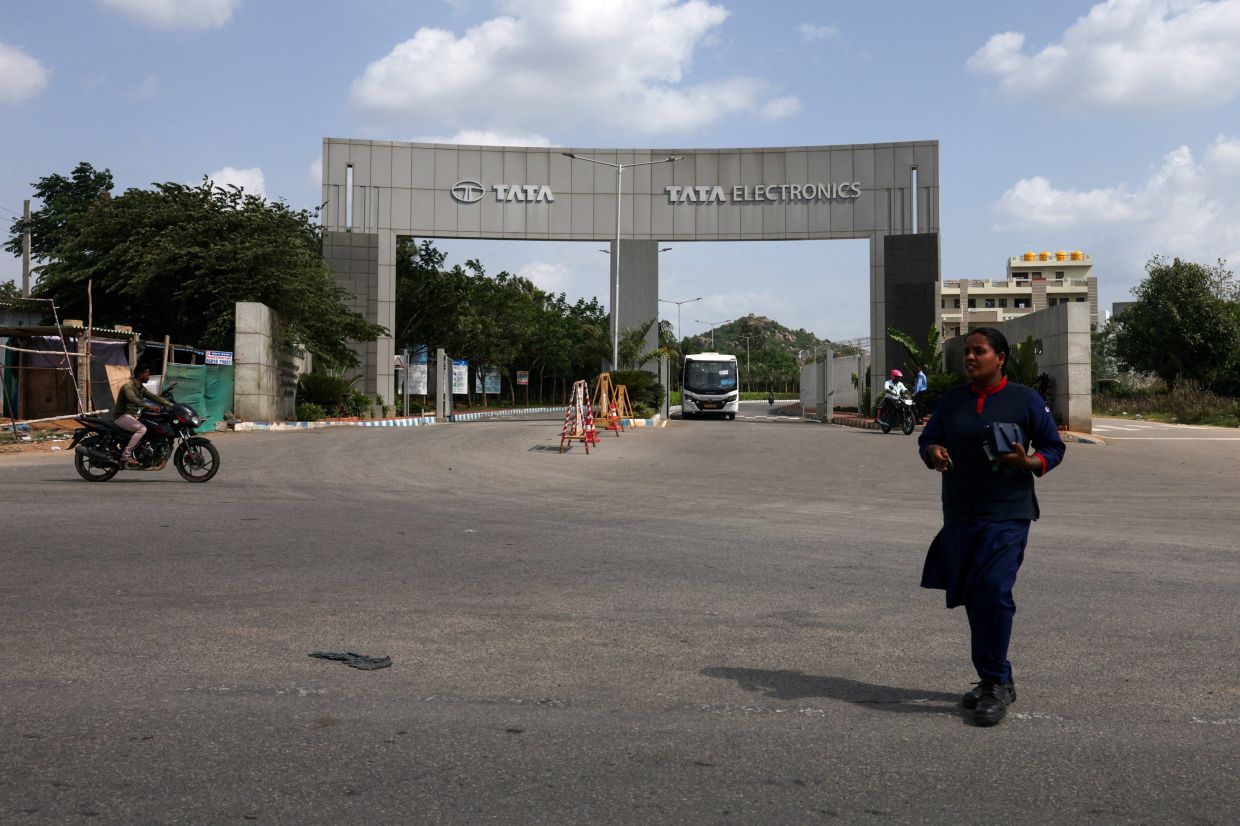
Tata Electronics has acknowledged discovering a cybersecurity breach affecting some of its systems, with security researchers claiming that an international ransomware group called World Leaks has published more than 200,000 files allegedly containing confidential information from Apple and Tesla. The company said the incident was detected several weeks ago and that its operational systems across all business divisions remained fully functional following immediate deployment of response protocols. The disclosure marks another vulnerability in India's growing role as a manufacturing alternative to China, particularly as New Delhi seeks to position the country as a global electronics powerhouse.
World Leaks, a cybercriminal organisation previously linked to breaches at major international corporations, has posted the stolen data on the dark web, a hidden corner of the internet inaccessible to conventional search engines. According to security researchers who reviewed the posted materials, the database contains over 630 gigabytes of files attributed to Tata Electronics, including what appear to be component design specifications, quality inspection documentation, employee communications spanning several years, and personal identification documents of staff members both Indian and foreign. The authenticity of the published materials has not yet been independently verified by major technology companies.
Apple has launched an investigation into the breach and is conducting a comprehensive analysis of the incident, according to sources familiar with the matter. The technology giant declined to comment publicly, but informed parties indicated that Tata Electronics had received a ransom demand linked to the cyberattack. Tesla similarly did not respond to inquiries about the breach, though industry sources confirm that Tata manufactures components for the electric vehicle maker. Tata Electronics has refrained from discussing the ransom demand or its negotiation status with media outlets.
Securityresearchers examining the posted files identified extensive Apple-related documentation, including purported design and specification records for iPhone circuit board components and materials. A 52-page document bearing Apple's proprietary markings allegedly detailed quality inspection standards for critical iPhone parts. Additionally, approximately 33 files and folders referenced Hosur, the location of Tata's primary iPhone assembly facility in Tamil Nadu state. For Tesla, the data dump included purported manufacturing specifications and assembly documentation, with one folder labelled as referencing components for an upgraded version of the Model Y SUV and another described as containing drawings for Project Highland, Tesla's internal codename for a redesigned Model 3 sedan. Some files carried footer markings identifying them as proprietary and confidential material of both companies.
This breach represents a significant setback for Tata's position within Apple's manufacturing ecosystem at a particularly sensitive moment. Tata currently accounts for approximately one-third of Apple's iPhone production capacity in India, with Taiwan-based Foxconn handling the remainder. The company has emerged as one of Apple's most critical manufacturing partners outside China, embodying Prime Minister Narendra Modi's strategic vision to transform India into a hub for electronics manufacturing and reduce dependence on Chinese production capacity. The security breach adds complexity to this expansion strategy, occurring as Tata simultaneously faces scrutiny from environmental authorities investigating alleged contamination of farmlands adjacent to its iPhone parts manufacturing facility.
The incident reflects a troubling pattern of cybersecurity vulnerabilities affecting Tata's operations. The conglomerate experienced a significant cyberattack on its British luxury automotive division, Jaguar Land Rover, last year that resulted in a six-week production stoppage and demonstrated the group's exposure to sophisticated digital threats. That earlier breach raised concerns about the company's cybersecurity infrastructure and incident response capabilities, concerns that the current breach may intensify among Tata's global customers and business partners.
Indian government bodies have been notably absent from the public response to the breach. India's Computer Emergency Response Team, a unit operating under the country's Information Technology Ministry with responsibility for overseeing and responding to significant cyber incidents, did not immediately respond to inquiries about the attack or confirm whether it was investigating the matter. This silence may reflect the sensitivity of the incident within government circles, given India's push to attract international technology manufacturers and position itself as a reliable alternative manufacturing destination.
Security researchers who examined the exposed data confirmed its presence on the dark web since at least June 10. Rajshekhar Rajaharia, an Indian cybersecurity expert who has previously advised local law enforcement agencies on cyber investigations, reviewed the Tata files and noted the extensive scope of the breach, which included email communications, system event logs spanning multiple years, and employee passport information. A second security researcher, Rakesh Krishnan, independently verified the data's availability and scope. Their analyses demonstrate the sophisticated nature of the attack and the depth of access achieved by the attackers within Tata's systems.
The breach underscores broader vulnerabilities within global supply chains as cybercriminals and ransomware operations increasingly target manufacturing facilities and component suppliers. By infiltrating Tata's systems, attackers gained access to trade secrets and proprietary information belonging to some of the world's most valuable technology companies. This incident illustrates how supply chain partners, even those considered reputable and established, can become vectors through which attackers compromise the security of downstream customers. For companies like Apple and Tesla, which maintain complex global manufacturing networks, the breach highlights the inherent risks associated with outsourcing production and the difficulty of ensuring consistent cybersecurity standards across numerous partner facilities.
The implications for Malaysia and Southeast Asia are significant. As international manufacturers increasingly view the region as an alternative to Chinese production, this breach serves as a cautionary example of the infrastructure and security investments required to attract and retain high-value manufacturing partnerships. Malaysian electronics manufacturers and component suppliers competing for similar contracts with global technology companies may face increased customer scrutiny regarding their cybersecurity posture and incident response capabilities. The incident also demonstrates that establishing manufacturing capacity in the region requires not only operational expertise but also world-class digital security infrastructure.
Tata informed some employees at its iPhone assembly operations of the data breach in communications last week, indicating that the company was managing internal communications about the incident even as public acknowledgment remained delayed. This suggests tension between operational management decisions and public disclosure obligations, with the company apparently attempting to control information flow before comprehensive public disclosure became necessary through media investigations and researcher findings.
The broader context reveals how India's rapid emergence as an electronics manufacturing destination carries inherent cybersecurity risks alongside economic opportunities. As multinational corporations expand manufacturing footprints in India to diversify away from China, they necessarily expose sensitive intellectual property to new operational environments and potential vulnerabilities. The Tata Electronics breach demonstrates that even established, large-scale manufacturers may lack the cybersecurity infrastructure necessary to protect world-class technology secrets, raising questions about the readiness of India's manufacturing ecosystem to support truly sensitive, strategically important production.