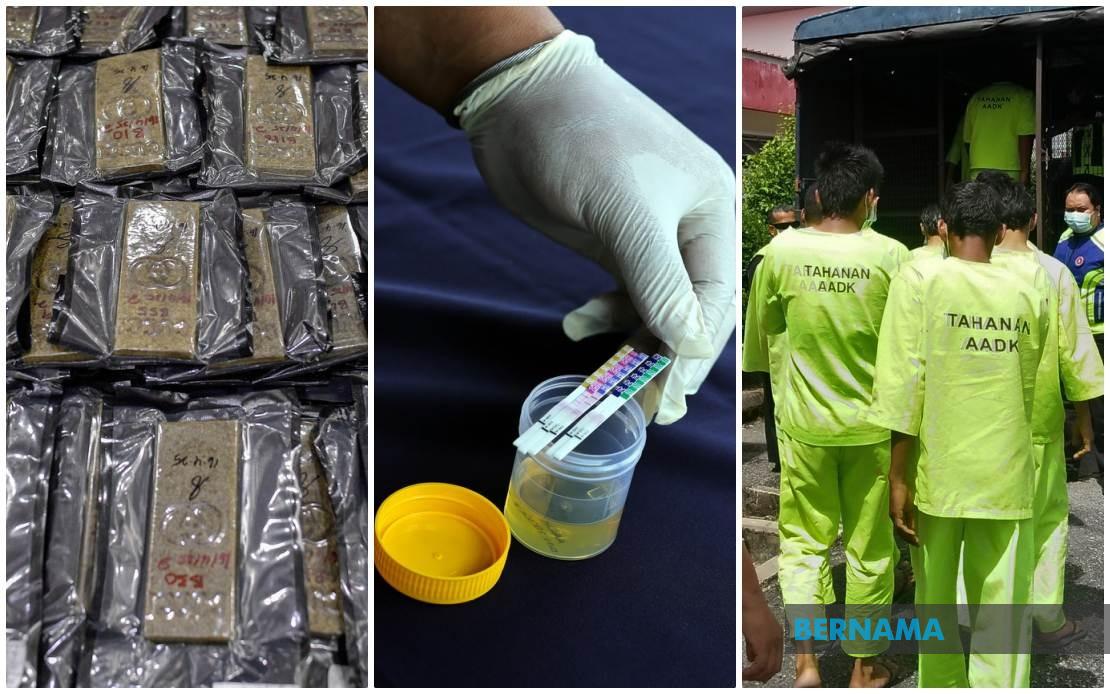
The synthetic drug epidemic gripping Malaysia has reached alarming proportions, with Home Minister Datuk Seri Saifuddin Nasution Ismail revealing that 141,817 abuse cases were documented last year alone. Speaking during Ministers' Question Time in Parliament, he disclosed that the previous year saw 145,526 cases, followed by a sharp spike to 192,852 cases in 2024, painting a trajectory of escalating substance misuse that demands urgent national attention.
What distinguishes Malaysia's drug crisis from typical patterns elsewhere is the overwhelming dominance of synthetic substances. Amphetamine-Type Stimulants (ATS) now account for approximately 70 per cent of all recorded drug abuse cases nationwide, fundamentally reshaping the nature of addiction and enforcement challenges. This represents a significant departure from the historical prevalence of traditional opiates, cannabis, and ketum that once characterised the country's drug landscape. The shift signals that traffickers and users have adapted to evolving enforcement strategies and market dynamics, favouring lab-synthesised compounds over plant-based alternatives.
Geographic concentration of the problem further complicates policy responses. Analysis of data compiled jointly by the Ministry of Health, the National Anti-Drugs Agency (AADK), Narcotic Addiction Rehabilitation Centres (Puspen), and the Royal Malaysia Police (PDRM) reveals that east coast states bear a disproportionate burden. Within this corridor, methamphetamine—locally known as syabu—has become the substance of choice, displacing traditional drugs entirely. Districts including Pendang, Kuala Krai, Bachok, Besut, and Mersing register the highest incidence rates, suggesting either concentrated production networks, strategic distribution hubs, or vulnerable populations more susceptible to addiction in these areas. Understanding these hotspots is crucial for targeted intervention and resource allocation.
A particularly alarming development is the emergence of fentanyl, a synthetic opioid dozens of times more potent than morphine and capable of causing death in minute quantities. Authorities discovered the substance during enforcement operations against adulterated vapes, indicating a dangerous new distribution vector. Although fentanyl prevalence remains limited compared with ATS currently, its detection signals an evolving supply chain strategy by traffickers seeking to introduce even more potent and profitable substances into Malaysian markets. The government has responded by adding fentanyl to scheduled substance lists through amendments to the Drug Dependants (Treatment and Rehabilitation) Act and the Dangerous Drugs Act 1952, establishing the legal framework for prosecution. However, the lag between market emergence and regulatory response remains a vulnerability that trafficking networks routinely exploit.
Demographic patterns underscore how addiction transcends socioeconomic boundaries. Approximately 192,000 drug abuse cases across all substance types have been recorded since January this year, equivalent to 560 cases per 100,000 Malaysians. Nearly 75 per cent involve individuals aged 15 to 39, highlighting the particular vulnerability of youth and young adults to substance dependency. This age concentration carries sobering implications for workforce productivity, educational attainment, and social stability. When combined with the prevalence rates in Malaysia's correctional system—where roughly 70 inmates per 100 are linked to drug-related cases, and in facilities like Machang prison approaching 100 per cent—the dimensions of the crisis become unmistakably clear.
The prison statistics warrant particular scrutiny as they reveal how thoroughly drug-related criminality has infiltrated the justice system. Whether inmates are convicted or remanded awaiting trial, the overwhelming preponderance of drug-linked cases suggests either successful enforcement generating high case volumes, or alternatively, an underlying population with pervasive substance abuse vulnerability. The concentration of drug cases in specific facilities indicates that incarceration alone has failed as a deterrent, and that rehabilitative capacity within correctional systems remains insufficient to address underlying addiction.
Law enforcement and public health authorities have deployed multi-pronged strategies to combat this escalating crisis. The AADK has emphasised community-based prevention initiatives, educational programmes within schools and universities, and family and workplace intervention schemes. Coordination between the PDRM and Customs Department provides enforcement backbone, aiming to disrupt supply chains at their source. Yet these conventional approaches face a formidable new obstacle: the digitalisation of drug markets. Online platforms enable anonymous purchases without regulatory oversight, creating enforcement blind spots that traditional policing struggles to penetrate effectively. Saifuddin Nasution acknowledged this challenge directly, recognising that technological advancement has paradoxically empowered traffickers while constraining conventional investigation methods.
The question of whether Malaysia functions as a regional transit hub or distribution centre remains ambiguous in official responses, though the geographic concentration and supply sophistication suggest significant trafficking infrastructure. The ease with which synthetic drugs can be synthesised in clandestine laboratories, combined with Malaysia's strategic location and port facilities, creates conditions favourable to both regional and international trafficking operations. This positioning exposes the country not merely to domestic consumption pressures but also to transnational criminal networks seeking market expansion or distribution bases.
Addressing this multifaceted crisis requires approaches extending beyond conventional drug enforcement. Investment in youth employment, mental health services, and addiction treatment capacity must accompany enforcement efforts. The age concentration among users suggests that preventive intervention during formative years could reduce future addiction rates. Additionally, disrupting online drug markets demands regulatory innovation, international cooperation, and technological sophistication that matches criminal adaptive capacity. Without such comprehensive approaches, the trajectory evident in recent statistics—with cases surging from 145,526 in 2023 to 192,852 in 2024—will likely continue, deepening Malaysia's social and economic burden.