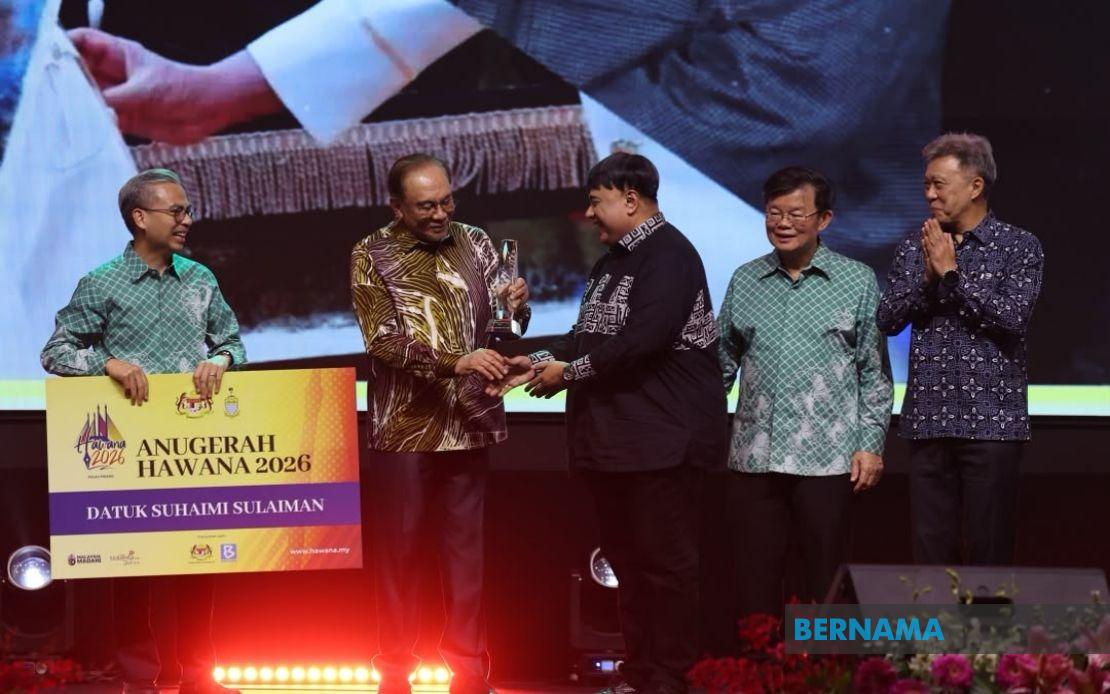
Datuk Suhaimi Sulaiman has been recognised as a leading figure in Malaysian journalism and broadcasting, receiving the prestigious HAWANA 2026 Award at a ceremony held in Butterworth on June 20. The award, presented during the National Journalists' Day grand finale at PICCA @ Arena Butterworth Convention Centre, acknowledges more than thirty years of dedicated service to the country's media industry. Prime Minister Datuk Seri Anwar Ibrahim presented the honour in the presence of key government and media figures, underscoring the significance placed on recognising journalism excellence at the highest levels.
Suhaimi's career trajectory reflects the evolution of Malaysian broadcasting through several critical periods. As former director-general of Broadcasting Malaysia (RTM), he led one of the nation's most influential state broadcasters during a transformative era for media. His tenure witnessed shifts in broadcasting standards, regulatory frameworks, and audience engagement strategies that have left an enduring mark on how Malaysia's public media operates. The recognition today validates not only his operational achievements but also his role in shaping the professional standards and ethical practices that continue to guide the industry.
The presence of multiple high-ranking officials at the award ceremony demonstrates institutional commitment to honouring media professionals. Penang Chief Minister Chow Kon Yeow, Communications Minister Datuk Fahmi Fadzil, and Malaysian National News Agency (Bernama) chairman Datuk Seri Wong Chun Wai all witnessed the presentation, alongside Bernama's chief executive officer Datin Paduka Nur-ul Afida Kamaludin and editor-in-chief Arul Rajoo Durar Raj. This convergence of political and media leadership reflects the importance government places on maintaining robust press institutions and acknowledging those who have steered them through decades of change.
In his response to receiving the award, Suhaimi articulated a perspective that resonates deeply with contemporary media challenges across Southeast Asia. Rather than positioning the honour as a capstone to his career, he framed it as a source of continued motivation to learn and evolve. This mindset becomes particularly relevant given the unprecedented disruptions transforming journalism globally. For Malaysian media practitioners, Suhaimi's comments acknowledge that excellence in broadcasting and reporting remains a dynamic pursuit rather than a fixed achievement.
The emergence of artificial intelligence as a transformative force in media operations has become central to industry conversations worldwide, and Malaysia is no exception. Suhaimi's specific reference to the AI era highlights how even seasoned professionals with decades of experience recognise the necessity of continuous adaptation. The ability to master new technologies while maintaining journalistic integrity and editorial standards has become a defining competency for contemporary news organisations. In Malaysia's context, where media literacy remains unevenly distributed across the population, journalists and broadcasters increasingly bear responsibility for helping audiences navigate AI-generated content and misinformation.
The HAWANA 2026 ceremony itself represents an institutional moment for the Malaysian media sector to reflect on its values and trajectory. National Journalists' Day serves as an annual occasion for the industry to recommit to its foundational principles: accuracy, fairness, independence, and accountability. By honouring figures like Suhaimi who have spent three decades building credibility and professional standards, the ceremony reinforces that these principles remain central to Malaysian journalism's identity and purpose. This becomes particularly important during periods when media institutions globally face declining public trust and increasing polarisation of news consumption.
Suhaimi's remarks about constant learning also implicitly address generational dynamics within Malaysian media. As senior figures acknowledge the necessity of acquiring new skills and knowledge, they model intellectual humility for younger journalists entering the profession. In an industry where hierarchical structures have traditionally been pronounced, this public acknowledgement that experience alone is insufficient in a rapidly changing landscape can help foster more collaborative, innovation-oriented newsrooms. The message that media practitioners must remain perpetual students has particular resonance for Malaysia's expanding media ecosystem, which includes digital-native outlets, podcasters, and multimedia journalists operating outside traditional institutional frameworks.
The award's timing, in 2026, also reflects broader strategic thinking about media development in Malaysia. Governments and institutions typically use anniversary and milestone years to take stock of progress and recalibrate objectives. By honouring Suhaimi during HAWANA 2026, the Malaysian media establishment signals continuity with proven leadership while simultaneously pivoting toward future challenges. The emphasis on AI adaptation suggests that industry leaders are consciously preparing journalists and broadcasters for an era where content creation, verification, and distribution will function according to fundamentally different technological paradigms than those that shaped Suhaimi's early career.
For readers and audiences across Malaysia and the broader Southeast Asian region, recognising media professionals like Suhaimi carries practical implications. Trust in news institutions remains foundational to functional democracy and informed citizenship. When government officials, media executives, and industry bodies publicly honour those who have dedicated their careers to rigorous journalism, they reinforce the importance of quality information in public discourse. At a moment when misinformation and disinformation present significant challenges to media systems across Asia, such institutional gestures become important reaffirmations of journalism's value.
The recognition also positions Suhaimi within a broader lineage of Malaysian media leadership that spans from state broadcasting's formative years through its contemporary digital transformation. His generation of practitioners developed standards and practices during eras of technological constraint that encouraged careful curation and editorial discipline. As younger journalists navigate environments of algorithmic distribution and instantaneous publishing, the accumulated wisdom of figures like Suhaimi—tempered by their own demonstrated openness to learning—becomes a bridge between journalism's established best practices and its emerging future. The HAWANA 2026 Award ultimately honours not just an individual's past contributions but his continued engagement with an evolving profession.
%22%2F%3E%3C%2Fpattern%3E%3C%2Fdefs%3E%3Crect%20width%3D%22100%25%22%20height%3D%22100%25%22%20fill%3D%22url(%23phgab1g)%22%2F%3E%3Crect%20width%3D%22100%25%22%20height%3D%22100%25%22%20fill%3D%22url(%23phgab1p)%22%2F%3E%3Ctext%20x%3D%2250%25%22%20y%3D%2250%25%22%20text-anchor%3D%22middle%22%20dominant-baseline%3D%22central%22%20fill%3D%22rgba(255%2C255%2C255%2C0.95)%22%20font-family%3D%22Georgia%2C%20'Times%20New%20Roman'%2C%20serif%22%20font-weight%3D%22700%22%20font-size%3D%22170%22%20letter-spacing%3D%22-0.02em%22%3EMalaysia%3C%2Ftext%3E%3C%2Fsvg%3E)
%22%2F%3E%3C%2Fpattern%3E%3C%2Fdefs%3E%3Crect%20width%3D%22100%25%22%20height%3D%22100%25%22%20fill%3D%22url(%23ph57sjag)%22%2F%3E%3Crect%20width%3D%22100%25%22%20height%3D%22100%25%22%20fill%3D%22url(%23ph57sjap)%22%2F%3E%3Ctext%20x%3D%2250%25%22%20y%3D%2250%25%22%20text-anchor%3D%22middle%22%20dominant-baseline%3D%22central%22%20fill%3D%22rgba(255%2C255%2C255%2C0.95)%22%20font-family%3D%22Georgia%2C%20'Times%20New%20Roman'%2C%20serif%22%20font-weight%3D%22700%22%20font-size%3D%22170%22%20letter-spacing%3D%22-0.02em%22%3EMalaysia%3C%2Ftext%3E%3C%2Fsvg%3E)
%22%2F%3E%3C%2Fpattern%3E%3C%2Fdefs%3E%3Crect%20width%3D%22100%25%22%20height%3D%22100%25%22%20fill%3D%22url(%23ph48mt2g)%22%2F%3E%3Crect%20width%3D%22100%25%22%20height%3D%22100%25%22%20fill%3D%22url(%23ph48mt2p)%22%2F%3E%3Ctext%20x%3D%2250%25%22%20y%3D%2250%25%22%20text-anchor%3D%22middle%22%20dominant-baseline%3D%22central%22%20fill%3D%22rgba(255%2C255%2C255%2C0.95)%22%20font-family%3D%22Georgia%2C%20'Times%20New%20Roman'%2C%20serif%22%20font-weight%3D%22700%22%20font-size%3D%22136%22%20letter-spacing%3D%22-0.02em%22%3EGovernment%3C%2Ftext%3E%3C%2Fsvg%3E)