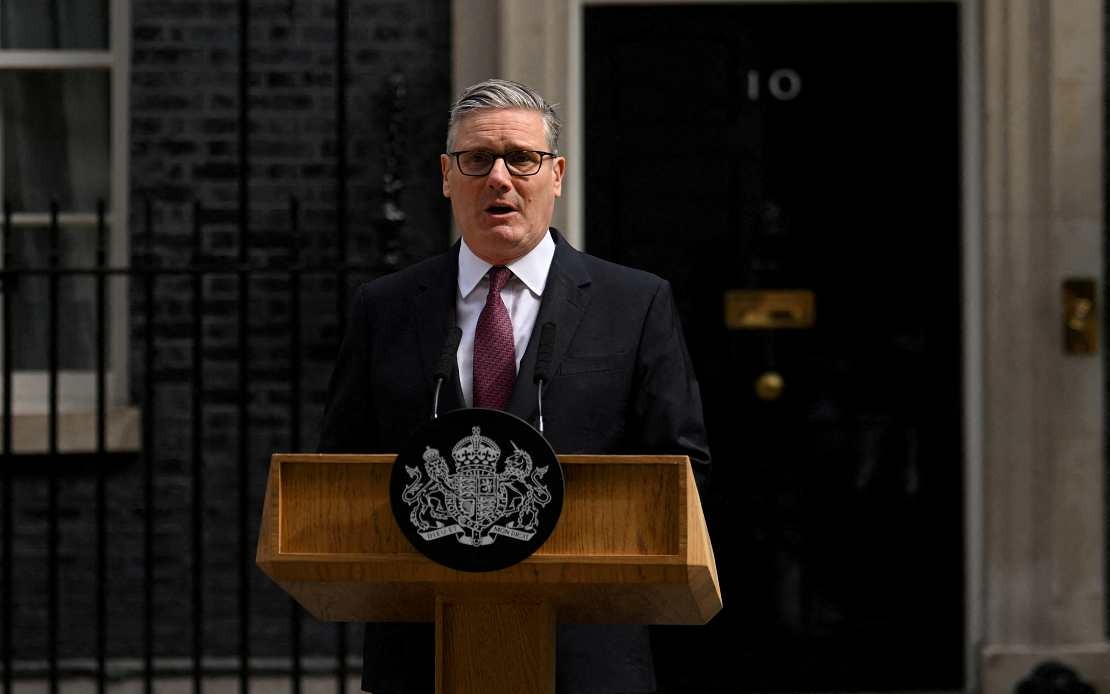
British Prime Minister Keir Starmer announced on Monday that he will resign from his position, with a replacement expected to be in place when parliament reconvenes in September. The decision marks a dramatic reversal for a leader who swept to power less than two years ago on a mandate to restore stability to British governance following years of political turbulence. Starmer pledged to support whichever candidate ultimately wins the party's leadership contest, signalling his acceptance of the grassroots revolt that has grown within Labour ranks over recent months.
The pressure on Starmer's position had been intensifying since Friday, when Andy Burnham, the mayor of Greater Manchester, secured a decisive victory in a parliamentary by-election. Burnham's win carried particular symbolic weight because his opponent represented Nigel Farage's Reform UK party, which has maintained a commanding lead in national opinion polling for over a year. The result offered Labour MPs a glimmer of hope that the party could recover electoral ground under different leadership, particularly given Burnham's reputation as a skilled communicator with decades of political experience at various levels of government.
The contrast between Starmer's political fortunes and those of Burnham illuminates the scale of Labour's difficulties. Where Starmer's approval ratings have plummeted to historic lows—worse than any previous British prime minister at equivalent stages in their tenure—Burnham demonstrated an ability to mobilise voters and defeat a surging populist challenger. This disparity convinced many Labour lawmakers that a leadership change offered the party's best prospect of reversing its slide in public support and preventing further electoral damage in future contests. The speed with which pressure mounted on Starmer suggests deep frustration had been accumulating within parliamentary Labour ranks for considerable time before finally reaching a breaking point.
Burnham's legislative platform, however, remains incomplete in several crucial respects. While he has articulated a commitment to delivering fundamental systemic reform and reducing the cost of living for ordinary Britons—concerns that resonate strongly with voters across the country—he has not yet articulated detailed policy positions on foreign affairs, defence strategy, or macroeconomic management. This gap raises questions about whether he has genuinely developed comprehensive answers to Britain's persistent challenges or whether he represents primarily a change in personnel rather than direction. For Malaysian observers, such incomplete policy frameworks echo challenges faced by regional governments attempting to chart new courses while inheriting complex inherited problems.
The incoming prime minister, whether Burnham or another candidate, will inherit an extraordinarily constrained fiscal position that severely limits room for manoeuvre. International bond market investors, concerned about Britain's elevated debt levels and sluggish growth trajectory, oppose any expansion of government borrowing. Simultaneously, the British electorate demands visible improvement in living standards, public service delivery, and immigration management—objectives that typically require substantial public investment. This contradiction between investor expectations and voter demands has plagued British politics for years and shows no sign of resolution regardless of who occupies No. 10.
Britain's fiscal predicament is particularly acute within the context of major developed economies. The country faces the highest borrowing costs among Group of Seven nations, a direct consequence of accumulated debt, substantial interest payment obligations, and consistent economic underperformance. Years of anaemic growth, difficulty reducing public expenditure, and pressing defence modernisation requirements have conspired to create a fiscal straitjacket. Additional investment in national security and military capabilities—viewed as necessary by policymakers—cannot easily be accommodated within existing budgetary constraints, forcing uncomfortable choices between competing priorities.
Financial markets remain deeply uncertain about whether Burnham, should he become prime minister, would genuinely respect the fiscal discipline that bond investors demand. Burnham's public statements last September suggesting Britain must move beyond dependence on financial markets have alarmed some analysts who fear he might pursue expansionary policies incompatible with current market conditions. Economists at Citibank warned that a Burnham government would inherit "a precarious fiscal situation with few tools to deliver meaningful change," suggesting that even dramatic leadership changes may prove insufficient to address structural economic constraints. This assessment underscores how thoroughly previous policy errors have constrained successor governments' options.
The selection process for Labour's next leader will unfold against a backdrop of unprecedented political instability. Starmer will become Britain's seventh prime minister since the 2016 Brexit referendum, a rate of leadership turnover unseen in nearly two centuries of British parliamentary history. This extraordinary churn reflects profound voter alienation with consecutive governments' inability to substantially improve material conditions or deliver on major policy commitments. For regional policymakers watching from Southeast Asia, the British experience serves as a cautionary tale about the political consequences of failing to translate electoral mandates into tangible improvements in citizens' daily lives.
The advisory group Eurasia had previously suggested that optimal timing for Starmer's departure would allow him to remain in post through a UK-European Union reset summit scheduled for July, while providing his successor adequate preparation time before assuming office in September. This sequencing would theoretically enable completion of important diplomatic engagement while preventing an extended leadership vacuum that could unsettle both domestic politics and international relations. The suggestion reflects recognition that even in resignation, British prime ministers must manage the transition carefully to avoid compounding existing governance challenges or creating opportunities for further political instability.
Starmer's resignation, though inevitable in its broad outlines, removes one significant source of uncertainty from British politics while simultaneously opening others. Labour MPs now face the task of selecting a candidate capable of reconnecting with voters, stabilising the party's internal dynamics, and navigating the severe fiscal constraints that have defeated previous administrations. Whether Burnham or another contender ultimately prevails, the next Labour government will confront fundamentally intractable problems: how to improve public services without excessive borrowing, how to address immigration concerns while maintaining economic dynamism, and how to restore voter confidence after years of broken promises and disappointed expectations. These challenges transcend any single leader's capacity to resolve through force of personality alone.