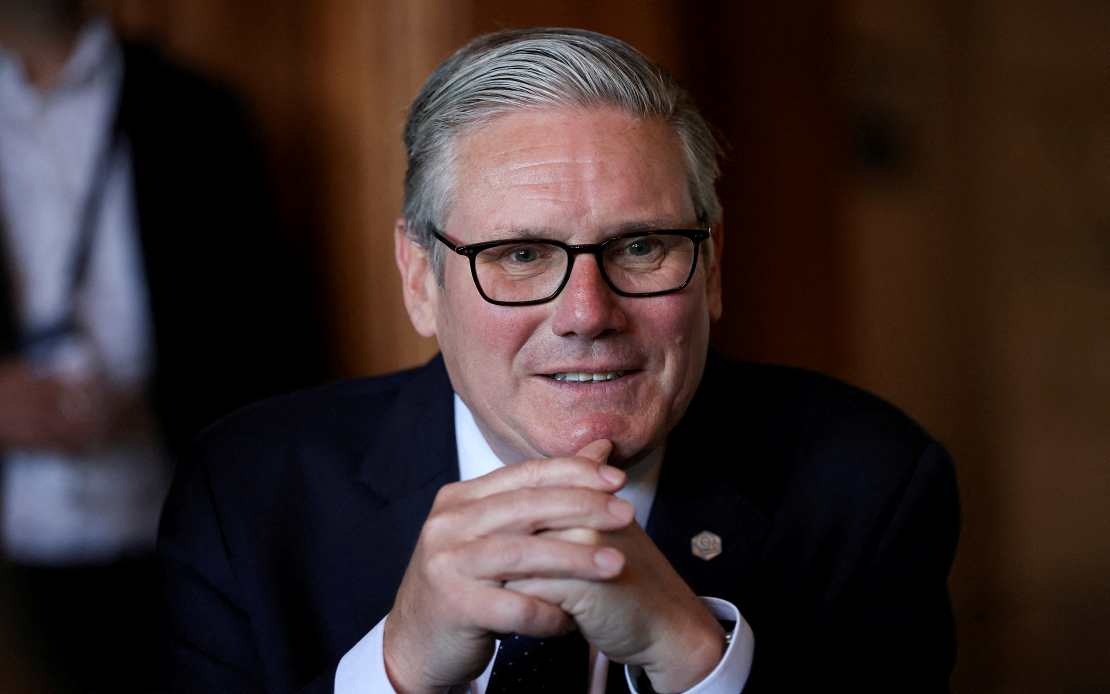
British Prime Minister Keir Starmer appeared set to deliver a significant announcement from Downing Street on Sunday, with technical preparations underway to broadcast his remarks, according to reporting from Reuters. The developments signal an intensifying political crisis within the UK government, with mounting speculation about the prime minister's immediate future in office.
Turkey-based news agency Anadolu Ajansi reported that sources close to US President Donald Trump indicated Starmer would resign from his position, attributing his departure to substantial policy failures in the immigration and energy sectors. The report, emanating from international sources, underscores how the British prime minister's difficulties have captured international attention and concern.
The BBC separately reported that Starmer could lay out a specific schedule for stepping down, potentially as early as Monday, reflecting shifts in the political atmosphere within government circles. This reporting aligns with observations from multiple outlets tracking developments inside Westminster, suggesting a coordinated or inevitable sequence of events unfolding rapidly.
Government insiders have grown increasingly convinced that the prime minister may announce a formal resignation timetable in the coming hours or days, according to multiple accounts. The urgency of such potential announcements reflects the accelerating pace at which political consensus within the governing Labour Party appears to be consolidating around a transition away from Starmer's leadership.
For Malaysian observers, the UK political turbulence carries several implications. First, it demonstrates how quickly domestic policy failures can undermine even recently elected governments, regardless of their initial electoral mandates. Starmer's Labour Party secured power relatively recently, yet immigration and energy policy challenges have apparently eroded support sufficiently to trigger serious speculation about his tenure ending.
Second, the situation illustrates how modern communications technology and media coverage can compress political timelines dramatically. What might once have been weeks of behind-the-scenes negotiation now plays out in real-time across news cycles, with photographers capturing physical evidence of announcements at Downing Street before any formal statement occurs. This acceleration of political communication is a global phenomenon affecting leadership dynamics across democracies, including Westminster-influenced systems like Malaysia's own parliamentary framework.
Third, immigration and energy policy—the reported sources of Starmer's political difficulties—represent areas where popular opinion often diverges sharply from elite or technocratic preferences. Both issues involve tangible, daily impacts on ordinary voters' lives, from household energy costs to concerns about borders and labour markets. When governments struggle to deliver credible solutions in these domains, public confidence erodes rapidly, regardless of other policy achievements.
The timing of potential announcements on a Monday suggests careful political choreography, with the government likely seeking to manage media narratives and market reactions strategically. A Sunday evening or Monday morning statement would allow the government to frame the announcement and control initial reporting before the full political apparatus of opposition and commentary responds.
For regional observers tracking broader patterns in democratic governance, Starmer's apparent predicament underscores how contemporary political legitimacy increasingly depends on near-immediate delivery of visible, tangible policy results. The disconnect between campaign promises and governing realities, combined with economic pressures beyond any single leader's control, creates volatile political environments. Energy costs driven by global commodity markets and immigration patterns shaped partly by international dynamics present challenges that domestic policy alone cannot easily resolve.
The British situation also reflects longer-term shifts in parliamentary labour politics. Starmer inherited a Labour Party still recovering from previous internal divisions and electoral defeats. The party's high initial expectations following its 2024 general election victory appear to have collided with the practical constraints of governing in a complex economic environment. The contrast between election optimism and governing reality has compressed into an unusually short timeframe.
As Britain contemplates potential leadership transition, questions naturally arise about succession planning and the state of Labour Party unity. These internal dynamics will shape not just British politics but also the UK's positioning within international affairs, from its relationship with the European Union to its continued involvement in NATO and other global arrangements that Malaysian policymakers monitor closely.
The unfolding situation demonstrates that electoral victories, however substantial they appear at the ballot box, do not automatically translate into sustained political capital or governing durability. Starmer's challenges illustrate this sobering reality for leaders across democracies attempting to navigate complex policy landscapes while maintaining public confidence and party unity simultaneously.