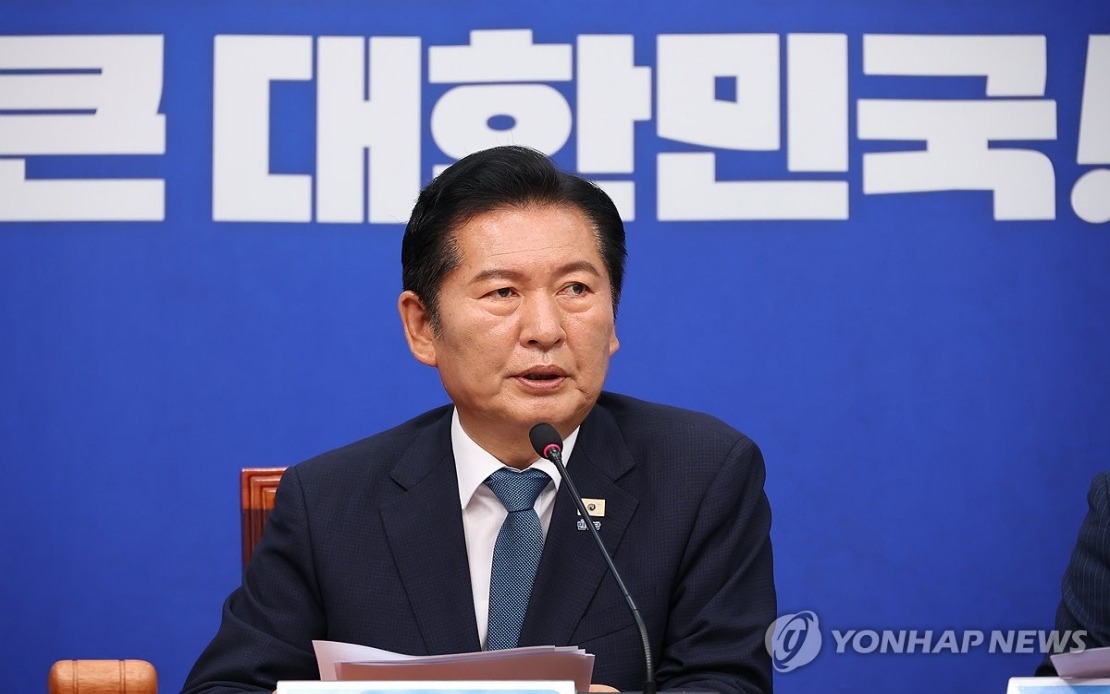
Jung Chung-rae, the chairman of South Korea's ruling Democratic Party, has announced his resignation from the position, a strategic move widely interpreted as laying the groundwork for his candidacy in the party's upcoming national convention scheduled for August 17. The resignation, delivered during a meeting of the party's supreme council at the National Assembly in Seoul on Wednesday, marks a pivotal moment in the party's internal dynamics as it prepares to elect new leadership.
In his departure statement, Jung reflected on the personal toll of his tenure, acknowledging the emotional weight of leading the party through tumultuous internal divisions. He spoke of sleepless nights spent in self-examination, scrutinising both his personal conduct and his track record in politics. His remarks were notably defensive in tone, suggesting awareness of the considerable criticism levelled against his stewardship and the contentious issues he has navigated since assuming the chairmanship.
Jung emphasised his unwavering commitment to President Lee Jae Myung's administration throughout his tenure, framing his leadership as fundamentally oriented toward ensuring cohesion between the ruling party, the broader governmental apparatus, and the presidential office. This positioning is significant, as it underscores Jung's alignment with the president's agenda and his efforts to present himself as a stabilising force within party structures. His insistence on seamless coordination between these entities reflects the strategic importance of maintaining a united front in the face of external political pressures.
However, Jung's characterisation of his tenure stands in sharp contrast to mounting criticism from factions within the Democratic Party, particularly those aligned with President Lee. These pro-Lee members contend that Jung has steered the party toward his own ideological preferences and hard-line supporters rather than pursuing a collaborative approach that prioritises the president's broader political objectives. This internal friction points to deeper divisions within the party hierarchy, with competing visions for the direction of policy and party organisation creating tension between Jung's leadership style and the administration's preferences.
The August 17 convention is shaping up to be a competitive three-way contest that will test the party's ability to manage competing ambitions and factional interests. Prime Minister Kim Min-seok, widely recognised as a key political ally of President Lee, is positioned as the frontrunner, backed by the presidential establishment. Song Young-gil, a former Democratic Party leader with significant political experience and a substantial following, is preparing to enter the race, bringing considerable credentials and organisational capability.
According to DP lawmaker Park Jie-won, Song has informed the president of his intention to participate in the contest and has indicated openness to consolidating his candidacy with Kim's. This potential alignment would be strategically significant, as it could create a combined force backed by both establishment and experienced party figures. Such a coalition would substantially strengthen the position of pro-Lee candidates while potentially marginalising Jung's prospects, though the dynamics remain fluid as the convention date approaches.
The succession timeline involves DP floor leader Han Byung-do assuming the role of acting party leader following Jung's resignation. Han will oversee party operations and manage administrative functions until the convention concludes in mid-August. This transitional arrangement ensures continuity of leadership while the party navigates the formal electoral process and the jockeying among candidates intensifies over the coming weeks.
The contest reflects deeper structural challenges within South Korea's ruling party, namely the tension between maintaining loyalty to the sitting president while allowing genuine internal democratic competition. Jung's resignation and the subsequent three-candidate race highlight how party leadership elections serve not merely as procedural exercises but as crucial moments when different visions for the party's direction and relationship to presidential power are contested and resolved.
For Southeast Asian observers, South Korea's intra-party dynamics offer instructive lessons in how ruling coalitions navigate succession planning and internal dissent. The Democratic Party's approach—formally inclusive electoral processes combined with informal factional alignments—mirrors patterns seen in regional political parties grappling with balancing internal democracy with maintaining executive coherence. The outcome of the August convention may reshape the Democratic Party's capacity to govern effectively and respond to public concerns in the remainder of Lee Jae Myung's presidential term.