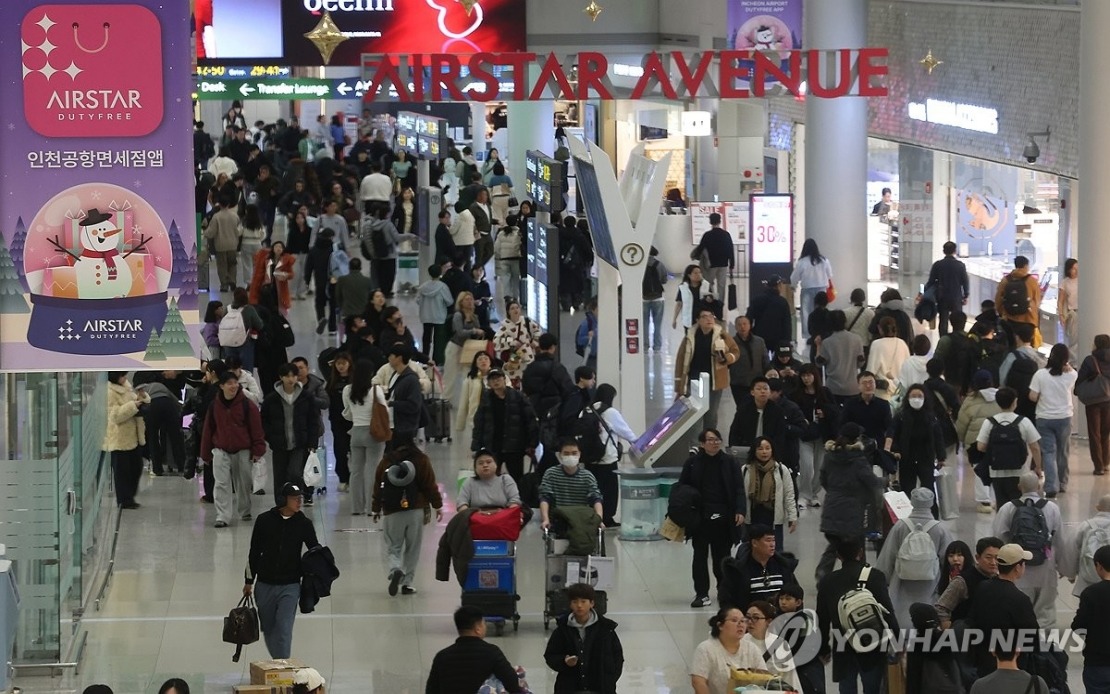
South Korea's tourism sector is experiencing a robust recovery, with the country welcoming more than 10 million foreign visitors during the first half of 2024. The Ministry of Culture, Sports and Tourism reported that this milestone was achieved by mid-June, roughly a month ahead of the previous year's timeline when the same figure was recorded in mid-July. This acceleration represents a significant momentum shift in the nation's travel and hospitality industries, suggesting Seoul is well-positioned to eclipse its previous annual tourism records.
The achievement of 10 million arrivals within the first six months marks the earliest occurrence of this benchmark in South Korea's modern tourism history. Prior to this year, no calendar year had registered double-digit millions of foreign visitors before July's conclusion, underscoring the accelerating appeal of the destination across diverse markets. May alone brought 1.95 million visitors, representing a robust 19.4 percent increase compared to the corresponding month in 2023, demonstrating sustained demand across multiple source markets despite challenging global conditions.
Visitor composition reveals the geographic diversity supporting this tourism boom. Chinese tourists remained the largest contingent in May with 560,000 arrivals, maintaining their position as South Korea's primary source market. Japanese visitors contributed 360,000 travellers, reflecting the region's interconnected tourism networks and cultural exchanges. American visitors numbered 210,000, indicating strengthening long-haul connectivity to North American markets. This distribution showcases South Korea's appeal to both proximate Asian neighbours and distant Western markets, reducing dependence on any single source country.
Beyond headline arrival figures, foreign tourists' spending patterns reveal deepening economic integration with the local economy. Card expenditures by international visitors, encompassing both in-country transactions and online purchases, reached 2.12 trillion won in May alone—equivalent to approximately US$1.38 billion. This represents the first instance since systematic tracking commenced in 2018 that monthly spending surpassed the 2 trillion won threshold, indicating tourists are not merely visiting but substantially engaging with South Korea's commercial ecosystem through retail, hospitality, dining, and entertainment sectors.
A noteworthy shift in visitor distribution patterns suggests tourism growth is becoming more geographically balanced across the nation. Historically, Seoul and surrounding metropolitan regions dominated inbound arrivals, concentrating economic benefits within limited areas. However, arrivals through regional airports demonstrated consistent growth, rising from 230,000 travellers in January to 360,000 by May. This trajectory indicates regional destinations beyond the capital are increasingly capturing international visitor interest, potentially distributing tourism revenue more widely and supporting provincial economies.
Achieving these milestones amid geopolitical headwinds and elevated operational costs demonstrates the fundamental attractiveness of South Korea as a destination. Middle East tensions have historically elevated fuel surcharges affecting international aviation, theoretically dampening demand for long-distance travel. Despite these structural cost pressures, year-to-date arrivals through May expanded 21 percent compared to the equivalent 2023 period, suggesting strong underlying demand that overcomes price resistance and operational complexities. This resilience bodes well for sustained tourism momentum throughout the remainder of 2024.
South Korea's tourism authority is adopting a multi-pronged strategy to consolidate and amplify this growth trajectory. Kang Jung-won, heading the Ministry of Culture, Sports and Tourism's policy division, indicated government plans to deepen collaboration with private-sector stakeholders, particularly leveraging South Korean cultural exports as magnetising forces. The explicit reference to K-pop artists reflects recognition that music, entertainment, and digital media have become powerful tourism drivers, particularly among younger demographics globally. Similarly, engagement with export-oriented companies suggests efforts to position South Korea as an integrated business and leisure destination.
The tourism surge carries significant implications for Malaysia and other Southeast Asian nations pursuing similar international visitor objectives. South Korea's success illustrates how sustained investment in infrastructure, cultural promotion, and visitor experience quality generates compounding returns in a competitive global marketplace. The acceleration of arrivals despite challenging external conditions also demonstrates that authentic market differentiation—whether through K-pop, cuisine, technology, or shopping experiences—can insulate destinations from commodity-like competition on pricing alone.
For Malaysian stakeholders and policymakers, South Korea's tourism performance offers instructive lessons in market segmentation and regional distribution of benefits. The deliberate cultivation of regional airport usage prevents economic concentration in capital cities while spreading prosperity across provincial communities. This model resonates with Malaysia's own geographic diversity and aspirations to develop secondary cities as tourist destinations beyond Kuala Lumpur. Additionally, South Korea's emphasis on high-value visitor spending rather than volume alone provides a framework for optimising tourism returns within capacity constraints.
Looking forward, South Korea appears positioned to establish new annual visitor records throughout 2024, potentially exceeding 13 million total arrivals if current monthly averages persist. Such outcomes would reinforce Seoul's position among Asia's premier tourism destinations and validate sustained investment in hospitality infrastructure, transportation connectivity, and cultural programming. For regional competitors monitoring these metrics, South Korea's acceleration serves as both inspiration and competitive benchmark, demonstrating the substantial economic and soft-power returns that world-class tourism sectors can generate.