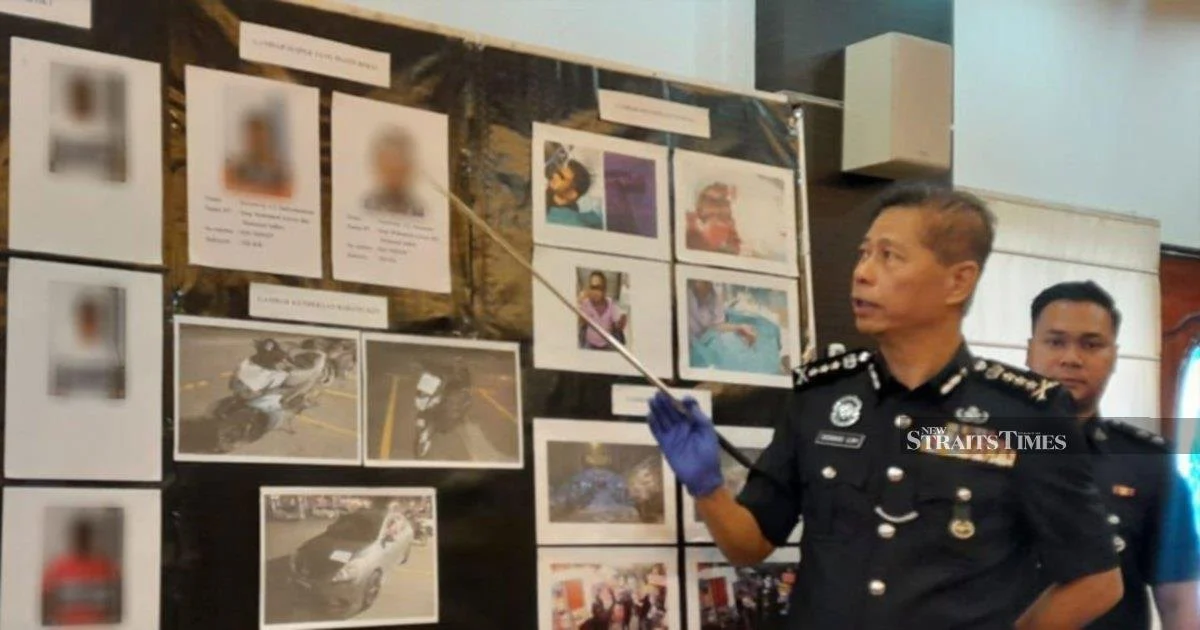
A vicious assault wielding traditional bladed weapons at a place of worship in Jelutong has triggered a significant police operation in George Town, with six men now in custody following the attack that critically wounded two victims. The incident underscores an alarming pattern of weapons-related violence in religious spaces across the Penang region, prompting authorities to intensify their focus on gang-related activities and community protection.
The assault, which targeted two men at the temple, resulted in injuries serious enough to require immediate medical intervention. Eyewitnesses at the scene reported the sudden and brutal nature of the confrontation, during which the attackers wielded parangs—long curved blades traditionally used in Southeast Asia for agricultural purposes but increasingly misused in violent crimes. The severity of the injuries sustained by the victims has raised questions about the coordination and intent behind what investigators are treating as a deliberate assault.
George Town police responded swiftly to reports of the incident, establishing a rapid investigation that led to the identification and apprehension of the six suspects within a relatively short timeframe. Law enforcement officials have been tight-lipped about the specific identities of those arrested and the exact circumstances that sparked the violence, though preliminary indications suggest the attack may have been premeditated rather than a spontaneous outbreak of street violence.
This incident forms part of a broader concern among Penang residents and civil society groups about increasing gang activity in urban areas throughout the state. Jelutong, a densely populated neighbourhood in George Town, has experienced several high-profile criminal incidents in recent years, leading community leaders to call for enhanced police presence and preventative measures. The targeting of a religious site is particularly troubling, as temples, mosques, churches and other places of worship have traditionally been regarded as safe spaces within Malaysian communities.
The involvement of multiple perpetrators in the attack highlights the organized nature of certain criminal elements operating in Penang. Six-person teams engaging in coordinated violence suggest some level of gang structure or pre-arrangement, distinguishing this from random street altercations. Investigators are likely examining whether the victims had prior connections to any of the suspects, whether territorial or financial disputes triggered the violence, or whether the temple location held specific significance to the attackers.
The use of parangs in particular deserves scrutiny from policymakers. Unlike firearms, which remain relatively controlled in Malaysia, parangs and similar weapons are ubiquitous in both rural and urban settings, ostensibly for legitimate purposes. Criminal elements have exploited this accessibility, deploying these weapons in high-impact assaults that inflict grievous wounds. The prevalence of parang-related crimes has motivated periodic calls for stricter regulations on the sale and possession of such implements, though implementation remains inconsistent across states.
Penang, as a major commercial and tourism hub, has faced mounting pressure to demonstrate effective crime control while balancing the open, business-friendly environment that attracts investment and visitors. A violent temple assault challenges both dimensions—it undermines the perception of safety essential for tourism and commerce, while simultaneously frightening religious communities. Authorities have a vested interest in swift case resolution and demonstrable consequences for perpetrators to restore public confidence.
The police investigation will likely focus on establishing clear motive, determining whether the attack was gang-related, debt-motivated, or arising from personal disputes. Video footage captured at the temple, as referenced in reporting about the incident, may prove instrumental in corroborating witness statements and clarifying the sequence of events. Digital evidence from mobile devices and surveillance systems throughout Jelutong could also reveal communications between the suspects prior to the assault, potentially establishing premeditation.
Neighbourhoods across Penang have become increasingly conscious of security following a series of high-profile criminal incidents. Business owners have invested in enhanced CCTV systems, while residents' associations have organized community watch programmes. The Jelutong temple attack will likely intensify such efforts, particularly among religious organizations that manage properties accessible to the public. Temple authorities may consider implementing visitor screening procedures, restricting access during off-hours, and improving lighting and surveillance infrastructure.
As the criminal justice process unfolds, the specific charges to be preferred against the six arrested individuals remain pending. Prosecutors face a range of options from simple causing of hurt to more serious charges such as grievous hurt or attempted murder, depending on the severity of injuries and evidence of lethal intent. The distinction carries significant sentencing implications under Malaysian law, with more serious charges potentially resulting in lengthy imprisonment.
The incident also prompts reflection on the broader social dynamics contributing to youth involvement in gang violence across Penang. Economic opportunities, family structure, educational engagement, and community integration all play roles in determining whether individuals gravitate toward criminal networks. Addressing the supply of willing perpetrators requires more than law enforcement responses; it demands complementary social interventions that provide alternatives to gang life for vulnerable youth populations.
For the two victims now recovering from their injuries, the physical and psychological trauma extends beyond the immediate assault. Returning to the temple or engaging in normal community activities may prove difficult, particularly if their injuries result in lasting disability or disfigurement. Support services, both medical and psychological, become essential components of their rehabilitation and reintegration. Temple authorities and community groups will likely rally around the victims to facilitate their recovery and restore their sense of security.