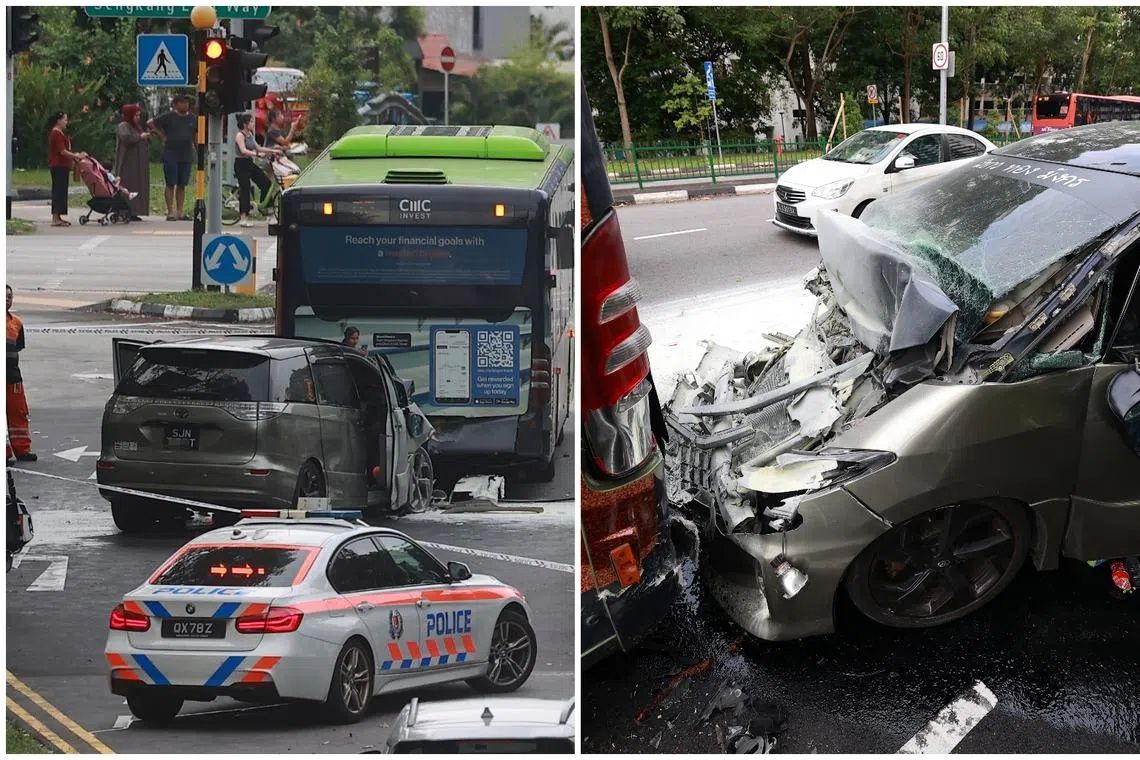
Singapore is confronting a troubling rise in traffic accidents attributed to drivers operating vehicles while under the influence of drugs, a trend that has alarmed medical professionals and prompted intensified law enforcement scrutiny. During a compressed 12-day window in June, police charged three separate individuals with driving under the influence of controlled substances—cases that only came to light following collision investigations. Two faced allegations of methamphetamine consumption, while the third was suspected of operating a vehicle after inhaling etomidate, an anaesthetic compound that has increasingly appeared in e-vaporiser products known locally as Kpods.
The dangers posed by etomidate-laced inhalation devices have become a particular concern for Singapore's healthcare system. Dr Jonathan Tang, a clinical toxicologist based at the Emergency Medicine Department of the National University Hospital, has treated patients presenting with severe injuries sustained in accidents where etomidate impairment played a contributing role. The medical professional draws parallels with alcohol intoxication, emphasizing that etomidate degrades critical driving faculties and exposes not only the operator to harm but also passengers, pedestrians, and fellow motorists to significant peril. His clinical observations underscore how the substance interferes with the neurological processes essential for safe vehicle operation.
The human cost became starkly apparent in a fatal collision that occurred on May 13, 2025, in Punggol. A vehicle carrying a male driver and female passenger struck a bus, resulting in the death of the 28-year-old woman. Subsequent investigation revealed that both individuals had etomidate in their bloodstream, and police recovered 42 vaporising devices containing over 1,200 pods from the vehicle, with several found to contain the anaesthetic compound. This tragedy illustrates the cascading consequences when impaired driving claims lives beyond the driver alone.
Parliamentary concern about this emerging public safety issue crystallized in February when Member of Parliament Valerie Lee, representing Pasir Ris-Changi GRC, raised questions regarding protocols for detecting drug impairment among accident-involved motorists. She sought clarity on whether the Traffic Police incorporated vaping or drug use assessment into their standard accident investigation procedures. Coordinating Minister for National Security K. Shanmugam confirmed that when accidents occur, officers routinely evaluate drivers for signs of impaired driving, with blood tests mandated if drug or etomidate use is suspected, potentially triggering charges under legislation prohibiting driving under the influence.
Minister Shanmugam's parliamentary disclosure revealed the alarming scope of the problem: between 2023 and 2025, authorities documented 38 traffic accidents directly linked to drug and etomidate consumption, of which 19 proved fatal. The breakdown by substance shows that of the fatal incidents, ten involved conventional drugs while nine involved etomidate. The temporal pattern is particularly concerning: 29 of the 38 accidents occurred during 2025 alone, with eighteen involving etomidate and seven involving combinations of both drugs and the anaesthetic. This clustering suggests the problem is accelerating rather than stabilizing.
Dr Tang has articulated the specific mechanisms by which etomidate compromises vehicle safety. The substance induces delayed reaction times, impairs hazard perception, and precipitates loss of vehicle control—each element individually dangerous, but collectively creating a scenario where accidents become statistically probable rather than merely possible. Beyond the direct pharmacological effects, he notes that chronic etomidate use through Kpods can trigger psychiatric manifestations including depression, heightened aggression, and impulsive behaviour that occasionally culminates in suicide attempts. These psychological consequences further deteriorate driving capability, creating compounded risk across multiple dimensions of road safety.
Three recent court cases exemplify the pattern of drug-related driving offences. Mohamed Firdouz Mohamed Akram, aged 36, faced multiple charges in June after allegedly operating his vehicle under methamphetamine influence in Kallang, striking a taxi and injuring both its driver and a passenger before abandoning the vehicle. Police discovered drugs, vaporising devices, and weapons within the car. Puah Zhe Cong, 34, was charged with seven offences including dangerous driving causing death, having allegedly consumed etomidate before an incident that resulted in one fatality and two injuries. Sivakandesh, 32, allegedly drove his Mercedes-Benz under methamphetamine influence when it collided with bollards, a parked vehicle, and a rubbish chute on Yishun Street 11, with registration plates subsequently removed.
The broader traffic casualty context renders these incidents particularly consequential. Singapore recorded 149 traffic deaths in 2025, marking a ten-year high and exceeding the 141 fatalities recorded in 2016, while 2024 saw 142 deaths. Injury figures similarly deteriorated, rising from 9,342 casualties in 2024 to 9,955 in 2025. This upward trajectory indicates that despite enforcement efforts and public awareness campaigns, road safety metrics are moving in the wrong direction, suggesting that drug-impaired driving represents one of multiple interacting factors contributing to the deterioration.
Legal consequences for driving under drug influence remain significant but may require escalation given current trends. First-time offenders face imprisonment of up to one year, fines reaching S$10,000, or both. Repeat offenders encounter sentences of up to two years imprisonment and fines of S$20,000, yet these penalties have not evidently deterred continued drug-impaired driving. The police statement issued on June 18 characterized such driving as extremely dangerous and irresponsible, reflecting official concern about the phenomenon's continuation despite enforcement awareness.
For Malaysian readers and regional observers, Singapore's experience carries instructive implications. The emergence of etomidate in e-vaporiser products represents a novel form of impairment with which regional law enforcement may be unfamiliar, potentially creating enforcement gaps elsewhere in Southeast Asia. The speed with which this particular threat has escalated—becoming 29 of 38 recorded incidents within a single year—suggests that other jurisdictions should preemptively assess their capabilities for detecting and prosecuting etomidate-impaired driving rather than waiting for fatalities to reveal the problem. Singapore's coordinated approach involving police investigation, medical toxicology, and parliamentary oversight offers a potential model, though the region's varying regulatory frameworks and enforcement capacities present significant obstacles to rapid replication.

%22%2F%3E%3C%2Fpattern%3E%3C%2Fdefs%3E%3Crect%20width%3D%22100%25%22%20height%3D%22100%25%22%20fill%3D%22url(%23ph4hk2dg)%22%2F%3E%3Crect%20width%3D%22100%25%22%20height%3D%22100%25%22%20fill%3D%22url(%23ph4hk2dp)%22%2F%3E%3Ctext%20x%3D%2250%25%22%20y%3D%2250%25%22%20text-anchor%3D%22middle%22%20dominant-baseline%3D%22central%22%20fill%3D%22rgba(255%2C255%2C255%2C0.95)%22%20font-family%3D%22Georgia%2C%20'Times%20New%20Roman'%2C%20serif%22%20font-weight%3D%22700%22%20font-size%3D%22320%22%20letter-spacing%3D%22-0.02em%22%3EMOH%3C%2Ftext%3E%3C%2Fsvg%3E)