Singapore's Internal Security Department has taken action against two citizens whose extremist radicalisation stemmed from the ongoing Israeli-Palestinian conflict, bringing to eight the number of Singaporeans dealt with under the Internal Security Act whose ideological trajectory was shaped by the Gaza crisis following Hamas's October 2023 attacks on Israel.
Cyrus Dzulqarnain Al-Shahriar, a 19-year-old student, was issued a restriction order on Wednesday after authorities determined he had become deeply entangled with a niche online extremist network. The second subject, Tarmizi Mohd Taha, a 30-year-old customer service officer, received a detention order after investigators established he had expressed willingness to conduct attacks within Singapore if directed by Hamas. While operating independently, both cases reveal how a single geopolitical event can activate multiple pathways to violent extremism among disparate individuals.
Cyrus's journey into radicalisation began innocuously in 2022 when he sought deeper knowledge of Islam through various online religious forums. His exposure gradually expanded beyond theological discussion to encompass anti-Western narratives and anti-LGBTQ content that he actively amplified through his own social media postings, where he called for violence against the LGBTQ community. The trajectory shifted markedly following the October 2023 Hamas attacks, when algorithmic amplification connected him to pro-Hamas messaging that reframed civilian casualties as religiously justified acts of warfare—a conceptual leap that authorities say represented a critical radicalisation threshold.
By 2024, Cyrus entertained concrete plans to travel to Gaza and join Hamas combat operations against Israeli forces, an aspiration he ultimately abandoned not due to ideological wavering but practical constraints: insufficient financial resources and fear of actual physical combat. This gap between ideological commitment and operational capacity would prove temporary. Early in 2025, Cyrus encountered an accelerationist extremist faction operating through encrypted online channels that promoted violent chaos as a mechanism for establishing Islamic global hegemony. The group's worldview encompassed a conspiracy theory positing that Western nations, Singapore included, functioned as extensions of American and Zionist control—a narrative that apparently resonated with his grievances.
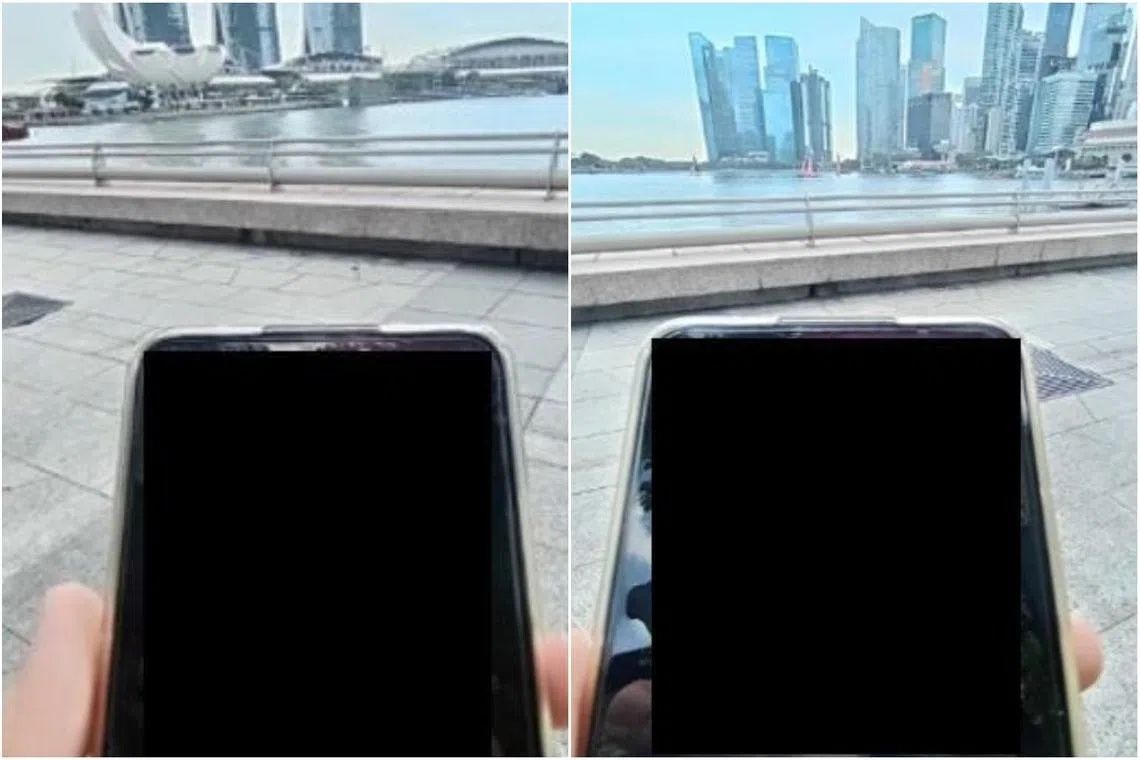
The case takes a troubling turn when examining Cyrus's documented activities within this online ecosystem. At the behest of group members, he visited Singapore's Esplanade district on multiple occasions to photograph materials the group had created, deliberately composing shots with Marina Bay Sands as backdrop before distributing these images across his social media platforms in November 2025. This act represented his public pledging of allegiance to the collective. Within this digital community, Cyrus participated in what members termed "digital jihad"—a euphemism for coordinated harassment campaigns against individuals perceived as anti-Islamic, involving the manufacturing of false information to damage reputations and explicit calls for violence against targets.
Moreover, Cyrus's extremist consumption expanded into ideological territory seemingly disconnected from traditional jihadist frameworks. He became absorbed by materials concerning Elliot Rodger, the 22-year-old who conducted a mass killing near the University of California, Santa Barbara in May 2014 that left six dead and fourteen injured, motivated ostensibly by sexual resentment and social alienation. This exposure catalysed Cyrus's identification with incel ideology—a subculture primarily composed of men who attribute their romantic and sexual failures to societal dysfunction rather than personal shortcomings, channelling this grievance into misogyny. Cyrus subsequently generated social media content threatening rape and murder against women, employed dehumanising terminology like "foid" (female humanoid), and documented fantasies about perpetrating violence within school settings against LGBTQ students and heterosexual couples.
What authorities describe as "composite violent extremism" or a "salad bar" approach to ideology characterises Cyrus's belief architecture. Rather than adhering to a singular coherent extremist framework, he synthesised fragments from jihadist narratives, accelerationist anarchism, conspiracy theories, and misogynist incel culture into a personalised ideological amalgam that functioned to justify violence against multiple perceived enemies. The Internal Security Department notes this represents only the second documented case involving such composite radicalisation pathways in Singapore, suggesting authorities are grappling with a novel threat landscape where traditional ideological boundaries dissolve through online algorithmic curation and peer reinforcement.
Tarmizi Mohd Taha's case, while separate, reveals how identical geopolitical triggers can activate fundamentally different radicalisation narratives. The 30-year-old, employed in customer service, previously served in the Singapore Police Force as a logistics assistant—experience he determined could be leveraged for Hamas operations. Unlike Cyrus's ideological eclecticism, Tarmizi's extremism appears more narrowly focused on Hamas as an organisational vehicle for achieving martyrdom, a goal he explicitly told investigators he would pursue through violent action on Singapore soil if the organisation commanded it. This unambiguous commitment to operational execution distinguishes his threat profile from Cyrus's more diffuse ideational framework.
Authorities emphasised that neither individual had progressed to concrete operational planning or preparatory steps, nor had they attempted to recruit or radicalise family members or peers. Cyrus maintained compartmentalisation between his online extremism and offline existence, suggesting he had not yet crossed into the phase where virtual ideation translates to actual cell formation or resource acquisition. Nevertheless, the Internal Security Department deemed both cases warranting intervention under the ISA framework, applying a preventive rather than prosecutorial logic that prioritises disruption before attacks materialise.
The rehabilitation regime Cyrus will undergo represents Singapore's investment in ideological deprogramming, a recognition that detention alone proves insufficient for addressing the psychological and cognitive vulnerabilities that enabled his radicalisation. The department characterised the case as emblematic of diversifying violent extremist ideologies capturing youth audiences through digital platforms, particularly through the synthesising function of composite extremism that allows individuals with disparate grievances—sexual frustration, religious conviction, geopolitical resentment, social alienation—to locate shared frameworks for justifying violence.
For Malaysia and the broader Southeast Asian region, the Singapore cases illuminate vulnerabilities within the digital information ecosystem that transcends borders. The radicalisation pathways documented—from religious forums to accelerationist networks to incel spaces—operate across jurisdictions with minimal friction, suggesting that efforts to counter violent extremism must increasingly focus on the algorithmic architectures and online spaces where recruitment occurs rather than solely on geographic enforcement. The composite extremism threat also indicates that traditional counter-messaging strategies targeting specific ideologies may prove ineffective against individuals who cherry-pick from multiple frameworks, requiring instead interventions addressing the underlying grievances and psychological vulnerabilities that make such ideological bricolage psychologically attractive to isolated young people.