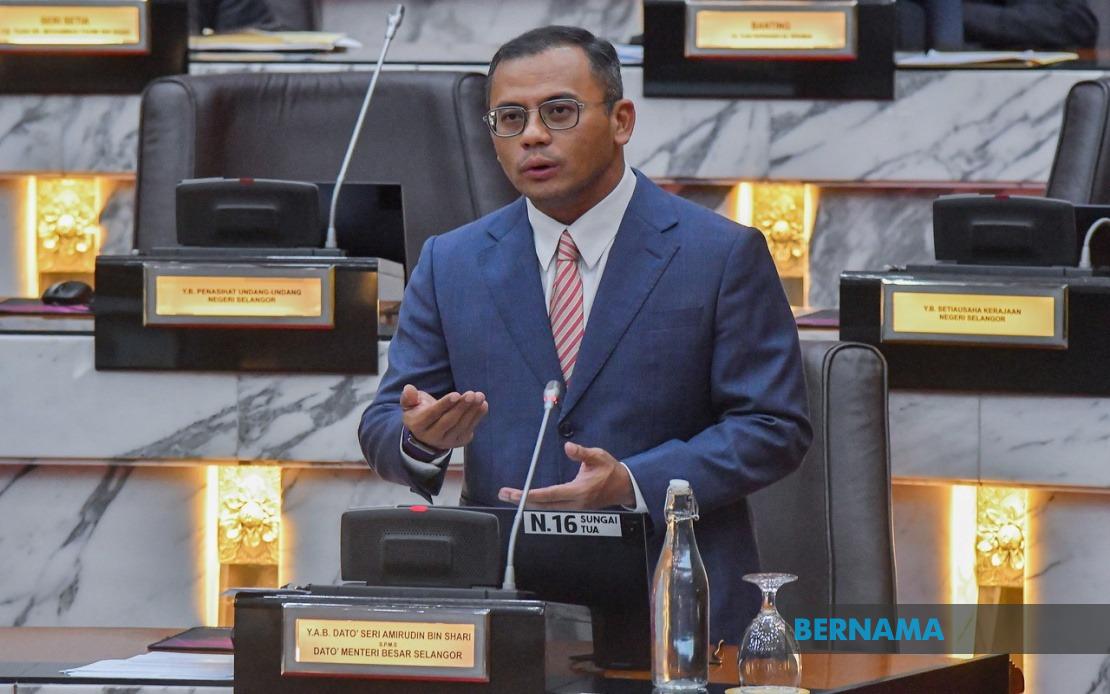
Selangor's state government is mounting a coordinated push to fix fragmented public transport connectivity across the region, with Menteri Besar Datuk Seri Amirudin Shari directing all local authorities to conduct comprehensive reviews of pedestrian and transit infrastructure. The directive follows mounting complaints on social media highlighting gaps between residential areas and major transit nodes, particularly around the LRT3 line. Speaking in the State Legislative Assembly, Amirudin acknowledged that connectivity issues have become a significant barrier preventing residents from fully adopting public transport, and warned local councils against being reactive rather than proactive in addressing such problems.
The administration is signalling willingness to commit fresh financial resources toward upgrading infrastructure in underserved areas, though officials have stressed that spending must be strategic and tied to concrete outcomes. Amirudin rejected the notion that solving connectivity issues requires massive expenditure, instead framing improvements as essential investments in the state's broader mobility agenda. This positioning reflects growing recognition among Malaysian policymakers that last-mile connectivity—the journey from home to a transit station and from a final station to destination—remains a critical weak point undermining public transport adoption, particularly in emerging suburban areas of Selangor.
The Menteri Besar's remarks were prompted by an intervention from assemblyman Danial Al-Rashid Haron Aminar Rashid representing Batu Tiga, who raised the connectivity issue during legislative debate on the Selangor Resilience Strengthening Package. Danial's contribution reflected frustration articulated by many urban commuters who have taken to platforms like X and Threads to document situations where transit stations exist but remain poorly accessible to surrounding neighbourhoods. By citing social media as the source of these complaints, Amirudin implicitly acknowledged that residents no longer wait for formal channels to highlight infrastructure failures; instead, they document problems publicly, forcing officials to respond.
Moving beyond rhetoric, the state government has tasked Ng Sze Han, chairman of the Investment, Trade and Mobility Committee, with convening all public transport operators in Selangor to map existing service areas and identify coverage gaps. This mapping exercise represents a data-driven approach to understanding where connectivity breaks occur and which areas suffer from inadequate feeder services. Rather than assuming operators are serving communities efficiently, the government is forcing transparency around operational patterns and route decisions. The decision to involve all operators collectively rather than addressing individual providers suggests authorities recognize that fragmented service planning has created inefficiencies across the broader network.
An important dimension of the connectivity problem involves operational hours and service frequency, which Amirudin specifically highlighted in his remarks. Many feeder bus routes operate limited schedules that fail to align with peak commuting times or with arriving and departing transit trains and buses. When a resident travels to an LRT station only to find connecting minibuses or feeder buses no longer running, the entire journey becomes impractical. By instructing committee chairman Ng to address such gaps, Amirudin signalled that the state intends to push operators toward better coordination, even where this requires operational adjustments that might increase costs.
The government's offer of subsidies emerges as a potential lever to encourage operators to improve service coverage and frequency. By stating that subsidies may reduce operational costs, officials are implying they could link continued financial support to commitments around expanded or improved service in underconnected areas. This approach differs from simply providing blanket subsidies without performance conditions. However, Amirudin's warning that subsidies alone cannot solve the problem underscores frustration that financial support sometimes fails to translate into actual service improvements if operators do not adjust their strategies accordingly.
The connectivity challenge assumes particular importance in Selangor given the state's rapid urbanization and the concentration of employment and commerce in central areas. Commuters in developing neighbourhoods increasingly rely on public transit to reach job centres, educational institutions, and commercial zones, yet poor connectivity makes such journeys time-consuming and unreliable. When first-mile and last-mile gaps exist, residents rationally choose private vehicles instead, defeating the state government's objective of reducing traffic congestion and emissions through higher public transport usage. This creates a vicious cycle where underutilized feeder services appear economically unviable, leading operators to reduce them further.
For Malaysian commuters and urban planners, the Selangor initiative reflects a broader Southeast Asian challenge: major transit investments often proceed without adequate coordination of peripheral services. Neighbouring Kuala Lumpur and other Malaysian cities face similar complaints about isolated transit stations. The willingness of Selangor's leadership to acknowledge the problem and assign specific responsibility to named officials suggests shifting political pressure on state governments to deliver integrated mobility solutions rather than siloed infrastructure projects. If the mapping exercise yields concrete improvements, it could establish a replicable model for other states grappling with comparable connectivity deficits.
The directive also implicitly critiques the performance of local authorities, many of which oversee street maintenance, pedestrian infrastructure, and feeder service planning. By instructing PBTs to proactively address issues rather than waiting for social media outcry, Amirudin is demanding institutional accountability and faster response cycles. Local councils and municipal bodies typically operate with limited budgets and political visibility, but transport connectivity directly affects residents' daily experience of their neighbourhoods and their willingness to use public facilities. Elevating this issue within the state government's priorities could shift local authority budgeting and planning toward connectivity-focused outcomes.
The emphasis on listening to council members and stakeholders signals recognition that local elected representatives often possess detailed knowledge of connectivity problems long before state officials become aware. By instructing operators to engage with councillors and community groups, the state is attempting to decentralize problem identification, making it incumbent on operators to maintain close relationships with local governance structures. This represents a departure from top-down infrastructure planning and suggests appreciation for grassroots input in designing effective transit systems.
Looking forward, the success of this initiative will depend on whether mapping translates into concrete service changes, and whether subsidies are structured to incentivize operators to prioritize underserved routes and extended hours. State authorities will also need to monitor whether local authorities genuinely implement improved pedestrian infrastructure and walkways to transit stations, or whether budgetary constraints once again defer such investments. The involvement of Ng Sze Han, a veteran state assemblyman with track record in administration, suggests the state intends serious follow-through rather than merely symbolic commitment.