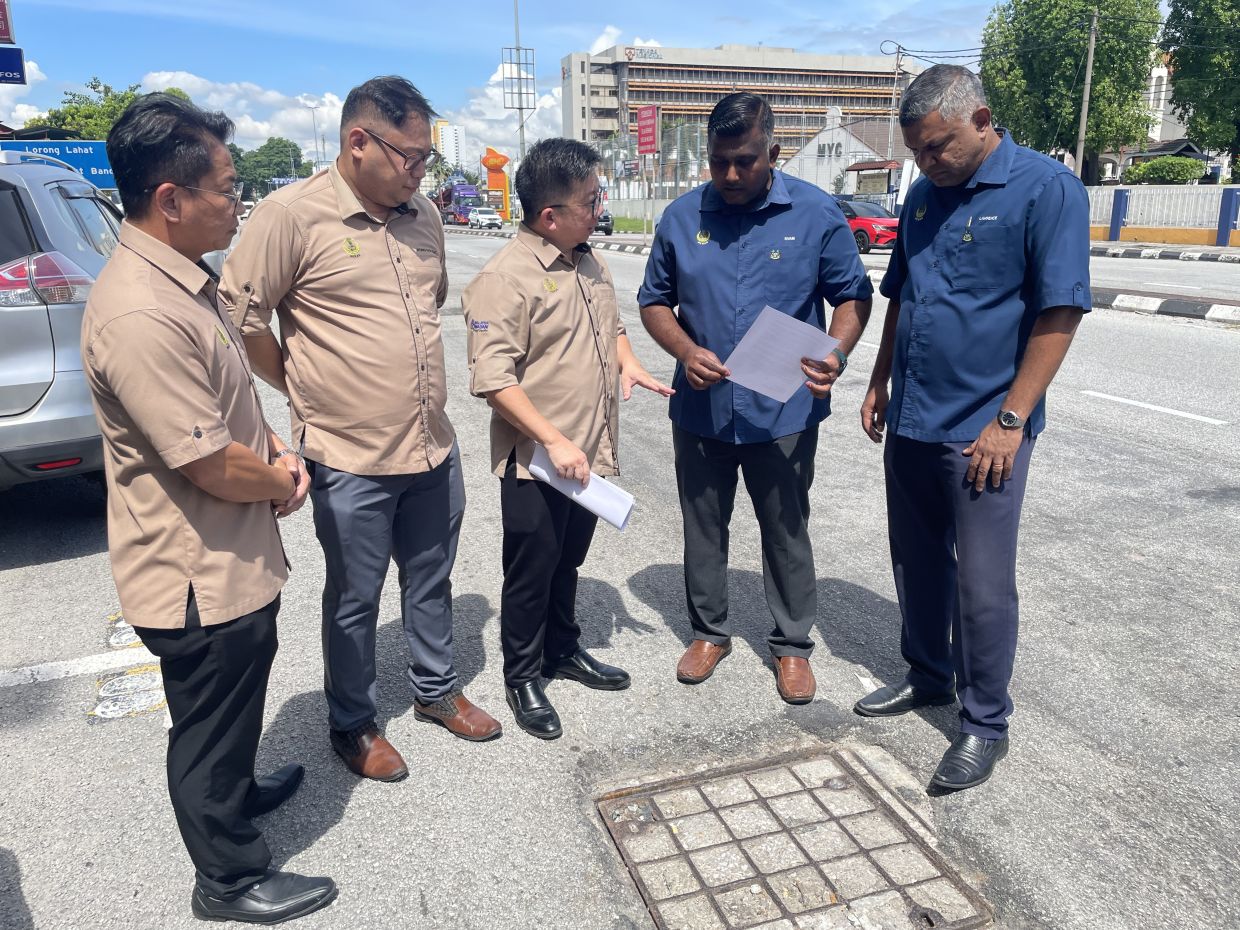
Motorists traversing Jalan Lahat in Ipoh will soon benefit from a comprehensive resurfacing programme worth RM2.6mil, with works expected to commence in July following months of deteriorating road conditions that have prompted repeated safety concerns. The initiative, funded through the Malaysian Road Records Information System (Marris), will address approximately 1.9 kilometres in each direction along the critical stretch between Falim traffic lights and the Jalan Leong Boon Swee junction near Little India, bringing the total coverage to almost 4 kilometres of the roughly 10 to 11 kilometre-long thoroughfare.
The resurfacing project spans three state constituencies—Buntong, Tebing Tinggi and Menglembu—and responds to escalating complaints from road users about severe deterioration that has plagued this major transport artery. According to Menglembu assemblyman Chaw Kam Foon, the approval represents a significant breakthrough for commuters and commercial operators who have endured months of hazardous driving conditions. The decision comes after sustained pressure from residents and social media users who documented the road's parlous state, with one particularly alarming viral video showing a massive pothole on the flyover section that raised immediate safety alarms among the driving public.
The scope of the problem became starkly evident when authorities recorded approximately 20 vehicle tyre punctures in a single month, a telling indicator of just how extensively potholes and uneven surfaces had compromised road safety. The situation prompted quick emergency patching work following public outcry, though these temporary measures proved insufficient given the underlying structural degradation. Chaw noted that while the full stretch warranted attention, targeting the most critical 4-kilometre section represented a pragmatic approach to addressing the highest-risk areas within current budget constraints.
Councillor K. Sivam, speaking on the project details, revealed that requests for major road rehabilitation had persisted since 2024, with stakeholders finally securing approval this financial year. The tender process is currently underway, and contractors are expected to mobilise by July with a completion window of approximately three weeks—a relatively swift timeline for works of this magnitude. The compressed schedule reflects the project's priority status and the urgency with which authorities view the road's rehabilitation.
The heavy usage patterns along Jalan Lahat have directly contributed to its accelerated deterioration, with the corridor serving residential neighbourhoods, educational institutions and commercial precincts while simultaneously bearing substantial traffic from large goods vehicles and lorries. Previous attempts at piecemeal repairs using conventional patching techniques proved ineffective, particularly given the region's tropical climate and the relentless pounding from high-volume traffic. Sivam explained that complete resurfacing had become necessary rather than optional, as temporary solutions could not withstand the combined stresses of environmental factors and vehicular loads.
Beyond simple surface renewal, the project encompasses comprehensive restoration measures designed to prevent future rapid deterioration. Works will include levelling of manhole covers that have settled below road surface level, elimination of undulations that create hazardous driving conditions, and reapplication of lane markings to improve traffic organisation and visibility. These elements address not merely cosmetic concerns but fundamental engineering requirements that affect both vehicle safety and pavement longevity.
Sivam attributed significant responsibility for past road damage to unsatisfactory utility infrastructure works, particularly sewerage pipeline installations where excavation and reinstatement had not met appropriate standards. These substandard restoration efforts created weakened sections of pavement prone to accelerated failure under traffic stress. To prevent recurrence of such problems, the Corridor Utiliti Darul Ridzuan (KUDR) will implement enhanced monitoring protocols for all future utility company excavation activities along the resurfaced stretch.
The oversight mechanism carries enforcement teeth, with KUDR empowered to impose financial penalties, issue compounds, or mandate repeat repairs on utility companies that fail to restore roads according to approved technical specifications. This regulatory framework addresses a chronic problem in Malaysian road maintenance where utility infrastructure works frequently leave roads in substandard condition, effectively transferring the cost of repairs to public authorities and creating safety hazards for motorists. By establishing clear accountability for utility operators, authorities aim to shift maintenance costs and responsibility to those creating the damage.
For Malaysian road users broadly, the Jalan Lahat project exemplifies the evolving approach to infrastructure management where social media documentation and public pressure increasingly drive prioritisation of maintenance works. The viral video that mobilised quick patching work and ultimately triggered this major resurfacing investment demonstrates how digital platforms have transformed citizens' ability to demand accountability from authorities. However, this reactive approach also highlights systemic gaps in preventive maintenance budgeting, suggesting that many road networks across the country likely suffer similar deterioration without equivalent public pressure or documentation.
The project holds particular significance for Perak's economic corridors, as Jalan Lahat connects key commercial and residential zones that depend on reliable road connectivity. For businesses operating along the route and residents commuting through the area, the three-week construction window represents a temporary inconvenience justified by the prospect of durable, safe road conditions. The resurfacing should substantially reduce vehicle maintenance costs associated with pothole damage, contributing indirectly to economic productivity in a region already contending with infrastructure challenges.
Looking forward, the successful completion of this project could establish a template for addressing similar deteriorated stretches across Perak and neighbouring states. As climate patterns intensify and traffic volumes continue mounting, road maintenance budgets will require strategic reallocation toward preventive rather than reactive work. The Jalan Lahat initiative, while addressing immediate safety concerns, underscores the longer-term infrastructure investment requirements facing Malaysian local authorities tasked with maintaining road networks within constrained fiscal environments.