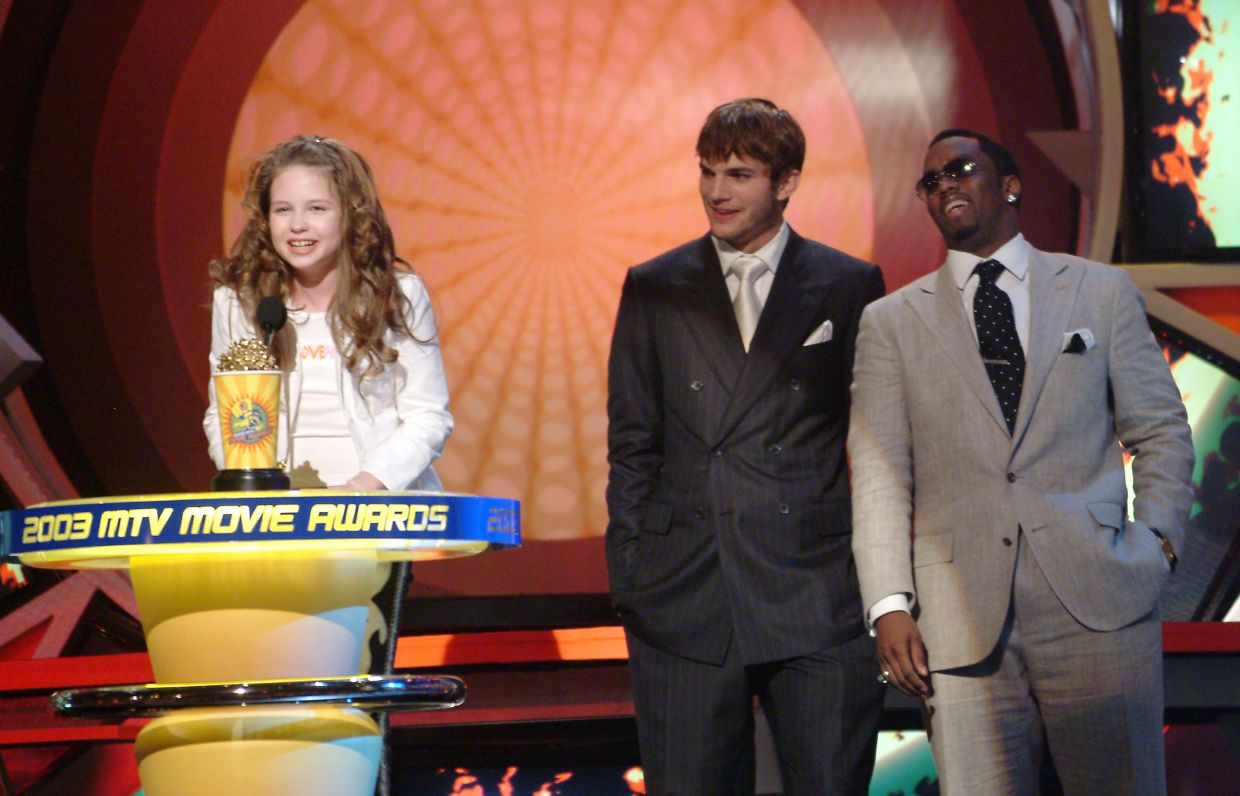
An old video from the 2003 MTV Awards featuring Sean "Diddy" Combs inviting a young Daveigh Chase to an after-party has circulated widely online in recent weeks, reigniting public concern about the music mogul's conduct and drawing fresh attention to his history of hosting gatherings. The footage, recorded during a moment when Combs presented an award alongside actor Ashton Kutcher, shows the producer approaching the then-12-year-old actress and asking whether she planned to attend the evening's private celebration. The resurfacing of this clip comes as Chase's death has prompted renewed examination of her life and career trajectory.
Daveigh Chase, best known for her chilling portrayal of Samara Morgan in The Ring, passed away on June 16 at a Los Angeles hospital at the age of 35. Her father, John Schwallier, disclosed that she had battled complications arising from bacterial meningitis and a concurrent blood infection, conditions that were further complicated by severe malnutrition. The actress had experienced a devastating personal decline in her final years, struggling openly with addiction and ultimately living unhoused near the very hospital where she would spend her final days. Her early career prominence as a child actor stood in sharp contrast to the circumstances that defined her later life.
Chase's recognition at the 2003 MTV Video Music Awards represented a peak moment in her young professional life. She received the accolade for Best Villain, a testament to her powerful performance in the supernatural horror film that had made her a recognizable name in entertainment. The award presentation itself became notable only in retrospect, as footage from that evening documented an exchange that many observers now view through a deeply uncomfortable lens given subsequent revelations about Combs' behaviour and the allegations that have emerged.
In the video, after Kutcher and Combs presented Chase with her trophy, the music producer approaches with a drink in hand and casually inquires about her attendance at the private celebration that would follow the televised ceremony. Chase nods affirmatively in response, whereupon Combs enthusiastically exclaims "Yeah!" while Kutcher appears to laugh off the interaction. The casualness of the moment at the time contrasts starkly with how it is now perceived by audiences aware of subsequent allegations and convictions.
Combs' public persona underwent a dramatic transformation following his September 2024 arrest at the Park Hyatt Hotel in Manhattan. Federal authorities moved swiftly against the 55-year-old entertainment figure, initiating a comprehensive investigation that would ultimately expose a pattern of behaviour that extended far beyond the bounds of typical celebrity excess. The allegations centred on what law enforcement termed "freak-off" parties, described as multi-day gatherings characterized by drug use and commercial sexual activity, frequently involving individuals engaged in sex work.
The federal prosecution that followed proved consequential and expeditious. In July 2025, Combs was found guilty on two counts of transportation to engage in prostitution following a sex trafficking trial conducted in New York. The conviction represented a significant legal reckoning for one of hip-hop's most prominent figures and reflected prosecutors' ability to construct a detailed account of coordinated criminal conduct spanning multiple years. The evidence presented demonstrated systematic planning and execution of these gatherings, counter to any suggestion of isolated incidents.
Following his conviction, the court imposed a sentence of 50 months in federal prison, placing Combs in custody at FCI Fort Dix in New Jersey. Beyond the criminal proceedings, the disgraced producer now faces over 100 civil lawsuits, many alleging various forms of misconduct and abuse. These parallel legal actions suggest that the criminal conviction represents merely one dimension of the broader reckoning surrounding his conduct and the institutional failures that enabled it for decades.
The resurfacing of the 2003 MTV Awards footage within this context has generated substantial reflection on how such moments were perceived and handled in real time. The video raises difficult questions about oversight, safeguarding protocols at major entertainment events, and the power imbalances that characterize interactions between adult industry figures and child performers. That Kutcher's apparent amusement at the exchange was captured on camera underscores how normalized certain behaviours had become within entertainment industry circles.
Chase's trajectory from award-winning child actress to someone experiencing homelessness and addiction represents a cautionary narrative about the pressures and vulnerabilities facing young performers in Hollywood. While her later struggles cannot be directly attributed to any single incident, they occurred within an industry ecosystem where protections for child actors have historically been inadequate. The renewed attention to the 2003 footage serves as a reminder of how systemic vulnerabilities intersect with individual predation in spaces where children's safety should be paramount.
For Malaysian and Southeast Asian audiences, the Combs case illustrates how entertainment industry scandals originating in the United States frequently carry global relevance and implications. The convergence of criminal conduct, institutional failure, and the exploitation of vulnerable individuals reflects patterns that transcend geography. As entertainment continues to flow across borders through streaming platforms and digital distribution, questions about safety standards and accountability mechanisms become increasingly pertinent to audiences worldwide who consume content shaped by these industries and their cultures.