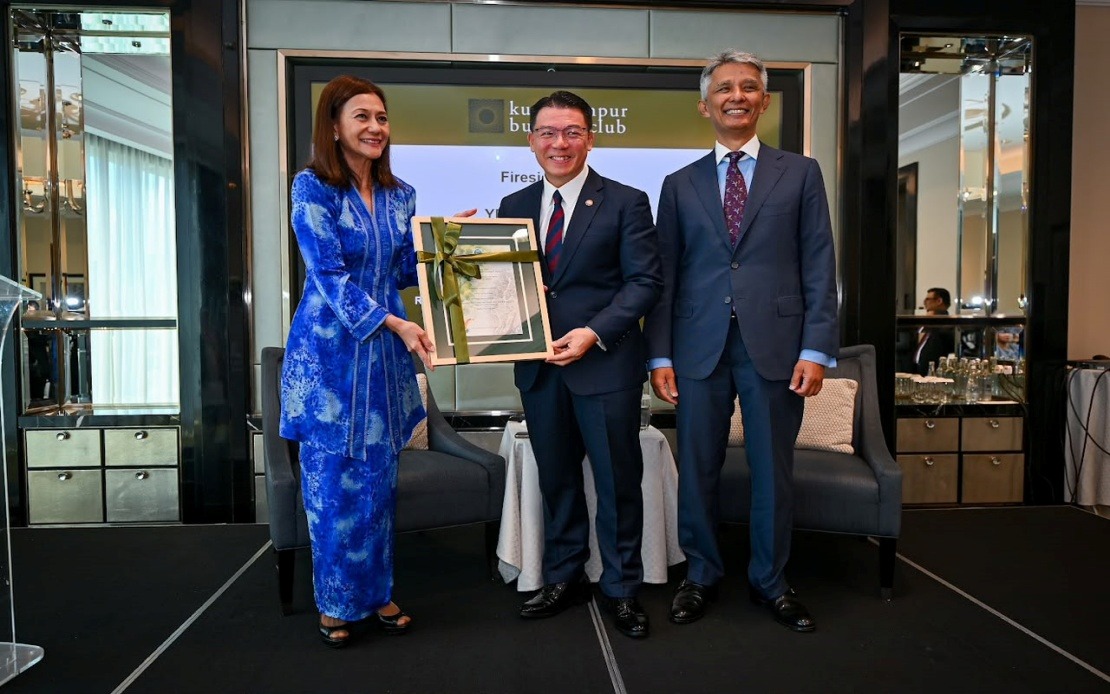
Malaysia's ability to sustain its trajectory of economic transformation hinges critically on maintaining consistent policy direction and governance frameworks, Housing and Local Government Minister Nga Kor Ming said at a business forum in Kuala Lumpur. Speaking after a fireside chat organised by the Kuala Lumpur Business Club, Nga underscored that policy continuity under the MADANI framework would enable the government to deepen structural reforms and fully realise long-term development objectives already in motion.
The minister's remarks carry particular weight given the economic headwinds facing Southeast Asia, where investor confidence remains sensitive to shifts in political direction and reform momentum. For Malaysia specifically, the ability to maintain a coherent reform agenda is increasingly viewed as a competitive advantage in attracting foreign direct investment and positioning the nation as a stable hub in a volatile regional landscape. Nga emphasised that consistency in governance and reform trajectories serves not merely as a rhetorical commitment but as a tangible mechanism for sustaining the investor confidence that underpins Malaysia's growth prospects.
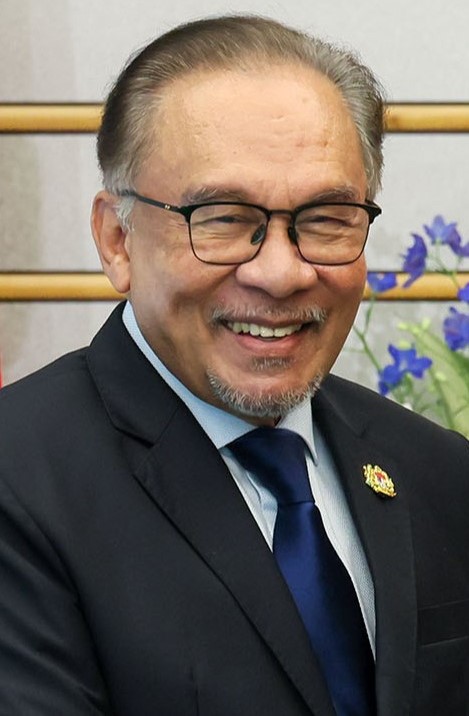
Under Prime Minister Datuk Seri Anwar Ibrahim's leadership, the MADANI government has articulated a comprehensive reform agenda spanning governance improvements, enhanced economic management practices, and recalibrated international engagement strategies. These initiatives have yielded measurable outcomes that extend beyond domestic economic indicators. Malaysia has strengthened its global reputation through improvements in governance metrics, including gains in the Corruption Perceptions Index ranking, which signals to international investors that institutional frameworks are becoming more robust and transparent. Additionally, the nation's credit rating trajectory has reflected fiscal credibility enhancements, a critical factor for businesses evaluating long-term investment decisions.
The government's emergence as a preferred investment destination reflects the convergence of several reinforcing factors. Clear, stable policies provide transparency that reduces business risk calculations. Strong fundamental economic indicators—including resilient trade performance despite global uncertainties—demonstrate that reform initiatives are translating into tangible economic benefits rather than remaining theoretical propositions. Political stability, a factor often underestimated in economic analyses, provides the bedrock upon which businesses construct multi-year capital deployment strategies. When investors perceive political instability or policy reversals, they invariably redirect capital to jurisdictions perceived as lower-risk, regardless of underlying economic fundamentals.
Nga highlighted that Malaysia's strategic international partnerships illustrate how sustained policy frameworks enable governments to negotiate long-term collaborations that would be impossible under conditions of political uncertainty. The RM52.73 billion strategic partnership with Turkmenistan and the long-term energy collaboration initiatives with Russia represent commitments that required sustained diplomatic engagement and consistent foreign policy positioning. These partnerships open investment channels and create dependencies that benefit multiple stakeholders, but they require institutional credibility and demonstrated commitment to agreed frameworks. A government viewed as subject to sudden policy reversals would find negotiating such partnerships significantly more difficult.
The theme of the Kuala Lumpur Business Club session—"Future Cities, Future Growth: How MADANI Reforms Are Reshaping Malaysia's Urban Economy"—reflects recognition that Malaysia's economic transformation is increasingly concentrated in urban development and modernisation. Cities represent complex systems requiring sustained investment, regulatory coherence, and long-term planning horizons. Disruptions to policy direction inevitably cascade through urban development timelines, affecting infrastructure projects, real estate investments, and service provision. Business leaders gathered at the forum clearly recognised that their capacity to plan and invest effectively depends on the government's ability to maintain reform momentum and institutional predictability.
The minister's reference to a "second-term mandate" providing "stability and continuity" signals the government's view that deepening structural reforms and strengthening institutional capacity requires multi-term commitment. This perspective reflects international experience showing that meaningful institutional transformation rarely occurs within single electoral cycles. Malaysia's financial sector reforms, for instance, required sustained policy frameworks across multiple years to achieve desired outcomes. Similarly, improvements in regulatory environments, anti-corruption frameworks, and investment-promotion mechanisms all benefit from consistency that transcends individual political periods.
For Malaysian businesses and regional investors monitoring the country's trajectory, Nga's emphasis on policy continuity addresses a fundamental concern about Malaysia's competitive positioning. The region increasingly fragments into competing investment blocs, with different countries offering varying combinations of regulatory predictability, growth potential, and geopolitical alignment. Malaysia's appeal rests partly on its ability to offer investors confidence that today's policy commitments will remain valid in future years. This confidence factor becomes particularly valuable in sectors requiring massive capital commitments with multi-year payoff periods—infrastructure, manufacturing complexes, and technology hubs all depend on institutional durability.
The international dimension of Malaysia's reform agenda deserves particular emphasis given the global economic uncertainties outlined in Nga's remarks. When major economies face recessionary pressures or trade disruptions, companies increasingly scrutinise the stability and predictability of prospective investment destinations. Malaysia's demonstrated ability to maintain consistent policy frameworks during periods of global volatility—as reflected in its resilient trade performance despite uncertainties—becomes a differentiating factor. Companies seeking to hedge geopolitical risks through geographic diversification place premium valuations on jurisdictions offering both growth potential and institutional stability.
The government's proactive diplomatic engagement represents another dimension of policy continuity with tangible economic implications. Strategic partnerships cannot be constructed and deconstructed at will without reputational costs. Nations that cultivate relationships and then abandon them lose credibility in future partnership negotiations. Conversely, governments demonstrating sustained commitment to strategic frameworks gradually accumulate reputational capital that facilitates future negotiations. Malaysia's diplomatic positioning appears deliberately designed to create multiple partnership pathways, reducing over-reliance on any single relationship while demonstrating consistent commitment to diversified engagement.
Looking forward, the question of policy continuity will likely dominate Malaysia's political and economic discourse. The minister's emphasis on institutional capacity strengthening and structural reform deepening suggests the government recognises that Malaysia's future competitiveness depends on continuous improvement rather than maintaining status quo. This frames policy continuity not as stagnation but as sustained momentum toward predetermined objectives. For businesses evaluating Malaysia as an investment destination, this distinction carries significant implications for long-term planning and capital allocation decisions within Southeast Asia's increasingly competitive investment environment.