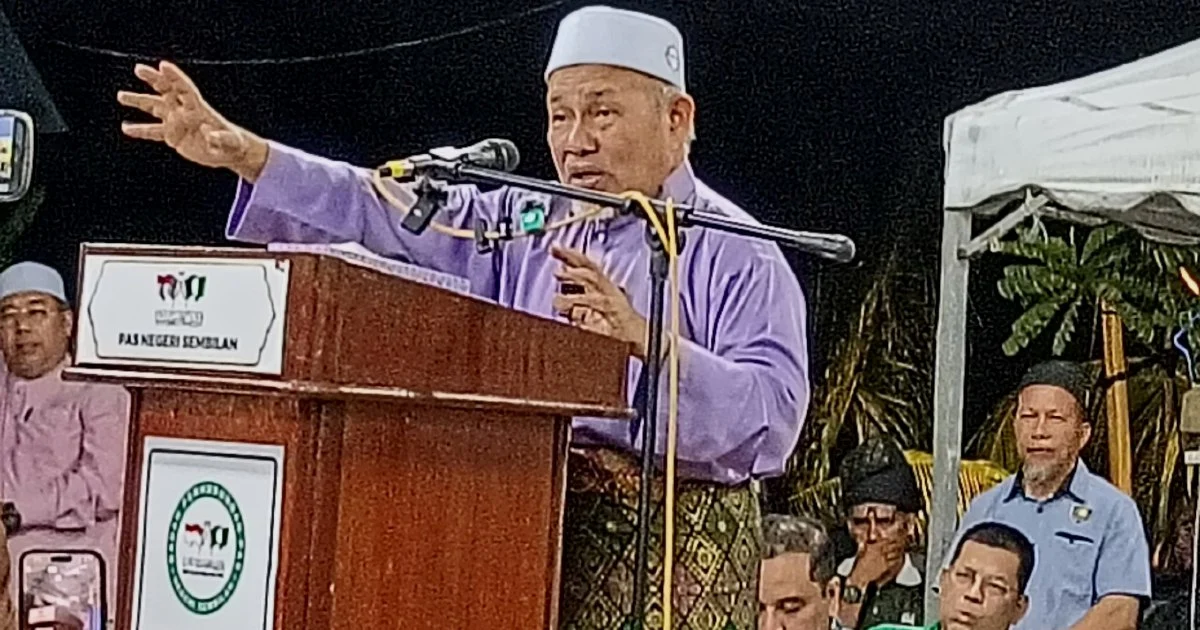
Datuk Seri Tuan Ibrahim Tuan Man, the deputy president of PAS, has firmly rejected suggestions that Perikatan Nasional is the sole property of Bersatu, insisting instead that the opposition coalition represents a collective enterprise shared equally among all participating parties. His remarks represent an escalation in tensions within PN's leadership structure, signalling deep-seated disagreements over how the coalition should be governed and who holds ultimate decision-making authority.
The assertion from the PAS leader comes amid mounting friction between the coalition's major players, particularly between Bersatu, which emerged as the nominal leader following the 2022 realignment, and PAS, which commands substantial grassroots support and parliamentary representation. This friction reflects broader anxieties within Malaysia's opposition camp about the distribution of influence, power-sharing arrangements, and the trajectory of PN as it positions itself as an alternative political force.
Tuan Ibrahim's pushback addresses what he perceives as overreach by those who claim that Bersatu's role in establishing or facilitating PN's formation grants it ownership or superior status within the coalition structure. The PAS deputy president's intervention suggests that component parties feel their contributions and mandates are being undervalued or sidelined by Bersatu's leadership, a concern that could destabilise the coalition if left unresolved.
The nature of coalition ownership in Malaysian politics remains contested and poorly defined by formal mechanisms. Unlike established democracies with explicit coalition agreements and constitutional provisions, Malaysian political coalitions often operate through informal understanding and personal relationships between party leaders. This ambiguity creates space for disputes when influential figures make unilateral decisions or claim exclusive authority over coalition direction.
Bersatu's position as a relative newcomer to PN, having relocated there after its split from UMNO, appears to generate resentment from established parties like PAS, which has deep historical roots and substantial electoral strength in northern states and amongst conservative Malay-Muslim voters. PAS contributed significantly to PN's capacity to contest elections and maintain parliamentary relevance, yet may feel that its role is insufficiently recognised or rewarded in terms of meaningful authority over coalition strategy.
The implications of this disagreement extend beyond internal coalition management. A fractured PN risks undermining the opposition's capacity to present a united front against the ruling coalition, whether in parliamentary debates, electoral campaigns, or policy advocacy. Malaysian voters increasingly expect opposition blocs to demonstrate coherence and stability before granting them electoral support; perceptions of internal squabbling translate directly into voter hesitation.
For Southeast Asia more broadly, the incident illustrates how coalition politics in the region often grapple with legitimacy questions and institutional immaturity. Neighbouring democracies in Thailand, the Philippines, and Indonesia have encountered similar tensions within their own multi-party alliances, where larger parties attempt to dominate smaller coalition members, triggering resentment and occasional defections.
Tuan Ibrahim's statement also carries implications for PAS's own strategic calculations. By publicly asserting that PN is not Bersatu's personal project, the PAS deputy president signals that his party retains agency and will not accept subordinate status within the coalition framework. This posturing may be designed to reassure PAS grassroots members and affiliates that the party's leadership is protecting their interests and refusing to be marginalised.
The broader context involves ongoing jockeying for position as Malaysia's opposition prepares for the next general election, currently scheduled for 2024 or potentially 2025 depending on political developments. Both Bersatu and PAS will be calculating how best to maximise electoral returns, which coalitions to contest under, and what seat allocations are acceptable. Such calculations inevitably generate tension when coalition partners possess different assessments of their own strength and entitlements.
Formalising coalition governance structures could help prevent such disputes in future. Clear agreements about decision-making procedures, dispute resolution mechanisms, and the basis on which component parties exercise power would reduce ambiguity and provide frameworks for addressing disagreements before they escalate into public confrontations that damage coalition credibility.
Tuan Ibrahim's rebuttal reflects a fundamental principle that should underpin democratic coalitions: no single party should exercise hegemonic control simply because it nominally leads a grouping. Yet turning this principle into sustained practice requires institutional discipline and voluntary restraint from dominant players, qualities that Malaysian political culture has historically struggled to cultivate at the coalition level. Whether PN can navigate these tensions constructively may ultimately determine whether it can evolve into a credible alternative government capable of attracting sufficient voter support to challenge the ruling establishment.