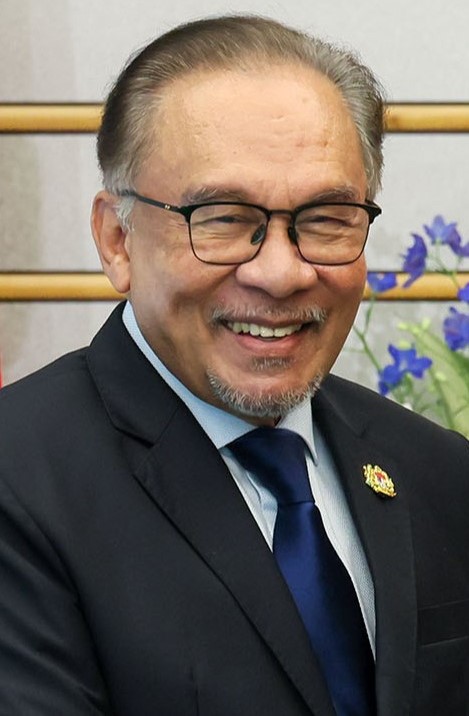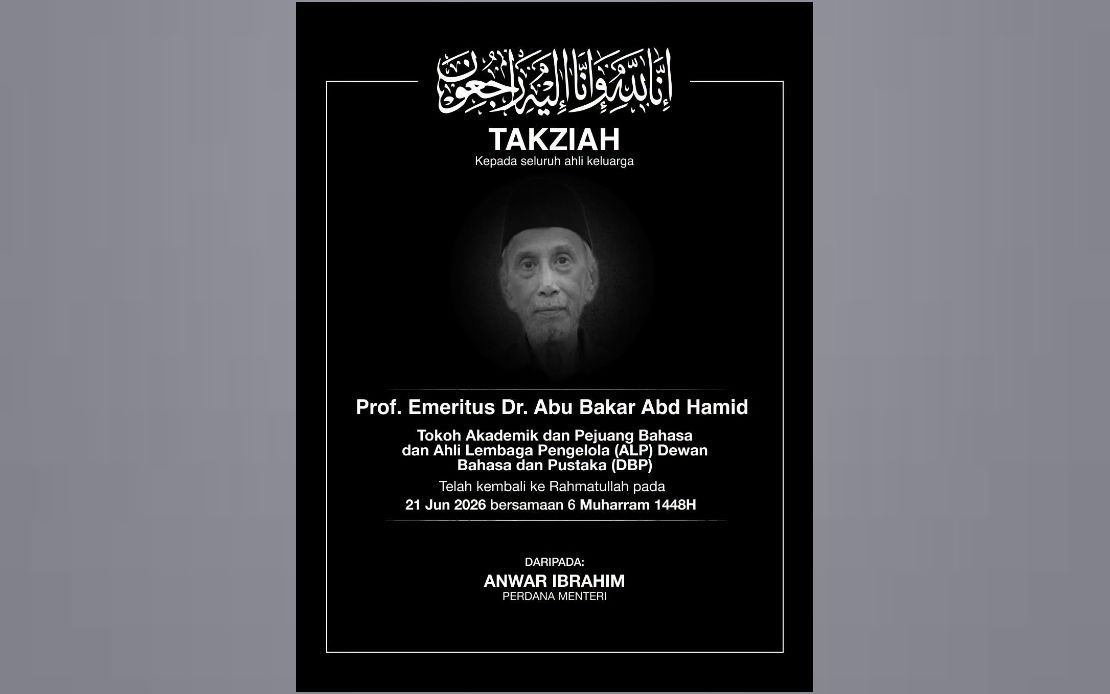
Prime Minister Datuk Seri Anwar Ibrahim has shared his deep sorrow following the death of Professor Emeritus Datuk Abu Bakar Abd Hamid, a commanding presence in Malaysian academic and literary circles whose influence shaped generations of scholars and students. The prominent educator passed away on Sunday, June 21, after experiencing sudden respiratory distress at his Petaling Jaya residence, leaving behind a legacy spanning decades of scholarly achievement and institutional development.
Anwar's public tribute, shared on his Facebook platform, underscored the personal connection between the Prime Minister and the departed academic. As a former student of Abu Bakar, Anwar reflected on the profound impact the professor exerted not merely as an instructor but as an intellectual mentor whose passion for knowledge creation and dissemination inspired all who encountered him. This student-teacher relationship illuminates the intergenerational influence Abu Bakar wielded across Malaysia's educational landscape, with his contributions resonating through the career trajectories of prominent figures including the nation's current leadership.
Born in Johor, Abu Bakar carved a distinguished career as a foundational figure in Malay literary studies, earning recognition as one of the field's most respected voices. His scholarly work and institutional advocacy positioned him at the intersection of Malaysia's cultural and academic development during formative decades. The professor's contributions to literary discourse extended beyond the classroom, shaping how successive cohorts engaged with Malay language, literature, and cultural expression within formal academic settings.
Among his most consequential professional roles, Abu Bakar served as joint secretary of the committee instrumental in establishing Universiti Kebangsaan Malaysia (UKM) in 1968, placing him directly at the genesis of one of the country's premier public universities. This foundational work represented more than administrative involvement; it reflected his commitment to expanding higher education access and building institutions dedicated to advancing Malaysian knowledge systems. Later, his appointment as deputy vice-chancellor of Universiti Malaya from 1987 demonstrated sustained institutional leadership during a period of significant educational expansion and curriculum development.
During his tenure as chairman of the Board of Governors of Bernama (Pertubuhan Berita Nasional Malaysia) from 1996 to 2000, Abu Bakar brought his scholarly sensibilities to the nation's premier news agency, influencing editorial standards and institutional direction during the latter stages of the 20th century. This role positioned him as a custodian of media integrity and information dissemination during a consequential period in Malaysian journalism and public communication. His presence across multiple institutional spheres underscored his reputation as a trusted figure capable of navigating both academic rigor and organizational leadership.
Throughout his extensive career, Abu Bakar accumulated numerous accolades acknowledging his intellectual contributions and institutional service. These honours reflected both domestic recognition and the esteem in which his peers held his scholarly output and professional conduct. For colleagues and students across multiple universities and organizations, such recognition validated the significance of his work and validated their own professional connections to him.
The Prime Minister's statement reflected not only official condolence but genuine personal bereavement. Anwar's invocation of Islamic remembrance—requesting Allah's forgiveness and peaceful rest for Abu Bakar's soul—situated the tribute within Malaysia's cultural and spiritual framework. This language choice underscored the Minister's respect for the deceased and reinforced shared values across Malaysia's diverse academic and political communities.
Abu Bakar's passing represents a meaningful loss for Malaysian intellectual life at a moment when the country continues grappling with questions about higher education quality, literary preservation, and the transmission of cultural knowledge to younger generations. His institutional legacy—particularly his role in establishing UKM—continues influencing Malaysian academia, while his literary scholarship remains foundational to Malay studies curricula nationwide. The absence of such figures inevitably prompts institutional reflection on succession planning and the cultivation of emerging scholars capable of sustaining academic standards and cultural engagement.
Following his death on June 21 at approximately 10:30 pm, Abu Bakar was laid to rest at Bukit Kiara Muslim Cemetery on Monday, completing final respects within the Islamic tradition. His funeral rites drew recognition from academic and political quarters, acknowledging the breadth of constituencies touched by his contributions. The gathering of colleagues, former students, and institutional leaders at his burial ceremony testified to the expansive networks he had cultivated across Malaysia's professional landscape.
For Southeast Asian observers of Malaysian intellectual development, Abu Bakar's career trajectory illustrates the historical importance of individual scholars in building national institutions and establishing academic fields during periods of rapid expansion and social transformation. His simultaneous engagement with university administration, literary scholarship, and governance responsibilities exemplifies the multifaceted expectations placed on leading intellectuals during Malaysia's post-independence development. As the region continues investing in higher education and cultural institutions, Abu Bakar's institutional legacy offers instructive lessons about the long-term consequences of early decision-making in establishing premier universities and establishing scholarly standards.