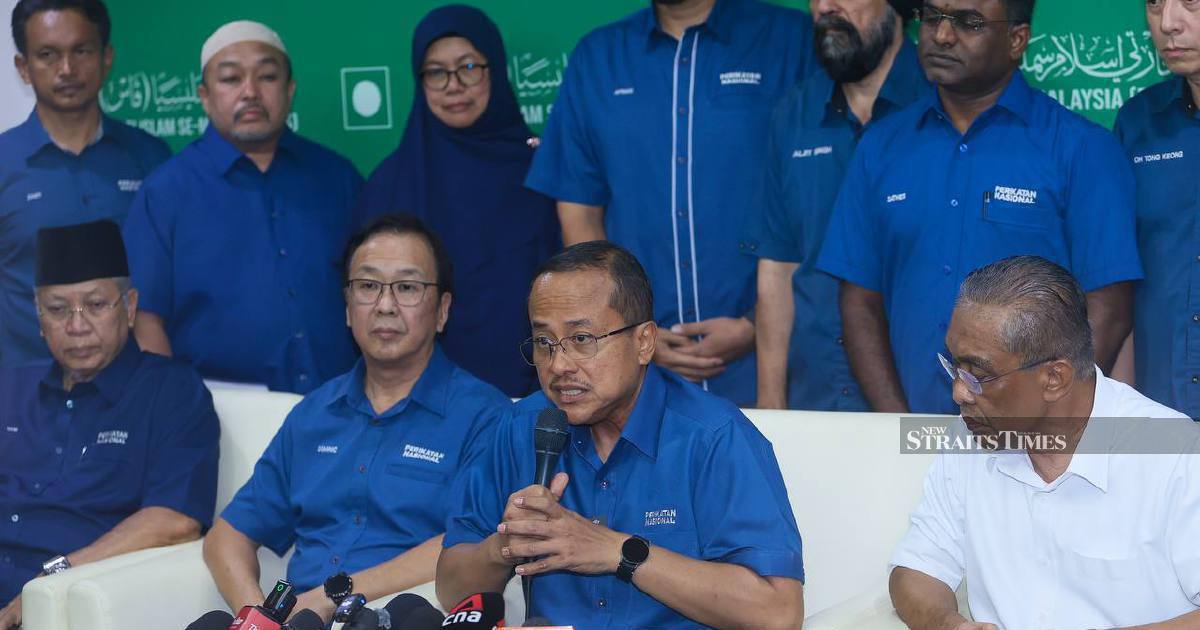
Perikatan Nasional has expanded its coalition umbrella by formally welcoming two additional political parties into the bloc, marking a strategic move to broaden its electoral and political reach across Malaysia. The decision was announced late on Sunday evening by PN chairman Datuk Seri Dr Ahmad Samsuri Mokhtar following an extraordinary session of the coalition's Supreme Council in Kuala Lumpur. While the expansion signals an attempt to consolidate opposition forces and strengthen PN's position ahead of future electoral contests, it also underscores the coalition's ability to add partners despite ongoing internal disagreements that continue to complicate the bloc's cohesion and organisational clarity.
The acceptance of these two parties represents a calculated expansion strategy for PN, which has been working to solidify its presence in Malaysian politics since its formation. By opening its doors to additional members, the coalition aims to extend its influence beyond its core component parties—currently comprising Bersatu, PAS, and several other significant political organisations. This approach reflects a broader pattern among opposition coalitions to accumulate electoral firepower, particularly as the nation approaches an uncertain political landscape where coalition strength can significantly influence parliamentary mathematics and government formation prospects.
However, the expansion effort reveals deep fissures within PN's internal management. Most notably, Samsuri explicitly confirmed that the Supreme Council meeting deliberately avoided discussing the contentious matter of Wawasan Rakyat's status within the coalition. This omission is significant given previous tensions surrounding the party's position and the conditions under which it operates within the broader PN framework. The decision to shelve this discussion suggests either a pragmatic political calculation to prevent further conflict or an acknowledgement that consensus on this particular issue remains elusive among the coalition's senior leadership.
The unresolved Wawasan Rakyat question represents more than a minor administrative oversight. It touches on fundamental questions about membership criteria, party autonomy, and decision-making authority within the coalition. Wawasan Rakyat's status has been a source of friction, with disputes potentially revolving around the nature of its affiliation, its organisational independence, or the degree of control that PN's central leadership exercises over its operations. By deferring this discussion, PN's leadership appears to be prioritising the momentum of accepting new members over resolving these deeper structural tensions.
Equally troublesome is the apparent decision not to address the logo issue during the Supreme Council session. The logo controversy carries both symbolic and practical weight, as it relates to PN's official brand, identity, and the visual representation of the coalition in electoral contests and public communications. Logo disputes often mask underlying disagreements about dominance, representation, and recognition within a coalition. The refusal to tackle this matter suggests that consensus-building on this specific point either requires further negotiation or that addressing it would have derailed the positive momentum generated by the new party admissions.
For Malaysian political observers, these omissions are revealing. They demonstrate that PN, despite projecting unity on matters of party recruitment and coalition expansion, remains internally fractured on several key governance questions. The simultaneous advancement on one front—welcoming new members—while retreating on others indicates selective consensus-building rather than comprehensive coalition cohesion. This pattern raises questions about PN's capacity to function as a unified political force, particularly when confronted with complex governance decisions that require genuine agreement among its components.
The timing of the emergency meeting itself warrants attention. Supreme Council sessions convened on short notice typically indicate either urgent developments requiring immediate attention or strategic moves designed to advance specific agendas before opposition can crystallise. In this case, the decision to accept two new parties through an emergency procedure suggests that PN's leadership saw window of opportunity worth seizing, though the simultaneous decision to postpone other contentious matters indicates they remained cognisant of internal sensitivities.
From a regional Southeast Asian perspective, PN's expansion strategy reflects broader patterns observed in opposition coalitions across the region, where attempts to aggregate political forces often coexist with unresolved internal tensions. The Malaysian case demonstrates how coalition politics involves constant negotiation between the imperative of unity against a common opponent and the reality of deep disagreements about internal power distribution, resource allocation, and strategic direction.
Looking forward, the unresolved Wawasan Rakyat and logo questions will likely resurface, potentially with greater urgency and emotional investment as deadlines approach or as these issues become catalysts for broader coalition tensions. The Supreme Council's approach—advancing on some fronts while deferring on others—represents a pragmatic short-term strategy but may store up problems for the medium term. Future coalition effectiveness will depend significantly on whether PN's leadership can translate the momentum from accepting new members into successful resolution of these lingering disputes.
For Malaysian stakeholders monitoring PN's evolution, the expansion announcement should be interpreted within this fuller context. While the acceptance of two new parties demonstrates growth and outreach capacity, the deliberate avoidance of Wawasan Rakyat and logo discussions reveals boundaries of that unity. Understanding where PN leadership draws lines on which issues warrant confrontation—and which should be deferred—provides crucial insight into the coalition's actual operational dynamics beneath its public facade of consensus and strategic direction.