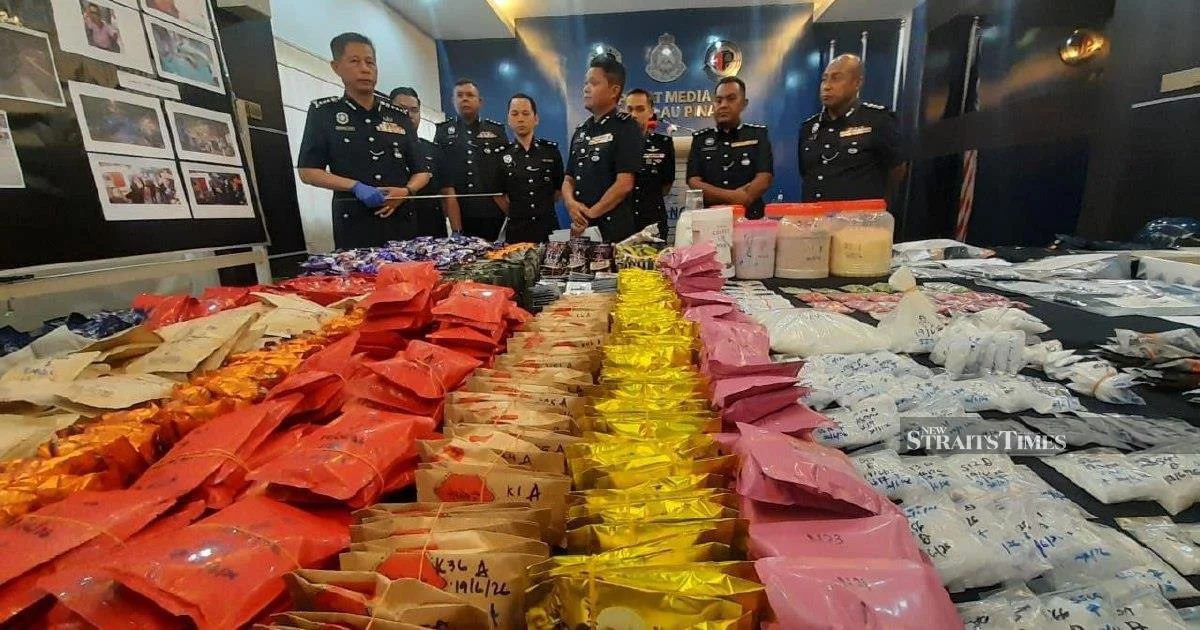
In a significant breakthrough against organised drug trafficking, Penang police have arrested a couple suspected of operating a major narcotics processing and distribution hub from within a residential condominium in Butterworth. The operation, which came to light following a coordinated investigation, resulted in the seizure of controlled substances valued at RM9.7 million—a substantial haul that underscores the scale of illicit drug manufacturing and distribution networks operating in the northern corridor of Peninsular Malaysia.
The arrests mark a notable achievement in the ongoing regional campaign to dismantle high-level drug operations that supply markets throughout Peninsular Malaysia and beyond. Law enforcement agencies have increasingly focused on dismantling the infrastructure that supports large-scale production and distribution of narcotics, recognising that apprehending individual street-level dealers addresses only the symptoms of the problem. By targeting processing facilities and distribution networks, authorities aim to strike at the organisational backbone of trafficking operations that funnel substances into communities across Selangor, Kuala Lumpur, and surrounding states.
The decision to operate from a condominium in Butterworth reflects a common pattern observed in recent years, where traffickers exploit residential spaces to conduct illicit manufacturing and storage activities. Condominiums offer distinct advantages for such operations: they provide civilian cover, multiple entry and exit points, and a degree of anonymity that stand-alone properties or commercial spaces may not afford. The apparent normalcy of condominium activity makes illicit operations less conspicuous to neighbours and more difficult for routine patrols to detect without specific intelligence.
The RM9.7 million valuation represents the street value of the seized materials, reflecting what these substances would command in retail distribution markets. This figure illustrates the extraordinary profitability of drug trafficking and explains the persistent appeal of such enterprises despite elevated legal penalties. Even accounting for losses to law enforcement, the economics of large-scale production remain compelling for organised syndicates capable of securing reliable supply chains and managing distribution networks across multiple states.
The involvement of a romantic couple in this operation adds a social dimension worth examining. Relationship-based criminal partnerships are common in drug trafficking, as romantic bonds create trust networks essential for managing sensitive operations. Authorities note that couples operating together often demonstrate greater operational security and longevity than loosely affiliated criminal associates. The fact that these individuals were identified and apprehended suggests intelligence gathering, informant networks, or observable operational security failures that prompted police investigation.
George Town and surrounding areas have emerged as focal points in Penang's ongoing struggle with organised drug trafficking. The state's geographic position—strategically situated on the west coast of Peninsular Malaysia with port facilities and proximity to Thailand—makes it both a destination for imported narcotics and a transshipment point for drugs destined for Kuala Lumpur and southern markets. Criminal organisations exploit these geographic advantages, establishing processing and distribution nodes throughout urban Penang.
The police operation demonstrates sustained investment in intelligence and surveillance capabilities necessary for identifying and dismantling mid-to-high-level trafficking networks. Such operations typically require weeks or months of undercover monitoring, warrant acquisition, coordination across multiple police units, and careful timing to maximise the likelihood of apprehending suspects during possession of contraband. The successful execution suggests robust coordination between Penang police narcotics divisions and potentially federal agencies tasked with combating organised crime.
For Malaysian policymakers and law enforcement officials, this seizure illustrates both the persistence of trafficking networks and the capacity of police to disrupt their operations. However, the emergence of new operations filling vacuums left by dismantled networks remains a challenge. Each successful bust represents a temporary disruption rather than lasting suppression of drug trafficking, given the sustained demand for narcotics within Malaysia and the profitability driving supply.
The seizure also highlights the evolving sophistication of manufacturing operations within Malaysia. Rather than relying entirely on imported finished products, larger criminal organisations increasingly establish processing facilities capable of converting precursor chemicals into marketable substances. This shift reflects both tighter border controls and the economics of value addition—importing bulk chemicals and manufacturing finished products generates substantially greater profit margins than importing finished drugs.
The case underscores ongoing vulnerabilities in residential security and the challenge confronting property management companies and condominium associations in preventing criminal misuse of their premises. Building management, residents, and authorities share responsibility for identifying suspicious activity, maintaining physical security protocols, and reporting concerns to police.
As Penang authorities continue their anti-trafficking efforts, this operation will likely inform broader strategy discussions regarding intelligence gathering, surveillance of high-risk residential areas, and cooperation with international law enforcement partners monitoring precursor chemical flows. The investigation into the couple's operations will probably reveal supplier networks, distribution channels, and customer bases that may lead to additional arrests and further dismantling of trafficking infrastructure.