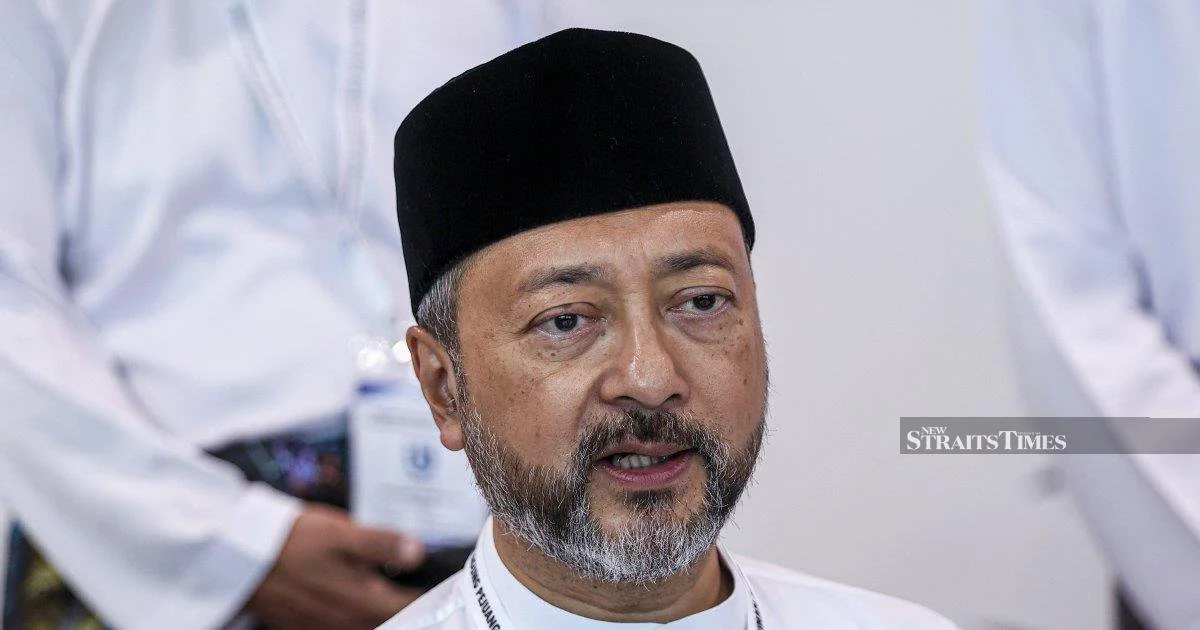
Parti Pejuang Tanah Air has formally joined Perikatan Nasional, a development that party president Datuk Seri Mukhriz Mahathir characterises as an opening move in a larger initiative to consolidate Malaysia's fractured political landscape and respond to escalating domestic pressures. The merger represents a significant realignment in the opposition bloc, bringing together parties that have long operated in parallel or sometimes competing political trajectories.
Mukhriz's framing of the move as merely the initial phase of a broader unification agenda carries considerable weight in Malaysian political circles. His assessment suggests that Pejuang's integration serves as a foundation upon which additional coalition-building efforts may be constructed. The statement indicates forward momentum rather than a completed process, signalling to observers that further political consolidations could materialise in coming months.
Peikatan Nasional, which already comprises PAS, Bersatu, and other constituent parties, gains additional parliamentary representation and organisational capacity through Pejuang's accession. This expansion potentially strengthens the coalition's negotiating position in any future government formation scenarios. The influx of Pejuang's membership also diversifies the bloc's appeal across different demographic and geographic constituencies, extending its reach beyond traditional strongholds.
For Pejuang itself, the move represents a strategic recalibration after several years of operating as an independent entity. Founded in 2020 as a vehicle for Mahathir's political projects, the party had maintained its autonomy while attempting to influence broader political dynamics. Joining Perikatan Nasional indicates a recognition that individual parties increasingly struggle to exercise meaningful influence without coalition backing in Malaysia's contemporary political environment.
The timing of this merger is not inconsequential. Malaysia faces mounting economic headwinds, including inflation pressures, currency fluctuations, and fiscal constraints that demand coordinated policy responses. Educational disparities, healthcare accessibility, and infrastructure deficiencies persist across regions, particularly in rural areas. By unifying under Perikatan Nasional's umbrella, opposition parties can potentially present more coherent alternative policy platforms than they could while fragmented.
Mukhriz's emphasis on addressing national challenges reflects growing public expectations that political leaders transcend purely partisan calculations. Malaysian voters increasingly expect coalitions to articulate substantive governance agendas rather than merely accumulating seats for numerical advantage. The invocation of shared purpose in tackling national problems serves to legitimise the merger within this context of public sentiment.
The Perikatan Nasional coalition now encompasses diverse ideological perspectives and regional interests. PAS brings Islamic governance expertise and strong rural networks, Bersatu maintains significant bureaucratic connections, and now Pejuang introduces additional metropolitan and reform-minded constituencies. This heterogeneity presents both advantages and potential friction points. Successful coalition management requires establishing clear protocols for resolving policy disagreements and managing internal tensions.
From a Southeast Asian perspective, Malaysian political consolidations carry implications beyond national borders. Stable, clearly defined political coalitions enable more predictable foreign policy positioning and regional engagement. Thailand, Indonesia, Singapore, and other neighbours benefit from Malaysian leadership that operates from positions of consolidated domestic support rather than constant shifting alignments. This consideration adds strategic weight to unity efforts among opposition parties.
The Malaysian electorate's fragmentation across multiple political organisations has created governance challenges regardless of which coalition holds executive power. A federal government, state administrations, and local councils may operate under competing political managements, complicating policy implementation and budget allocation. Stronger coalitions theoretically reduce such fragmentation and enable more coordinated governance across administrative levels.
Mukhriz's characterisation merits scrutiny regarding what additional unity measures might follow. Opposition figures have periodically attempted grand coalitions spanning PAS, Perikatan Nasional, Pakatan Harapan, and various independents, generally with limited success. Whether Pejuang's integration signals the beginning of yet another attempted grand consolidation or represents a more modest coalition strengthening remains unclear from current statements.
The path toward fuller political unity faces several obstacles. Deep ideological differences persist regarding Islam's role in governance, federalism versus centralisation, and economic management approaches. Competition for electoral candidacies between coalition members threatens internal stability. Personality-driven conflicts among senior leaders historically derail Malaysian coalition efforts. These structural challenges will test whether unity rhetoric translates into sustained organisational cohesion.
Observers should monitor whether this entry precipitates comparable moves by other politically unaffiliated entities or splinter groups. If additional parties follow Pejuang's example, the Malaysian opposition landscape could experience substantial reconfiguration over the next electoral cycle. Conversely, if Pejuang's move proves isolated, it may reflect pragmatic party leadership decisions rather than broader trends toward coalition consolidation.