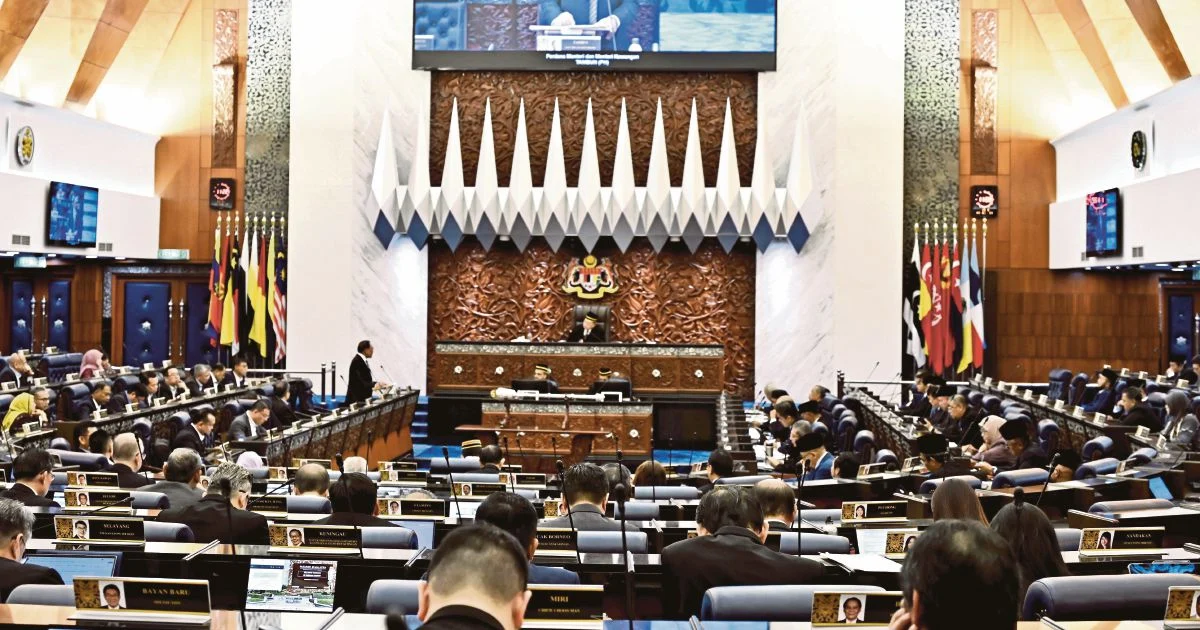
Parliament became a flashpoint for simmering tensions within Malaysia's political landscape as the Dewan Rakyat quickly descended into heated exchanges moments after convening today. The confrontation, pitting opposition legislator Takiyuddin against a government-aligned MP, exposed deeper fractures within the governing coalition and underscored the volatile nature of current parliamentary dynamics.
The dispute originated from disagreements surrounding the status and recognition of the opposition leader, a procedural matter that ordinarily might be resolved through formal channels. Instead, it spiralled into personal accusations and pointed rhetoric, with both camps trading accusations that went well beyond the initial procedural disagreement. The rapid escalation reflected the brittle state of relations between coalition partners and between government and opposition blocs.
Takiyuddin's intervention into the debate highlighted longstanding grievances within the opposition camp regarding what he characterized as bullying behaviour by larger coalition partners, particularly between PAS and Bersatu. These intra-coalition tensions have periodically boiled over in public, revealing cracks in what was supposed to be a unified political force. The accusation carries weight given the complex history of these parties' relationship, which has oscillated between cooperation and competitive positioning.
The government MP's counter-arguments attempted to defend the coalition's record and deflect criticism, but the intensity of the exchange suggested that merely brushing aside such allegations would prove increasingly difficult. This parliamentary moment reflected a broader pattern whereby procedural debates frequently become vehicles for airing fundamental political disagreements and coalition frustrations that might otherwise remain unspoken.
For Malaysian observers and political analysts, such displays raise important questions about the durability of the current governing arrangement. Coalition governments depend significantly on maintaining public unity even when private disagreements exist. When tensions spill into parliamentary proceedings broadcast live to the public, they inevitably undermine confidence in the government's stability and cohesion. This dynamic becomes especially consequential in a political environment where switching loyalties remains commonplace.
The involvement of PAS and Bersatu in the dispute adds particular significance for regional politics. Both parties carry considerable influence within their respective constituencies and within the broader Southeast Asian Islamic political landscape. Their relationship fundamentally shapes Malaysian governance, and public signs of strain invite speculation about possible realignments that could alter the political configuration considerably.
The PAS-Bersatu relationship itself deserves careful examination. These partners occupy somewhat overlapping political space, with both parties claiming Islamist credentials and competing for similar voter bases in certain constituencies. This inherent competition, combined with the power dynamics of coalition governance, creates structural incentives for conflict even when party leadership wishes to maintain unity. Public accusations of bullying suggest that managing these tensions through behind-closed-doors negotiations has reached its limits.
Parliamentary disruptions, while commonplace in legislatures worldwide, carry particular weight in Malaysian contexts given the country's political history. Dramatic exchanges in the Dewan Rakyat often foreshadow broader political realignments or serve as pressure releases for tensions that might otherwise accumulate beneath the surface. The early eruption in today's sitting suggests that multiple actors within parliament harbour frustrations they are eager to articulate publicly.
The government's challenge in such moments involves simultaneously defending its record, maintaining coalition discipline, and avoiding the appearance of suppressing legitimate parliamentary debate. Heated exchanges, when they occur, test the institutional strength of parliament itself. A legislature unable to manage passionate disagreement risks losing credibility, yet one that appears unable to accommodate genuine debate similarly suffers reputational damage.
Looking forward, today's confrontation may influence how lawmakers approach subsequent business. If tensions continue to escalate, government whips will face increasing difficulty maintaining order and ensuring the passage of government business. Conversely, if cooler heads prevail and participants choose to moderate their rhetoric, it could signal renewed commitment to institutional norms despite underlying political differences.
The timing of this exchange—occurring within the first hour of parliament's sitting—also matters strategically. Early disruptions set the tone for subsequent proceedings and suggest that contentious issues remain unresolved. It signals to observers both within and outside parliament that business-as-usual governance faces significant headwinds from multiple directions.
For regional observers watching Malaysian politics, such incidents provide windows into deeper structural vulnerabilities within Southeast Asia's democracies. Governance challenges in larger countries like Malaysia inevitably influence regional political dynamics and investor confidence. Demonstrations of institutional strain, even when managed and resolved, contribute to perceptions of political risk that affect economic and diplomatic calculations throughout the region.