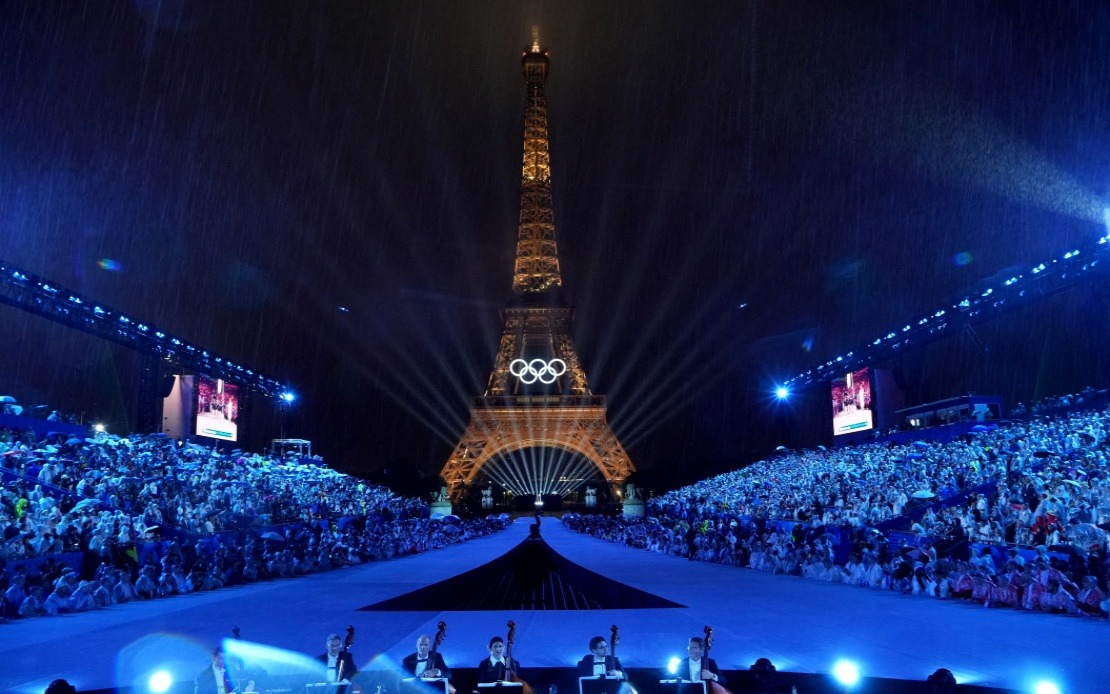
Iconic Paris landmarks are taking unprecedented measures to protect visitors and workers as France grapples with a severe heatwave that has enveloped much of the country. The Eiffel Tower, one of the world's most visited monuments, shut its doors at 4.00 pm local time on Tuesday instead of operating into the evening, with final entry halted at 12.15 pm. This exceptional closure reflects the extraordinary conditions sweeping the French capital, where temperatures climbed to 36 degrees Celsius by mid-afternoon on Tuesday alone.
Management of the Eiffel Tower, operated by Sete (Societe d'Exploitation de la tour Eiffel), stated that the decision prioritised the wellbeing of both visitors and staff members navigating the monument's confined spaces and crowded elevators during dangerously hot conditions. The organisation made clear that adapting operations to extreme weather represented a necessary safety measure rather than a discretionary closure. Guests who held reservations for time slots commencing at 11.30 am for staircase access or 12.00 pm for lift access will automatically receive full refunds without requiring manual claims.
The heat emergency extends beyond Paris's most celebrated structure. The Louvre Museum, home to the Mona Lisa and countless masterpieces attracting millions annually, announced it would curtail operations from 4.00 pm instead of the standard 6.00 pm closing time across four consecutive days from June 24 through June 27. This adjustment across major cultural institutions signals the severity of conditions affecting France's urban centres and the difficult choices facing venue operators balancing public access with health imperatives.
France's national meteorological agency, Meteo-France, forecasted that the heatwave would persist through at least Thursday, maintaining temperatures well above comfortable levels throughout the week. Wednesday's outlook proved particularly concerning, with predictions suggesting the Paris region would experience highs approaching 38 degrees Celsius—dangerously warm even by Mediterranean summer standards. Such sustained heat creates genuine risk for vulnerable populations, outdoor workers, and visitors spending extended periods in crowded indoor spaces with limited ventilation or cooling capacity.
The geographic scope of the crisis underscores its national significance. Meteo-France placed 54 departments across mainland France under red alert status on Tuesday, representing the highest alert classification in the nation's warning system. An additional 35 departments received orange alert designations, affecting substantially more of the population. This distribution demonstrates that the phenomenon affects not merely Paris and its immediate surroundings but stretches across the entire country, from coastal regions to inland areas.
For Malaysian and Southeast Asian observers, the French experience carries particular relevance given regional climate patterns and tourism implications. Southeast Asian visitors planning trips to Europe during summer months must understand that extreme heat closures now represent a realistic possibility for major attractions. The decision by French authorities to prioritise safety over revenue indicates a shifting institutional approach to climate-related emergencies that may influence visitor planning and travel insurance considerations across the region.
The Eiffel Tower and Louvre closures also highlight infrastructure vulnerabilities in heritage sites designed during cooler historical periods. Many European monuments lack modern air conditioning systems, making them genuinely dangerous during extreme heat events. Visitors ascending the Eiffel Tower's stairs or queuing in the Louvre's galleries face genuinely hazardous conditions when outdoor temperatures exceed 35 degrees Celsius, particularly for elderly visitors or those with underlying health conditions.
Beyond individual attractions, the heatwave creates broader economic implications for France's tourism sector. Summer represents peak season, and heat-related closures disrupt travel plans, accommodation bookings, and support services throughout Paris. Hotels, restaurants, and transportation networks face simultaneous surges in demand as visitors seek shelter and cooling, creating operational strain across the hospitality industry.
The French government's alert system, which escalated to maximum red status across more than half the country, activates coordinated responses including heat centres, extended cooling facility hours, and public health messaging. Authorities recognise that sustained heat above 35 degrees Celsius represents a genuine public health emergency, particularly in urban environments where concrete and asphalt intensify ambient temperatures further.
Looking forward, these closures exemplify how climate variability increasingly forces cultural institutions to make uncomfortable operational decisions. Future summer seasons may see similar patterns become routine rather than exceptional, prompting longer-term discussions about infrastructure adaptation, operational flexibility, and the balance between public access and visitor safety. For Southeast Asian regions experiencing tropical climates year-round, such temperature thresholds remain familiar, yet the disruption they cause to European summer tourism highlights how climate conditions outside historical norms create genuine challenges regardless of geographic location.

