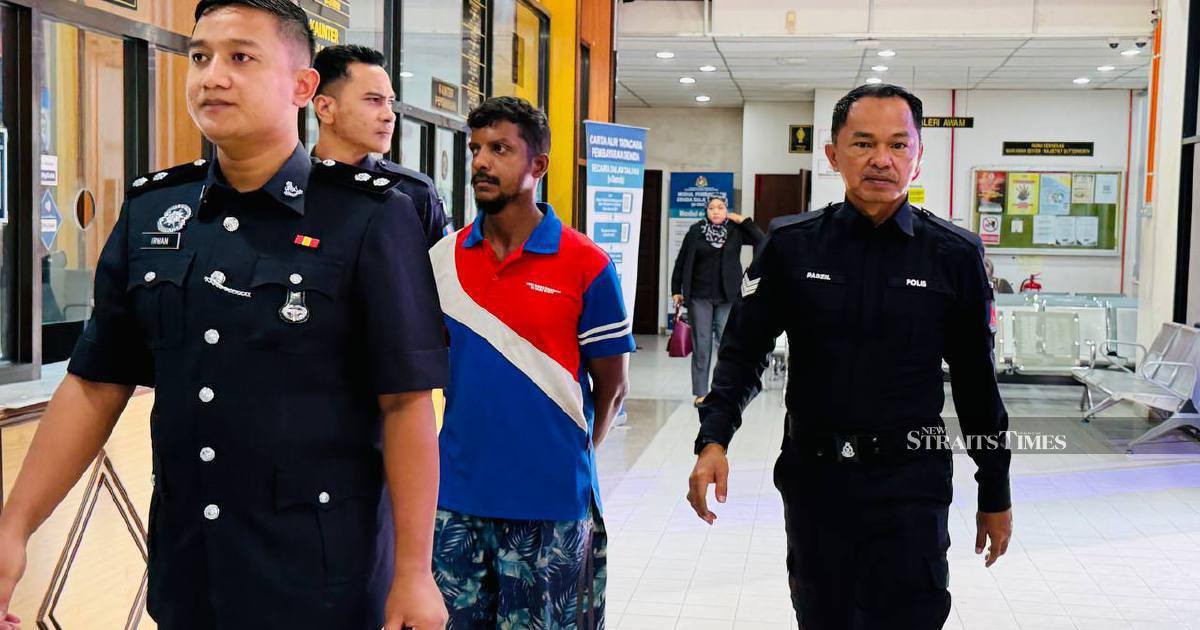
A Myanmar national made his appearance at Butterworth Sessions Court today facing charges related to a serious assault on a fellow countryman that occurred over the past week. The case highlights the continuing involvement of migrant workers in violent crime across Malaysian courts, particularly in the northern states where large cross-border populations reside.
The Sessions Court proceedings took place in Butterworth, the principal court jurisdiction serving Penang's commercial and judicial affairs. Legal proceedings against the accused proceeded on the grievous hurt charge, one of Malaysia's more serious personal violence offences under the Penal Code, defined as injuries inflicting severe bodily damage that interfere substantially with health or comfort.
Most significantly, the magistrate presiding over the case exercised discretionary authority to refuse bail pending the accused's submission of proper identification credentials. This decision reflects heightened judicial caution regarding non-citizen defendants, who may present elevated flight risks or whose identity cannot be readily verified through standard Malaysian identification systems. The bail condition directly obstructs the defendant's release until he supplies documentation confirming his identity and nationality status.
Myanmar nationals constitute one of Malaysia's largest migrant communities, with hundreds of thousands working across construction, manufacturing, domestic service, and agricultural sectors, particularly concentrated in Penang, Selangor, and Johor. This demographic reality inevitably intersects with Malaysia's criminal justice system, though most Myanmar migrants remain law-abiding residents. However, incidents involving inter-community violence among foreign nationals periodically surface in court records, occasionally reflecting tensions, disputes over labour arrangements, or accommodation conflicts that escalate into physical confrontation.
The grievous hurt charge itself represents a significant criminal classification. Unlike simple hurt charges, which impose lighter penalties, grievous hurt convictions carry sentencing provisions reaching up to two years imprisonment, substantial fines, or both, depending on circumstances and culpability established during trial. The severity reflects Malaysian law's assessment of the injury severity involved and societal interests in deterring serious interpersonal violence.
Identification procedures for foreign nationals in Malaysia's courts have become increasingly standardised following incidents of immigration fraud and false documentation. Requesting verified identity documents before considering bail serves multiple protective functions: confirming the defendant's true identity, ensuring consistency with immigration records, and establishing contact information for legal proceedings. Without proper identification, courts cannot reliably enforce bail conditions or locate the defendant if flight occurs.
The decision to withhold bail also influences bail court practice across Malaysia's sessions courts, where judicial officers balance public safety, defendant rights, and practical constraints. While bail denial pending document submission is not uncommon for non-citizens, it effectively restricts the accused's freedom during the pre-trial phase. For migrant workers, this creates logistical complications, requiring coordination with employers, family members, or Myanmar consular officials to obtain necessary documentation.
Myanmar consular representation in Malaysia operates through its embassy in Kuala Lumpur and honorary consulates in several states. However, assistance procedures for detained nationals sometimes prove slow, particularly when identifying documents require authentication from Myanmar authorities or when COVID-related document processing delays persist in diplomatic channels. This procedural friction occasionally extends pre-trial detention periods unnecessarily.
The background context of this incident—occurring last week—indicates a relatively recent occurrence brought swiftly through preliminary investigation and charging processes. This timeline suggests sufficient evidence gathering occurred to proceed with formal charges, though the alleged victim's role in supporting prosecution remains unreported. Whether the injured party cooperated with police investigation or required medical intervention affects case strength considerably.
For Malaysian readers and policymakers, this case exemplifies broader challenges regarding migrant worker integration, community safety, and criminal justice administration. While Malaysia's economy depends substantially on migrant labour, ensuring that foreign nationals are held accountable through proper legal channels while respecting due process protections remains an ongoing tension. The bail refusal decision, while legally defensible, also raises questions about access to justice and the practical barriers non-citizen defendants face navigating Malaysia's legal system.
The forthcoming identification document submission will likely determine bail reconsideration timing. Once verified identification reaches the court, bail applications may be revisited, potentially permitting the accused's release pending trial on conditions such as travel restrictions or bond requirements. The trial itself will require establishing whether the alleged victim sustained injuries meeting the grievous hurt threshold and whether prosecution proves the defendant's culpability beyond reasonable doubt.
This matter now enters Malaysia's ordinary trial procedures, with potential duration extending several months depending on investigation depth, defence complexity, and court scheduling. The outcome will contribute incrementally to case law regarding grievous hurt prosecutions and bail procedures affecting foreign nationals—legal precedents quietly shaping how Malaysian courts administer justice across its increasingly multicultural population.