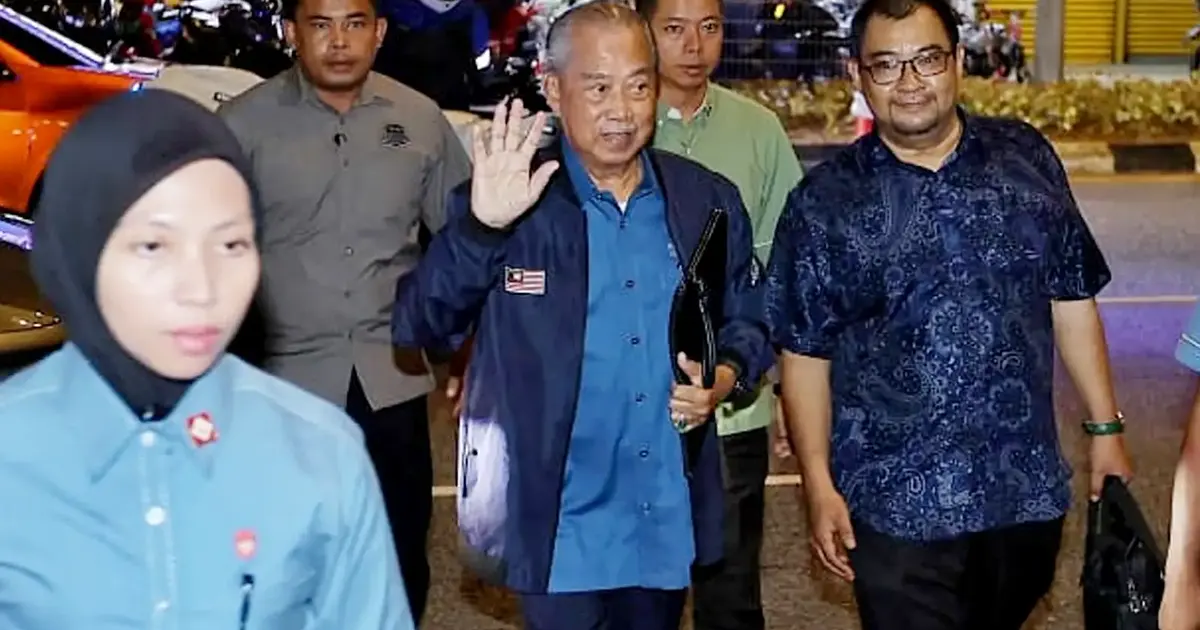
Tan Sri Muhyiddin Yassin, chairman of the Perikatan Nasional coalition, has called an urgent assembly of senior party figures to confront a deepening crisis within the increasingly fragile political alliance. The hastily arranged meeting brings together the party leadership in response to a shock announcement that has thrown the stability of the entire coalition into question and sparked concerns about its ability to present a united front in Malaysian politics.
The immediate catalyst for the emergency session centres on Bersatu's precarious position within the Perikatan Nasional framework following PAS's dramatic decision to withdraw from the partnership. This development represents a significant blow to coalition cohesion at a particularly sensitive moment when political alliances remain under intense scrutiny and pressure from competing power blocs at both federal and state levels. The severance of ties by PAS, one of the coalition's major components, signals deepening fissures that threaten the viability of Perikatan Nasional as a functioning electoral and parliamentary machine.
Bersatu, the party founded by Muhyiddin himself and formerly part of the broader Malay-Muslim political establishment before joining Perikatan Nasional, now faces uncertain prospects within the coalition structure. The party's standing depends significantly on the outcome of tonight's discussions and whether remaining coalition partners can forge consensus on its continued participation. Questions loom about Bersatu's ability to maintain political relevance and bargaining power if it loses coalition partners, particularly a heavyweight like PAS.
The timing of this emergency convocation reflects the high stakes involved in maintaining coalition discipline and coherence. For Malaysian politics, the health of Perikatan Nasional carries broader implications, as it represents one of the principal vehicles through which Malay-Muslim political interests are aggregated and negotiated. Coalition fragmentation at this juncture could reshape the entire political landscape and influence calculations for future elections and government formation at both state and national levels.
PAS's departure moves raise fundamental questions about the ideological and strategic alignment that bound Perikatan Nasional together. The coalition was conceived as a platform uniting parties across different political traditions—from Bersatu's base in former UMNO ranks to PAS's Islamic political constituency and smaller allies. The erosion of these bonds suggests either fundamental incompatibilities that were papered over during formation, or shifting calculations about where each party's interests lie in Malaysia's evolving political ecosystem.
For Bersatu specifically, the loss of PAS partnership leaves it vulnerable in several dimensions. Electorally, the coalition's combined reach was essential for contesting seats effectively, particularly in states where Malay-Muslim voters constitute decisive constituencies. Institutionally, PAS brought organisational muscle and grassroots networks accumulated over decades. The departure thus represents both a symbolic and practical diminishment of Bersatu's political capacity.
Muhyiddin's convening of this emergency meeting signals his determination to salvage what remains of the coalition structure and prevent further defections. The agenda will likely extend beyond merely discussing Bersatu's status to encompassing broader questions about coalition architecture, the terms under which remaining partners continue cooperation, and what reforms might prevent additional ruptures. How other coalition components—including smaller parties whose interests may not align perfectly with the major players—respond to these developments will be crucial.
The broader political context amplifies the significance of this crisis. Malaysian politics has seen multiple coalition experiments in recent years, many ending in acrimony or structural breakdown. The instability within Perikatan Nasional adds to doubts about whether multi-party coalitions can survive the pressures and temptations of Malaysian political competition, where incentives frequently exist for parties to pursue separate strategies rather than collective ones.
International observers of Southeast Asian politics also watch coalition health carefully, as coalition stability affects governmental effectiveness and policy continuity. When major alliances fragment, governmental capacity to address pressing policy challenges—from economic management to social issues—often suffers due to internal divisions and weakened parliamentary majorities.
The emergency meeting will likely produce formal statements addressing Bersatu's status within the coalition framework, clarifying whether the party retains full membership, faces conditional participation, or occupies some intermediate status. Beyond these immediate outcomes, however, the gathering represents a critical moment for assessing whether Perikatan Nasional possesses the internal cohesion and strategic vision necessary to function as a durable political force, or whether it faces progressive dissolution as partner parties calculate individual advantages over collective ones.
How Muhyiddin and other Perikatan Nasional leaders navigate this particular crisis will significantly influence perceptions of the coalition's viability for upcoming electoral contests and determine the political environment Malaysian voters encounter heading into the next election cycle.