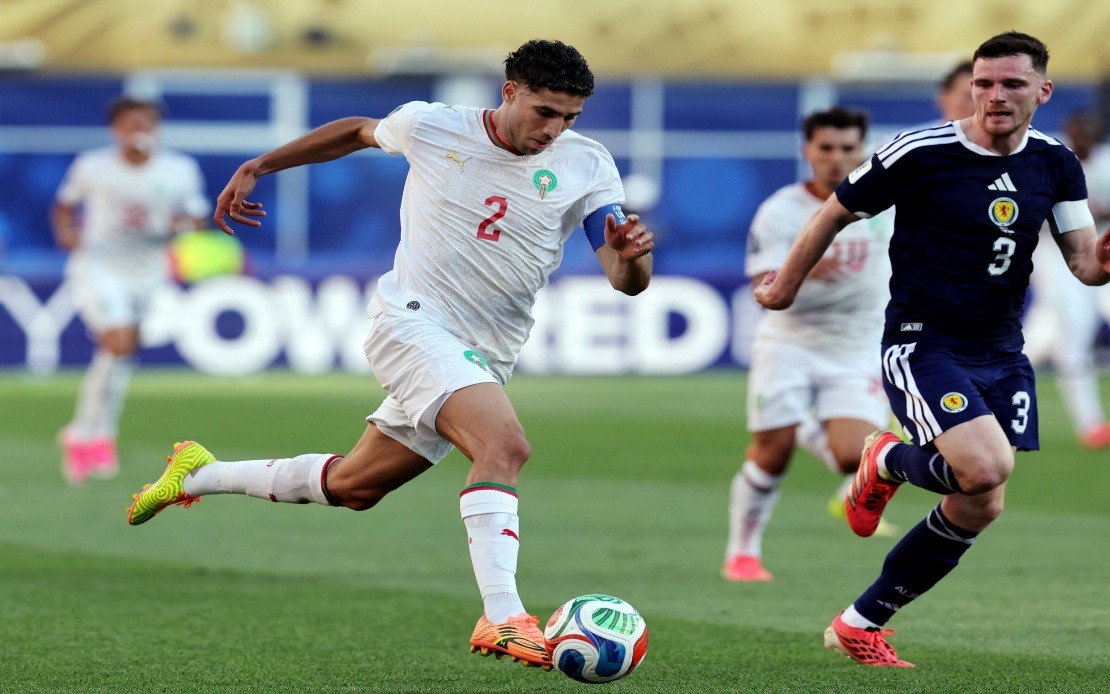
Morocco's tactical preparations received an unexpected complication during Friday's World Cup fixture against Scotland when captain Achraf Hakimi confronted sustained heckling from sections of the crowd at Foxborough in Massachusetts. The Paris Saint-Germain defender endured jeers at the team announcement and again whenever he engaged with the ball throughout the Moroccan team's 1-0 victory. Coach Mohamed Ouahbi, however, moved swiftly to shield his influential player from the controversy, emphasising the squad's collective support and steering conversation toward on-field performance.
The timing of the crowd's hostile reception coincided with a significant legal development in France. A Versailles appeal court had announced that morning that Hakimi must face trial on rape charges involving a 24-year-old woman whose alleged assault occurred at his residence in 2023. The judicial decision effectively elevated the case beyond preliminary investigation stages, marking a critical juncture in legal proceedings that had previously remained somewhat opaque to the general sporting public. Hakimi's legal team had mounted an appeal against an earlier investigative judge's determination, though that appeal ultimately proved unsuccessful.
Outahbi's response reflected a careful balance between acknowledging external pressure and maintaining focus on Morocco's World Cup ambitions. When questioned about the heated atmosphere surrounding his captain, the coach declined to engage with speculation or media narratives surrounding Hakimi's legal situation. Instead, he pivoted the discussion toward the defender's technical qualities and psychological state during competition. This strategic deflection underscores how international football authorities and team management attempt to compartmentalise off-field matters from sporting objectives, though such separation rarely proves entirely effective in practice.
The coach's public backing carries particular weight within the context of football culture in North Africa and the broader Middle East, where team unity and leadership cohesion significantly influence performance outcomes. By positioning himself as an unequivocal supporter, Ouahbi sent clear signals to his playing squad that internal solidarity would supersede external controversy. His observation that Hakimi "was very strong" during the Scotland encounter suggests that the defender's mental resilience withstood considerable psychological strain, a dimension often overlooked in analyses focused purely on legal proceedings.
Hakimi himself had deployed social media to address the judicial announcement, stating that he could finally articulate his perspective following the court's decision. His assertion that "at last, I will be able to speak" hints at previous legal constraints that may have restricted his public statements throughout investigative phases. This distinction between judicial timing and media accessibility reflects how criminal proceedings in France operate differently from common law jurisdictions, potentially limiting defendants' ability to publicly defend themselves during preliminary stages.
Teammates notably abstained from commenting on either the legal matter or the crowd's behaviour, following apparent squad guidance to maintain professional boundaries around Hakimi's situation. This disciplined approach prevented the incident from fragmenting team dynamics or creating secondary controversies that might undermine Morocco's tournament performance. The collective silence, while potentially perceived as evasive, functionally protected the group from becoming entangled in a legal matter that properly belongs outside sporting forums.
For Malaysian and Southeast Asian observers, the situation illuminates broader questions about how international sport navigates allegations involving high-profile athletes. The incident demonstrates that even at football's highest level, legal vulnerability does not automatically translate to removal from competition, though it certainly generates organisational and reputational challenges. The World Cup's status as a four-yearly spectacle means that individual scandals, however serious, rarely derail tournaments, though they inevitably shape public perception of affected players and their national teams.
The crowd's reaction at Foxborough also reflects evolving fan consciousness around athletes' conduct off the pitch. Modern supporters increasingly scrutinise personal behaviour and legal standing of players they follow, a departure from earlier eras when sporting achievement existed in greater isolation from personal matters. This phenomenon has intensified across Asian markets where digital connectivity enables instantaneous information dissemination and global sporting communities form rapidly around contentious issues.
Looking forward, Hakimi's presence on Morocco's squad for remaining World Cup fixtures will likely continue attracting intense scrutiny from both media and stadium audiences. Ouahbi's confidence in his captain's psychological fortitude and playing ability suggests the coach intends to maintain Hakimi's selection despite mounting external pressure. Whether the defender's performance levels remain consistent throughout the tournament, and how international football's governing bodies address the intersection of legal proceedings and competition eligibility, will shape discourse extending well beyond the immediate competition period.