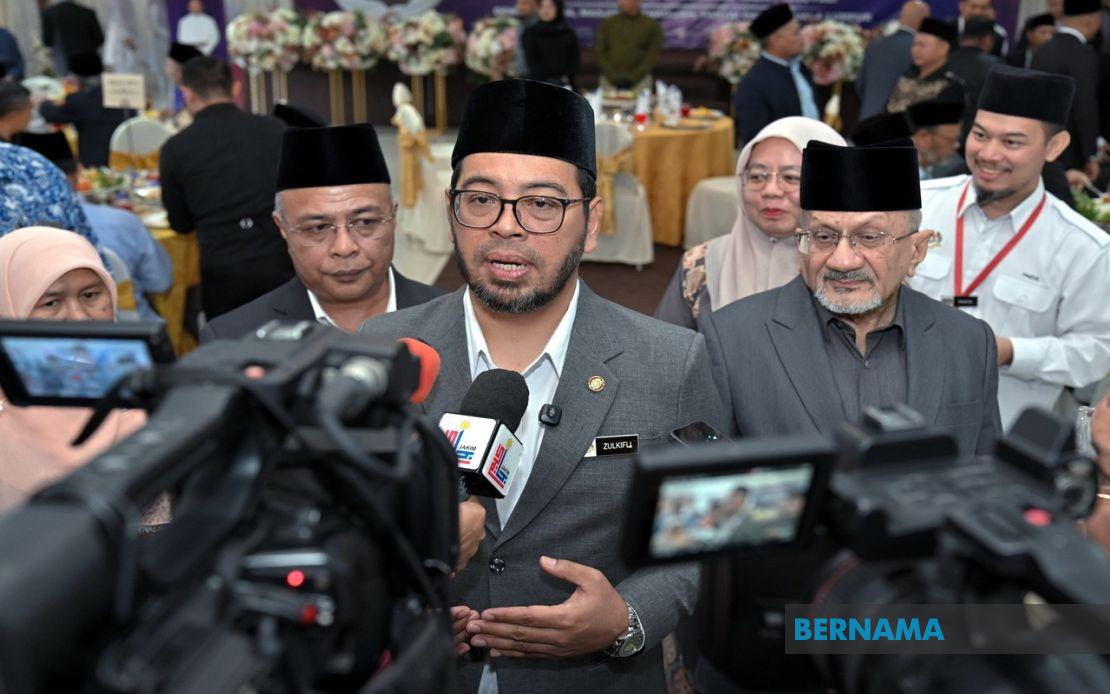
Malaysia's Religious Affairs Minister Dr Zulkifli Hasan has reaffirmed the government's commitment to proceeding with the construction of Masjid Warisan, positioned prominently in front of the Tun Razak Exchange (TRX) development in Kuala Lumpur. Speaking to journalists on June 23, Hasan emphasised that this long-planned initiative represents a deliberate effort to strengthen mosques' function as anchors of social cohesion within urban communities.
The project has become something of a focal point for public discussion following reports that various stakeholders had called for its postponement or cancellation. These critics have voiced concerns that the mosque's construction in such a high-profile location could potentially generate social friction or provoke public dissatisfaction. However, Hasan rejected these objections, characterising the mosque as an integral component of Kuala Lumpur's religious and cultural fabric rather than a source of division.
Hasan's remarks reflect a broader philosophy about the role of religious institutions in modern metropolitan spaces. He drew comparisons to many of the world's major cities, where mosques operate as established features of the urban landscape and the adhan, or Islamic call to prayer, serves as a source of spiritual tranquility for believers and coexists peacefully alongside other communities. This framing positions Masjid Warisan not as an anomaly or provocation, but as a natural extension of Kuala Lumpur's identity as a multicultural capital.
For residents and observers concerned about the project, Hasan directed them to seek clarification from the Federal Territories Islamic Religious Council (MAIWP). This institutional approach suggests that the government believes many objections stem from misunderstanding rather than fundamental opposition, and that dialogue can address legitimate queries about the mosque's construction, operations, and community impact.
The Masjid Warisan initiative sits within a broader government mandate to support Islamic institutions across the Federal Territories. On the same day as his statement, Hasan formally appointed committee members for Federal Territories mosques and Friday prayer surau for the 2026-2029 term during a ceremony at Masjid Al-Khadijah in Kampung Pantai Dalam. This administrative exercise reflected the scale of religious management in the capital, encompassing 91 mosques and 124 Friday prayer surau under the council's purview.
The selection process for these committee positions demonstrates the seriousness with which authorities approach mosque governance. From 3,010 nominations received, only 2,914 candidates ultimately secured appointment following a rigorous integrity vetting procedure. This screening involved multiple government agencies: the Royal Malaysia Police, the Malaysian Anti-Corruption Commission, and the Insolvency Department. Such thoroughness underscores that mosque management in the Federal Territories operates as a professional, regulated responsibility rather than an informal arrangement.
The TRX location itself carries symbolic weight. Tun Razak Exchange represents Malaysia's ambition to establish a modern financial hub comparable to international standards, and positioning a heritage mosque adjacent to this gleaming corporate development speaks to the government's desire to integrate Islamic values and institutional presence within contemporary economic and urban spaces. This deliberate placement challenges the notion that religious and commercial modernity must exist in separation.
From a Malaysian perspective, the Masjid Warisan project reflects ongoing negotiations about urban identity in Kuala Lumpur. As the capital continues rapid development and transformation, questions inevitably arise about preserving cultural and religious character amid globalization. The government appears to view the mosque not as defensive or reactionary, but as a forward-looking assertion that Islamic heritage and practice remain central to Malaysia's self-conception, even as the city modernises.
The project also carries implications for Malaysia's broader positioning on religious tolerance and coexistence. Hasan's confident defence of the mosque's construction, coupled with his invitation for dialogue rather than dismissal of concerns, suggests official confidence that Kuala Lumpur's diverse population can accommodate such developments without social breakdown. This optimism may reflect both genuine interethnic and interfaith relations in the capital and a determination not to allow vocal objectors to derail government religious policy.
For Southeast Asian observers, Malaysia's handling of the Masjid Warisan question offers insights into how Muslim-majority nations balance rapid urbanization with religious institution-building. Unlike some regional counterparts where religious development becomes more politically fraught, Malaysia appears to present this as a straightforward matter of planned urban development and religious provisioning.
The confirmation that construction will proceed as scheduled now shifts attention to implementation details. Questions about construction timelines, final design elements, community engagement during the building phase, and the mosque's eventual operational footprint within the TRX precinct remain subjects for forthcoming elaboration by MAIWP. The council's preparedness to receive inquiries suggests these conversations are anticipated and welcomed by the authorities responsible for the project's realisation.