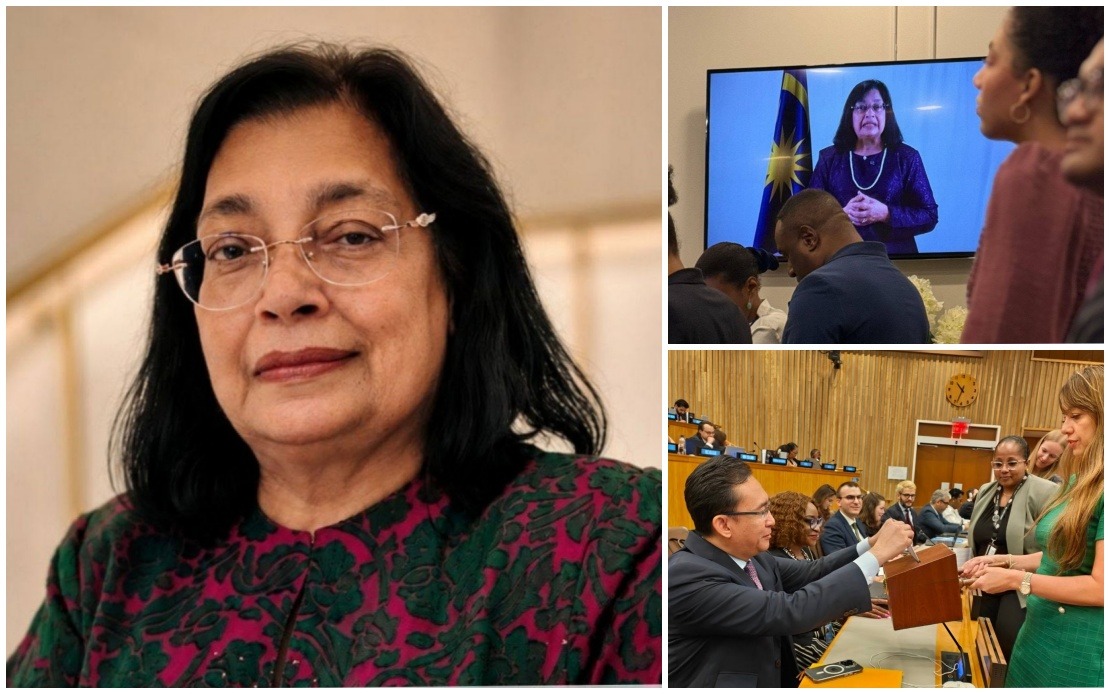
Malaysia has secured renewed international recognition in child welfare advocacy following the election of Datuk Yasmeen Muhamad Shariff to the United Nations Committee on the Rights of the Child for the 2027–2031 term. The election took place during the 21st Meeting of States Parties to the Convention on the Rights of the Child at UN Headquarters in New York on Tuesday, with Yasmeen capturing 136 votes from the 189 States Parties present and voting—a commanding mandate that reflected her standing among global peers.
The Foreign Ministry's announcement on Wednesday underscored the significance of this achievement for Malaysian diplomacy and child protection efforts. Yasmeen's election represents more than a routine personnel matter; it demonstrates sustained confidence from the international community in an individual whose expertise has previously shaped global discourse on children's issues. The decisive voting margin—she secured the highest number of votes among all candidates—signals broad-based support that transcends regional alignments and reflects genuine recognition of her professional credentials.
What distinguishes this victory is its historical dimension. Yasmeen's current appointment marks her second tenure on the committee, having previously served during the 2013–2017 term. Few individuals achieve such distinction, and her return speaks to the durability of her contributions and the continued relevance of her approach to child rights. The gap between her first and second terms also demonstrates that her earlier work left sufficient impression to warrant international stakeholders advocating for her reselection more than a decade later.
As an independent expert serving in her personal capacity, Yasmeen will engage in the committee's core functions over the next four years. These responsibilities extend beyond symbolic representation; the committee monitors how signatory nations implement the Convention on the Rights of the Child, facilitates dialogue with governments, and advocates for rights-based approaches to childhood development issues. For Malaysia specifically, having a citizen embedded within this monitoring framework creates a direct channel through which Malaysian perspectives on child protection can influence global standard-setting.
The Foreign Ministry's statement contextualizes this election within Malaysia's broader policy architecture for child welfare. Officials framed the outcome as validation of domestic legislative reforms and community development programmes designed to ensure Malaysian children can achieve their potential. This connection between international appointment and domestic policy reflects a growing recognition among policymakers that credibility on the world stage depends substantially on demonstrable commitment at home. Malaysia's claim to child protection excellence becomes more persuasive when supported by an international committee member who can attest to concrete national initiatives.
The appointment arrives at a moment when global consensus on children's issues faces meaningful challenges. Rising child poverty in many regions, increased displacement due to conflicts, digital safety concerns, and pandemic-related educational disruptions have complicated the implementation landscape significantly since Yasmeen's previous tenure. Her experience from 2013–2017 combined with contemporary expertise positions her to contribute constructively to the committee's evolving agenda. The timing suggests that international stakeholders valued her ability to navigate emerging threats to child welfare alongside traditional concerns.
The Foreign Ministry specifically acknowledged the Ministry of Women, Family and Community Development's role in supporting Malaysia's nomination campaign. This interagency coordination underscores how technical committee positions at the United Nations require sustained domestic institutional backing. The nomination process itself—identifying qualified candidates, building international support, and orchestrating voting strategies—demands resources and diplomatic skill that extend well beyond the candidate's individual qualifications. Malaysia's success reflected organisational capacity across multiple government departments.
For Southeast Asia more broadly, Yasmeen's appointment carries implications beyond Malaysia's borders. The region faces distinct child welfare challenges including labour exploitation in agricultural and informal sectors, inadequate educational access in rural areas, and vulnerability to trafficking. Having a regional representative with credibility and experience on the UN committee potentially amplifies Southeast Asian voices in global conversations about these issues. The committee's recommendations and monitoring reports influence how development agencies, international NGOs, and bilateral donors allocate resources and set priorities throughout the region.
The Foreign Ministry's emphasis on the committee's role in ensuring that "no child is left behind" reflects the international development agenda established through the Sustainable Development Goals. This framing connects Yasmeen's appointment to Malaysia's broader commitments on gender equality, education, and poverty reduction. Her participation in the committee's work directly supports Malaysia's accountability on these fronts, as the committee regularly examines how nations integrate child rights principles into their development strategies and resource allocation decisions.
Looking forward, Yasmeen will inherit a committee agenda shaped by post-pandemic recovery needs, digitalisation impacts on childhood development, and climate change consequences for vulnerable populations. The committee's upcoming term will likely grapple with how nations balance economic reopening with child protection priorities, regulate technology platforms affecting minors, and ensure that climate adaptation strategies include child-centred design. Her previous experience and demonstrated capacity position her to engage meaningfully with these complex intersectional issues.
Malaysia's Foreign Ministry statement also situated this election within the country's demonstrated commitment to multilateral cooperation on social issues. By promoting child rights through UN mechanisms, Malaysia enhances its standing as a responsible regional player invested in international norm-setting rather than merely responding to global standards. This proactive engagement strengthens Malaysia's voice on other agenda items within the UN system and contributes to the diplomatic capital necessary for advancing national interests across multiple forums.
The broader significance of Yasmeen's re-election extends to how Malaysia invests in sustained engagement with UN systems. Rather than treating committee memberships as ephemeral posting, the successful nomination of an experienced returning candidate demonstrates strategic thinking about institutional relationships. This approach potentially positions Malaysia to secure continued representation across multiple UN mechanisms, creating cumulative influence over time through demonstrated reliability and expertise.