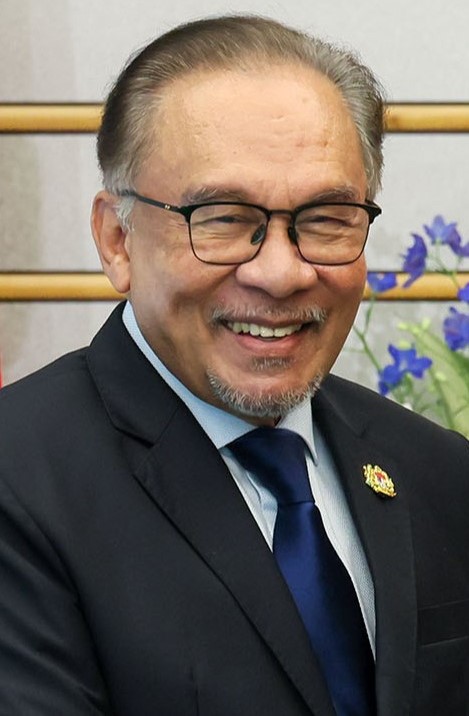
Malaysia's unionisation rate stands at a modest six per cent of the total workforce, a figure that reflects persistent gaps in worker awareness about the advantages of collective membership, according to Human Resources Minister Datuk Seri R. Ramanan. The statistic, unveiled at the Peninsular Malaysia Workers' Union Affairs Programme (PHEKS) 2026 grant presentation ceremony in Kuala Lumpur, underscores a disconnect between Malaysia's labour force and the organised union movement despite decades of industrial relations development in the country.
Ramanan attributed the sluggish participation rate to insufficient understanding among workers regarding what unions can offer beyond crisis management. He expressed optimism that significant room remains for expansion, suggesting that with proper messaging and engagement strategies, Malaysia could substantially increase its unionisation footprint. The minister's remarks highlight a fundamental challenge facing union organisers: the perception that unions serve primarily as reactive bodies that workers consult only when problems arise, rather than as proactive institutions embedded in day-to-day employment relations.
The Human Resources Minister reframed the strategic importance of workers' unions, positioning them not merely as employee advocacy organisations but as integral partners in Malaysia's development agenda. According to Ramanan, unions function as collaborative entities that work alongside government and employers to establish fair, inclusive economic growth and maintain the industrial harmony that has historically anchored Malaysia's labour market stability. This framing suggests the government views union strength as complementary to rather than adversarial toward economic objectives, a nuance that may be lost on workers unfamiliar with modern labour relations.
To bolster union capacity and worker awareness, the government has committed RM6.1 million for nationwide PHEKS 2026 implementation. The allocation reflects a two-pronged approach: RM3.5 million targets internal union strengthening through training, education, research, digital transformation, and governance enhancement programmes, whilst RM2.6 million supports external engagement via outreach activities and corporate social responsibility initiatives. This split reveals the government's belief that union effectiveness depends both on organisational capability and on community connection.
Ramanan emphasised that future grant allocations would depend on unions demonstrating judicious fund management and strong governance practices, effectively linking financial support to measurable accountability. This conditionality signals that the government views union grants not as unconditional subsidies but as investments requiring demonstrable returns in organisational performance and worker reach. Such requirements may pressure unions to professionalize their operations and articulate tangible benefits to justify ongoing state support.
The minister highlighted the urgency of workforce adaptation to technological disruption, particularly artificial intelligence, which is increasingly reshaping Malaysian workplaces across sectors. He noted that unions must help workers navigate this transition, a responsibility that requires both organisational capacity and aligned government programmes. The ministry's broader skills agenda includes the Jelajah AI MyMahir initiative under TalenCorp, which has allocated RM110 million for Malaysian worker upskilling, indicating substantial government commitment to ensuring the workforce remains competitive as automation advances.
As of 31 December 2025, Malaysia's registered union landscape comprised 786 entities representing over 1.06 million members. While these figures suggest a substantial organised labour presence, the six per cent participation rate implies that approximately 17.7 million workers remain outside union structures, assuming a workforce of roughly 18 million. This vast unorganised pool encompasses informal sector workers, gig economy participants, and formal employees who have chosen non-membership, presenting both challenge and opportunity for union organisers.
The gap between union membership and potential suggests structural barriers beyond awareness. Malaysia's informal economy, characterised by self-employment, casual labour, and precarious arrangements, naturally resists traditional union organising models designed for formal sector workplaces. Additionally, the rise of remote work, freelancing, and platform-based employment has fragmented worker populations in ways that complicate collective organising. Ramanan's emphasis on worker education and prevention-focused unionism implicitly acknowledges that modern unions must evolve beyond traditional worksite-based models.
Regional context adds weight to Malaysia's unionisation challenge. Comparable Southeast Asian economies exhibit similarly low union penetration rates, reflecting broader patterns of labour informality and limited worker familiarity with collective bargaining institutions. Yet countries like South Korea and Taiwan have achieved substantially higher unionisation through sustained organising efforts and political commitment. Ramanan's comments suggest Malaysia may be at an inflection point where deliberate policy choices could significantly alter labour movement trajectory over the coming decade.
The government's framing of unions as development partners rather than labour adversaries represents a notable positioning that could facilitate union growth if executed credibly. However, worker perceptions of unions are often shaped by personal experience rather than government rhetoric. Union organising success in Malaysia will likely depend on demonstrating tangible workplace improvements, competitive wages, and real grievance resolution rather than abstract appeals to partnership. The PHEKS 2026 programme's emphasis on training and governance may enhance union credibility, but ultimately workers join unions when they perceive immediate, material benefit.
Ramanan's call for preventative rather than reactive unionism signals a sophisticated labour relations vision but one that requires workers to adopt a forward-thinking perspective on employment risk. In economies where worker precarity is widespread and job security uncertain, employees may reasonably prioritise immediate survival over preventative union protections. Expanding unionisation to six per cent will thus require unions to demonstrate that membership provides security and voice in circumstances where many workers face fundamental employment instability.
The government's allocation of RM6.1 million and emphasis on technological adaptation suggest serious commitment to strengthening organised labour. Yet resources alone cannot overcome structural barriers related to workplace informality, worker mobility, and generational attitudes toward collective institutions. For Malaysia to substantially increase unionisation, unions themselves must innovate organising strategies, leverage digital platforms to reach dispersed workforces, and communicate value propositions that resonate with contemporary worker concerns including career development, workplace flexibility, and employment security in an AI-driven economy.