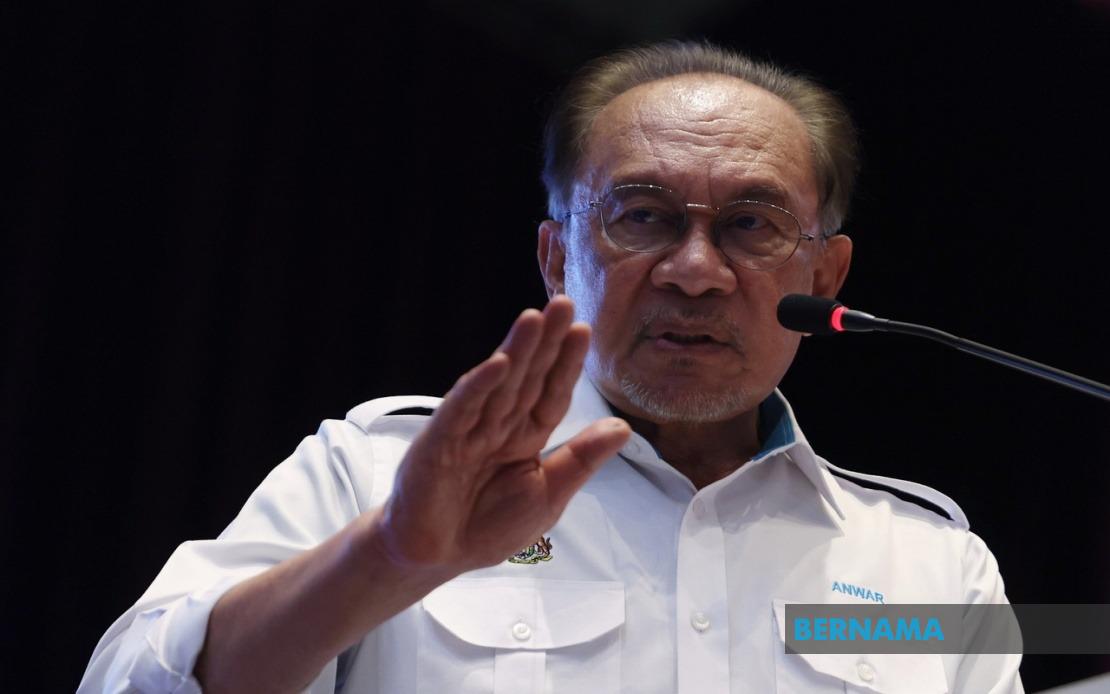
Malaysia has achieved a notable breakthrough in international competitiveness rankings, jumping eight places to reach 15th position globally in the IMD World Competitiveness Index 2026, up from 23rd the previous year. The improvement signals growing momentum in the country's economic and institutional development, even as regional competitors maintain their own upward trajectories. Prime Minister Datuk Seri Anwar Ibrahim used a meet-and-greet session with senior civil servants in Alor Gajah to acknowledge the institutional and human capital factors underpinning this advancement, emphasising that systemic reforms and public sector efficiency have been central to the turnaround.
Addressing civil servants from the southern zone at the Centre of Excellence for Engineering and Technology (CREaTE) in Simpang Ampat, the Prime Minister departed from conventional political rhetoric by explicitly distancing the achievement from individual leadership, instead framing it as a collective effort spanning the entire public service ecosystem. His comments suggest a deliberate strategy to build institutional pride and ownership across government ranks, potentially signalling broader ambitions to strengthen the civil service as a competitive advantage in Southeast Asia's increasingly complex economic landscape.
The timing of Malaysia's competitiveness improvement coincides with diplomatic recognition from unexpected quarters. Turkmenistan President Serdar Berdimuhamedov reportedly acknowledged the country's progress during a recent state visit, noting the visible upswing in Malaysia's international standing. This external validation carries symbolic weight in developing nations seeking to demonstrate momentum to both domestic constituencies and international investors. The recognition from an Central Asian counterpart underscores how competitiveness metrics have become standard benchmarks for evaluating national development trajectories across diverse regions.
President Serdar's reported interest in engaging Malaysia's civil service team represents a significant soft power opportunity for the country. According to Anwar, the Turkmenistan leader expressed intention to dispatch his own civil service delegation to learn from Malaysian practices and institutional arrangements. Such exchanges, though modest in immediate practical terms, can generate considerable diplomatic goodwill and position Malaysia as a model for public sector reform in emerging economies. This mirrors similar south-south cooperation frameworks that have gained traction in the Association of Southeast Asian Nations and broader developing world contexts.
The substance of Malaysia's competitiveness improvement warrants deeper examination. The IMD World Competitiveness Index assesses nations across economic performance, government efficiency, business dynamism, and infrastructure dimensions. Malaysia's eight-position jump suggests meaningful progress across multiple indicators rather than isolated sectoral gains. Government efficiency metrics typically encompass regulatory environment, institutional quality, and public administration responsiveness. For Malaysia, where investor confidence in governance structures has historically shaped foreign direct investment flows, such improvements can translate into tangible economic benefits.
The civil service emphasis in Anwar's messaging reflects intentional political positioning. By crediting institutional systems rather than personal leadership, the Prime Minister constructs a narrative of sustainable, rules-based governance that transcends individual tenure. This approach appeals to both international observers assessing institutional stability and domestic stakeholders concerned about governance continuity. In a Southeast Asian context where concentration of executive power remains common, institutional attribution offers a countervailing message about Malaysia's development model.
The gathering of senior officials including Chief Secretary to the Government Tan Sri Shamsul Azri Abu Bakar, Public Service director-general Datuk Seri Wan Ahmad Dahlan Abdul Aziz, and state-level administrators underscores the cross-sectoral coordination required to sustain competitiveness improvements. Melaka's presence through Chief Minister Datuk Seri Ab Rauf Yusoh indicates attention to state-level implementation, recognising that federal rankings ultimately reflect provincial governance quality. This integrated approach to public sector engagement suggests deliberate effort to embed competitiveness consciousness throughout Malaysia's administrative hierarchy.
For Malaysian businesses and investors, improved competitiveness rankings carry practical implications. Higher global standing typically correlates with improved access to international capital, greater ease in trade negotiations, and enhanced ability to attract skilled talent. Multinational corporations often consult competitiveness indices when deciding investment locations within competitive regions. A country's improving trajectory signals improving fundamentals, potentially accelerating foreign direct investment inflows and supporting job creation across sectors.
The three-and-a-half-year timeframe Anwar referenced anchors the improvement to his tenure as Prime Minister, though institutional momentum often develops across multiple administrations. The ranking climb suggests policy continuities and structural reforms have been maintained or accelerated, rather than sharp breaks with previous governance approaches. For Malaysian analysts and policymakers, identifying which specific reforms or efficiency gains drove the improvement remains crucial for calibrating future strategies and sustaining upward momentum.
Regional context adds complexity to Malaysia's achievement. Other Southeast Asian nations maintain varied positions within the IMD rankings, with Singapore typically occupying top-five positions as a developed economy. Malaysia's climb within the emerging market category positions it competitively within ASEAN, though substantial gaps likely persist with high-income neighbours. The improvement nevertheless signals Malaysia's relevance within global competitiveness discourse and demonstrates that meaningful institutional progress remains achievable in the region.
Sustaining this upward trajectory presents ongoing challenges. Competitiveness rankings remain dynamic, with other nations simultaneously pursuing reforms and efficiency improvements. Complacency following a single year's positive movement risks stalling momentum. Anwar's approach of publicly celebrating the civil service rather than individual accomplishment may encourage sustained institutional focus beyond election cycles, though political pressures inevitably influence administrative resource allocation.
The broader implication extends to Malaysia's positioning within global competitiveness frameworks. Improved rankings enhance national brand equity and signal to diverse audiences—investors, multilateral institutions, developed-country governments, and regional peers—that Malaysia maintains institutional capacity for sustained development. As countries increasingly compete for investment flows, talented workers, and international influence, competitiveness metrics serve as scorecards in ongoing global positioning efforts.