Malaysia's golfing body has identified the appointment of a full-time national coach as a critical priority in its strategy to elevate competitive performance at the 2027 Southeast Asian Games, which the country will host. The Malaysian Golf Association has formally approached the Ministry of Youth and Sports to help recruit a high-calibre coaching professional who can oversee a more systematic and rigorous national team development programme.
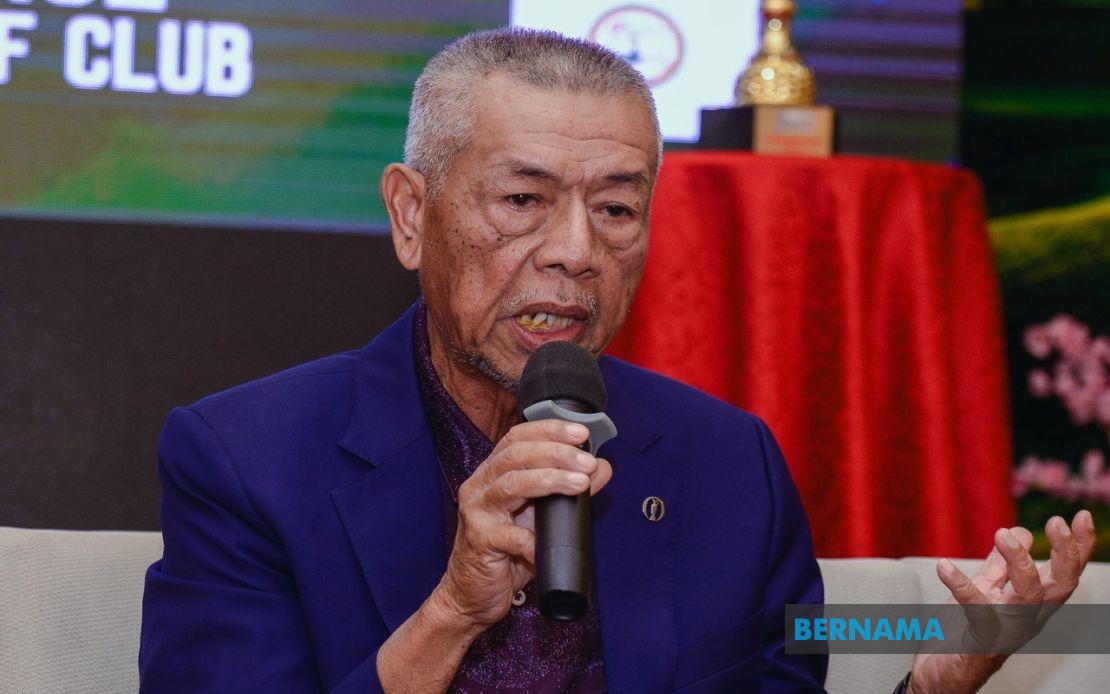
Tan Sri Mohd Anwar Mohd Nor, president of the MGA, outlined these ambitions during a press conference at The Mines Resort & Golf Club in Serdang. Speaking on the occasion of the 100PLUS MGA National Junior Development Programme (NJDP) Junior Series 2026 launch, he explained that the dedicated coaching position emerged from recent strategic discussions with Datuk Rahimi Ismail, secretary-general of the Ministry of Youth and Sports. The MGA leadership views this appointment not merely as an administrative appointment but as foundational to constructing a coherent pathway for athlete development.
The rationale behind the push for a permanent coaching structure reflects a broader recognition within Malaysian golf that sustained improvement requires continuity and dedicated expertise. A full-time national coach would provide consistent mentorship, technical oversight, and strategic planning that periodic or part-time arrangements cannot deliver. For a federation preparing to showcase its sport on home soil in 2027, having a dedicated professional at the helm signals both commitment to excellence and the serious infrastructure necessary to compete credibly against regional rivals.
Beyond the coaching appointment, the MGA president emphasised that collaboration between the golf federation, the Ministry of Youth and Sports, and the National Sports Council represents essential groundwork. These governmental partnerships unlock access to funding mechanisms, training facilities, and institutional support systems that would otherwise remain inaccessible. Mohd Anwar indicated that the MGA has formulated specific proposals in consultation with these bodies, suggesting a deliberate, multi-stage approach rather than ad-hoc interventions.
The timing of this initiative carries particular significance for Malaysian sport. With less than three years until the September 2027 Games, establishing foundational coaching and development structures now maximises the window for systematic player progression. Junior competitions, such as the newly launched NJDP Junior Series 2026, serve as the talent pipeline feeding into senior national squads, and having a permanent national coach ensures coherence between junior development pathways and elite preparation.
Geographical considerations also feature in the MGA's strategic blueprint. The association has explored the possibility of conducting specialised training camps in Sarawak, reflecting recognition that Malaysia's golfing landscape extends well beyond the Klang Valley. Mohd Anwar recently consulted with Sarawak's Minister of Youth, Sports and Entrepreneur Development, Datuk Seri Abdul Karim Rahman Hamzah, to investigate how the state might contribute to hosting and supporting national team preparations. Such regional engagement broadens the resource base and distributes the hosting burden, whilst leveraging Sarawak's golfing facilities and expertise.
For Malaysian golf, hosting the SEA Games represents both opportunity and pressure. The Games provide a showcase platform for the sport domestically and a genuine competitive laboratory against immediate regional peers. Success requires more than talented players; it demands systematic coaching, structured progression, and institutional backing. The MGA's pursuit of permanent coaching represents acknowledgment that sustained regional competitiveness demands moving beyond volunteer-dependent or externally rotated arrangements.
The coordination between the MGA and government agencies also reflects evolving sports governance in Malaysia. Rather than operating in isolation, sports federations now engage proactively with ministries and national councils to align initiatives with broader government sport development policy. This collaborative approach theoretically creates multiplier effects, enabling individual federations to punch above their weight by accessing shared resources and expertise.
Looking toward 2027, the golf federation faces the familiar challenge facing host nations: delivering competitive performances whilst managing the expectations and logistics of staging a major event. A permanent national coach would address one critical variable in this equation, providing the professional leadership necessary to translate Malaysia's golfing talent into podium finishes. The investment in coaching infrastructure now will determine whether Malaysia can convert home advantage into on-course success.