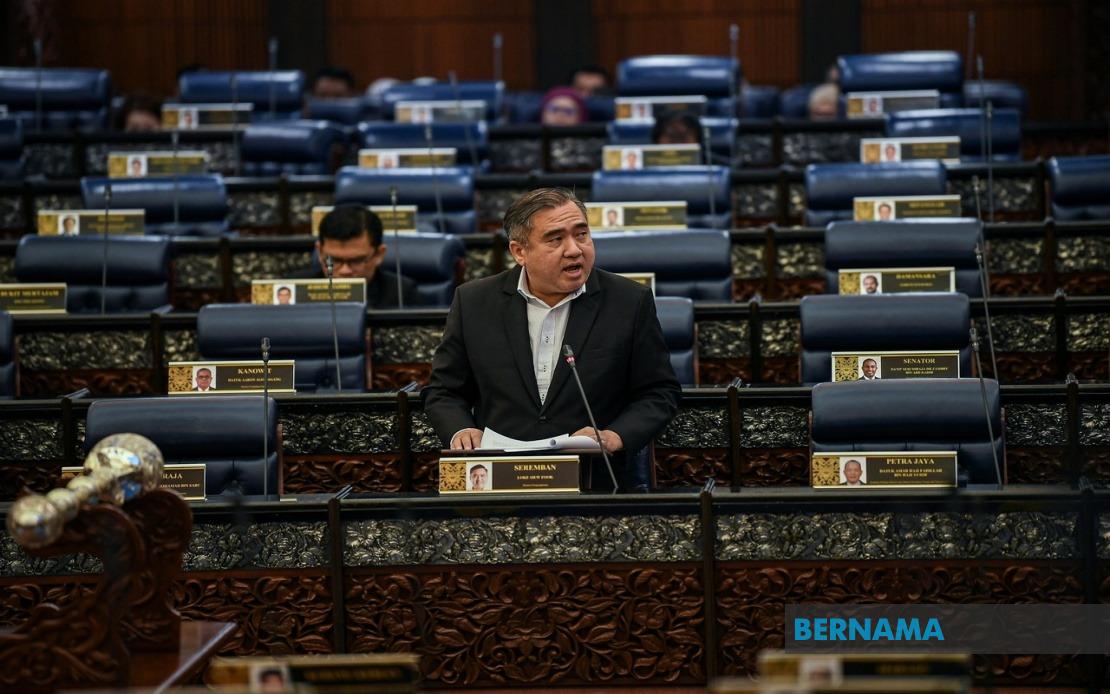
The Malaysian government has moved to establish a dedicated legal framework for prosecuting street racing and dangerous speed trials on public roads, addressing a longstanding enforcement gap in traffic legislation. Transport Minister Anthony Loke unveiled the Road Transport (Amendment) Bill 2025 during its second reading in Parliament on June 23, introducing Section 42A which makes illegal racing a standalone offence under the Road Transport Act 1987. The measure represents a significant shift in how authorities can address the persistent problem of reckless driving behaviour that endangers other road users.
Previously, illegal racing and speed testing cases fell under general dangerous driving provisions, a classification that limited enforcement options and created obstacles for traffic police seeking to take preventive action. By establishing racing as a distinct criminal offence, authorities now gain the ability to intervene proactively rather than reactively, treating the act of illegal racing itself as a violation regardless of whether accidents or injuries occur. This distinction proves crucial in jurisdictions like Malaysia where street racing has been a consistent concern, particularly involving young riders on motorcycles who engage in dangerous speed contests on highways and urban roads.
First-time offenders convicted under the new provision face financial and custodial penalties ranging from RM2,000 to RM10,000 in fines, up to two years' imprisonment, or a combination of both. The framework escalates significantly for repeat offenders, with second and subsequent convictions attracting substantially heavier sanctions: fines between RM5,000 and RM20,000, imprisonment extending up to five years, or both penalties imposed together. This graduated penalty structure reflects the legislator's intent to deter habitual offenders while providing proportionate consequences for first-time violations.
The practical implications of this legislative change are considerable for Malaysian road safety enforcement. Under the current framework, police would need to establish that racing resulted in dangerous driving that endangered other road users. Now, two or more motorcyclists engaging in speed contests against one another can be prosecuted immediately upon detection, without requiring evidence of accidents, injuries, or property damage. Similarly, motorists who illegally utilise public roads to test vehicle performance face prosecution under the same provision, closing a significant loophole that previously allowed such activities to proceed unchecked if conducted safely by the perpetrators' standards.
Beyond the racing offence itself, the Bill introduces Section 110B, which extends criminal liability to individuals who actively obstruct enforcement operations or assist offenders in evading arrest. Those who interfere with, assault, threaten, or follow enforcement officers' vehicles face fines ranging from RM10,000 to RM50,000, imprisonment from one to five years, or both. The provision also criminalises the sharing of enforcement operation details designed to help suspected offenders avoid apprehension, acknowledging how information disseminated through social media and messaging applications has historically compromised traffic enforcement efforts in Malaysia and across Southeast Asia.
This anti-obstruction provision represents a critical enhancement to enforcement authority, as illegal racing networks have become increasingly sophisticated in coordinating lookouts and sharing real-time location data of police operations. By classifying the obstruction offence as arrestable, authorities gain power to apprehend suspects without warrants, significantly streamlining intervention capabilities. The measure directly addresses tactics employed by organised street racing communities that have previously coordinated mass gatherings, closed roads, and endangered public safety while evading law enforcement through information networks.
The Bill also implements broader amendments to the penalty structure for various transport violations. Minimum fines and compound limits for selected offences are being revised upward, with the baseline shifting from RM300 to RM500. However, Minister Loke clarified that authorities will not automatically impose the maximum RM500 compound for all offences; instead, the actual amount levied will depend on factors including the specific violation type, severity assessment, timing of settlement, and prescribed enforcement procedures. This flexibility ensures that enforcement remains proportionate while strengthening the financial disincentive for violations.
The increased compound rate limits represent a recalibration of penalty frameworks that have remained largely unchanged for extended periods, failing to keep pace with inflation and the economic capacity of contemporary offenders. By raising maximum compound offers, the legislation aims to enhance the deterrent effect of traffic enforcement, particularly targeting commercial vehicle operators and owners of non-compliant vehicles. The amendments specifically target repeat offenders in categories including vehicle overloading and operation of mechanically unsafe commercial vehicles, problems that have persistently plagued Malaysia's highways despite existing regulations.
Implementation of the revised compound rates is scheduled for January 1, 2029, providing authorities and the public an extended transition period to adjust to new penalty levels. This staggered approach reflects consideration for enforcement agencies requiring time to update systems and train personnel, while road users gain opportunity to understand and adjust to modified financial consequences. The extended timeline also allows for interim monitoring of how the new racing provisions operate in practice before the broader penalty revisions take effect.
For Malaysian and Southeast Asian road safety advocates, the legislation addresses a persistent public concern. Street racing incidents have periodically resulted in fatal accidents, particularly involving young riders operating high-powered motorcycles on highways. The enabling of proactive enforcement rather than reactive response to accidents represents a meaningful shift toward preventive road safety policy. In the Malaysian context, where motorcycle usage remains widespread and youth-oriented street racing culture has manifested in various forms across urban and suburban areas, dedicated legal tools prove essential for comprehensive traffic management.
The amendment also reflects international trends in road safety legislation, where jurisdictions increasingly establish specific offences for street racing rather than relying on general dangerous driving statutes. This approach has gained adoption across developed nations and certain other Southeast Asian countries recognising that dedicated enforcement tools prove more effective in deterring and prosecuting racing-related conduct. Malaysia's legislative move brings domestic law into closer alignment with international best practices in traffic safety governance.
Stakeholder responses to the Bill have emphasised the balance between public safety imperatives and enforcement fairness. Traffic safety organisations have generally welcomed the racing provision, viewing it as necessary for protecting other road users. Simultaneously, civil society observers have noted the importance of proportionate application of the anti-obstruction provisions to avoid overreach against individuals providing routine information about enforcement activities.
The Bill's passage through Parliament signals government commitment to addressing road safety through legislative strengthening, complementing parallel initiatives in vehicle safety standards, driver education, and infrastructure improvements. As Malaysia continues developing comprehensive approaches to reducing traffic fatalities and serious injuries, dedicated legal frameworks targeting specific high-risk behaviours such as street racing constitute an important component of the overall enforcement and prevention strategy.