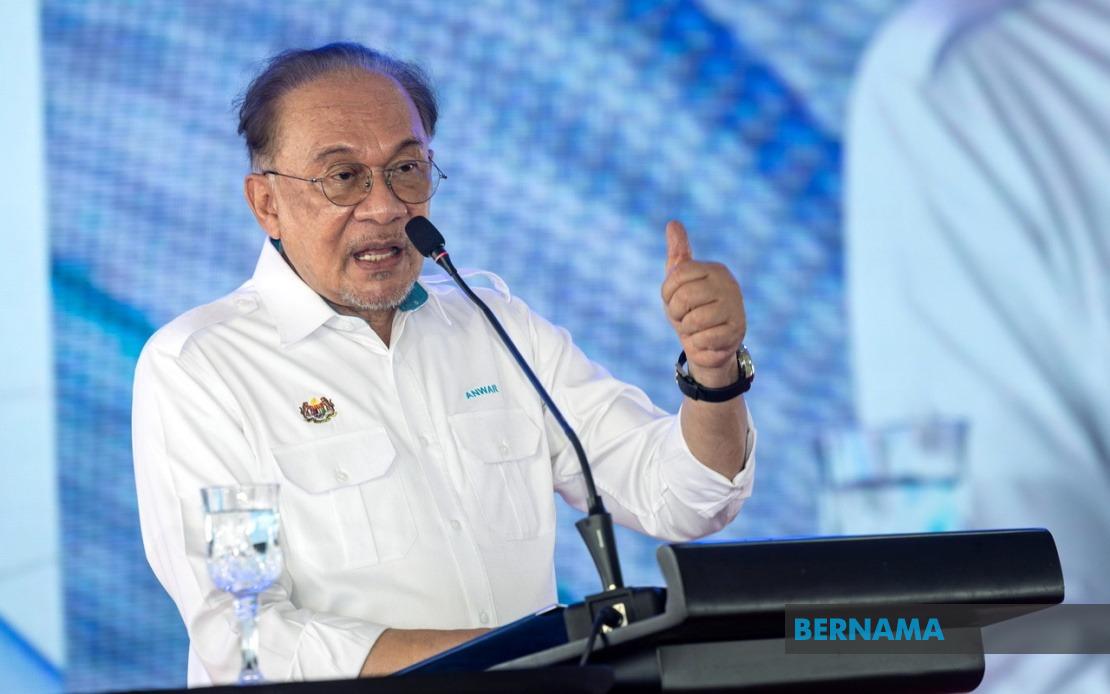
Prime Minister Datuk Seri Anwar Ibrahim has announced major progress on Malaysia's energy security through deepened strategic partnerships with Russia and Turkmenistan, with both agreements designed to safeguard the nation's hydrocarbon supplies well into the coming decades. Speaking at the Setia Fontaines Industrial Park groundbreaking ceremony in Kepala Batas, Anwar revealed that Russian President Vladimir Putin has committed to a long-term supply arrangement encompassing oil, gas, and diesel spanning a minimum of 20 years, underscoring the strengthening bilateral relationship between Kuala Lumpur and Moscow amid an increasingly multipolar global energy landscape.
The Russian commitment emerged during Anwar's recent official visit to Kazan, where the two leaders discussed the geopolitical and economic dimensions of sustained energy cooperation. This agreement carries significant strategic weight for Malaysia, which has long sought to diversify its energy procurement sources and reduce vulnerability to supply disruptions in traditionally dominant markets. By establishing predictable, long-term purchase arrangements with a major global energy producer, Malaysia can better insulate itself from price volatility and geopolitical tensions that occasionally disrupt conventional energy corridors in the Middle East and elsewhere.
Yet the more transformative development, according to the Prime Minister, stems from Malaysia's newly expanded foothold in Turkmenistan's energy sector. Anwar characterised the outcome of his visit to Ashgabat as representing a breakthrough in bilateral cooperation, with Turkmenistan granting Malaysia unprecedented access to its vast hydrocarbon resources. The significance cannot be overstated: Turkmenistan is home to some of the world's largest proven natural gas reserves, a resource that has historically remained concentrated in the hands of a limited number of trading partners. Malaysia's newly secured position opens pathways to tap reserves that could sustain the nation's energy requirements for generations.
The timeline of these negotiations reveals a carefully orchestrated diplomatic sequence. The foundation was laid in December 2024 when Turkmenistan President Serdar Berdimuhamedov visited Malaysia, establishing high-level dialogue and setting parameters for expanded cooperation. Anwar's subsequent reciprocal visit translated those preliminary understandings into concrete arrangements, demonstrating the value of sustained bilateral engagement in advancing shared economic interests. This methodical approach contrasts with more transactional energy diplomacy and suggests both nations view their relationship as mutually beneficial over an extended horizon.
Beyond securing Malaysia's domestic energy needs, these agreements unlock significant commercial opportunities for the country's downstream sectors and export potential. Anwar emphasised that Malaysia can leverage its newly accessible gas reserves to increase shipments to energy-hungry Asian economies, particularly China, Japan, and South Korea. These three nations represent among the world's largest and most consistent energy consumers, with demand profiles that are unlikely to diminish in the foreseeable future. By positioning itself as an alternative or supplementary supplier to these critical markets, Malaysia can generate substantial foreign exchange earnings and strengthen its standing within Asian energy trade networks.
The strategic calculus underlying these partnerships reflects a deliberate effort to operationalise Malaysia's growing geopolitical influence. Rather than remaining a passive consumer of energy commodities supplied through established Western or Middle Eastern channels, the nation is actively cultivating direct relationships with major producing states. This shift aligns with Anwar's broader foreign policy emphasis on safeguarding Malaysia's economic interests through pragmatic, non-aligned engagement with diverse international partners. Energy security is not merely a technical or commercial matter; it underpins national economic stability, industrial competitiveness, and ultimately political autonomy.
The timing of these announcements also reflects Malaysia's assessment of longer-term global energy dynamics. While renewable energy expansion is advancing globally, hydrocarbon demand across Asia remains substantial and is projected to remain elevated for decades. By securing long-term gas and oil access, Malaysia is hedging against scenarios where competition for available supplies intensifies as more nations transition their energy mixes. The 20-year Russian agreement and the Turkmenistan access arrangement provide a foundation of supply certainty that allows Malaysian policymakers and private sector actors to invest confidently in energy-dependent industries and infrastructure.
For Malaysian manufacturing and petrochemical sectors, reliable, long-term energy supplies are fundamental competitive advantages. Many industrial processes are energy-intensive, and predictable pricing structures enable businesses to plan capital investments and production strategies with greater confidence. The availability of abundant gas from Turkmenistan could particularly benefit Malaysia's chemical, refining, and liquefied natural gas sectors, potentially attracting new manufacturing investment and supporting employment growth across multiple regions. The agreement thus carries implications extending well beyond the energy sector proper into the broader industrial economy.
Regionally, Malaysia's energy partnership expansion also carries diplomatic weight. By diversifying its energy partnerships and reducing reliance on any single source or geopolitical bloc, Malaysia strengthens its negotiating position with existing partners while demonstrating independence in strategic decision-making. This posture is especially relevant in Southeast Asia, where energy security has become increasingly entwined with questions of regional balance and great power competition. Malaysia's approach—engaging substantively with Russia and Central Asia while maintaining relationships with Western and Middle Eastern suppliers—reflects a sophisticated understanding of how energy diplomacy can serve broader strategic objectives.
Anwar's comments underscore the government's conviction that harnessing international relationships to advance national interests across multiple domains remains essential in the contemporary environment. Energy security cannot be divorced from economic development, employment creation, and long-term prosperity. By anchoring Malaysia's energy supply through durable partnerships with Russia and Turkmenistan, the government aims to create the conditions for sustained industrial growth, export competitiveness, and rising living standards for Malaysian citizens. The completion of these energy agreements thus represents not a discrete transaction but rather a foundational element of Malaysia's strategy for navigating global economic and geopolitical currents in the decades ahead.
%22%2F%3E%3C%2Fpattern%3E%3C%2Fdefs%3E%3Crect%20width%3D%22100%25%22%20height%3D%22100%25%22%20fill%3D%22url(%23phgab1g)%22%2F%3E%3Crect%20width%3D%22100%25%22%20height%3D%22100%25%22%20fill%3D%22url(%23phgab1p)%22%2F%3E%3Ctext%20x%3D%2250%25%22%20y%3D%2250%25%22%20text-anchor%3D%22middle%22%20dominant-baseline%3D%22central%22%20fill%3D%22rgba(255%2C255%2C255%2C0.95)%22%20font-family%3D%22Georgia%2C%20'Times%20New%20Roman'%2C%20serif%22%20font-weight%3D%22700%22%20font-size%3D%22170%22%20letter-spacing%3D%22-0.02em%22%3EMalaysia%3C%2Ftext%3E%3C%2Fsvg%3E)
%22%2F%3E%3C%2Fpattern%3E%3C%2Fdefs%3E%3Crect%20width%3D%22100%25%22%20height%3D%22100%25%22%20fill%3D%22url(%23ph57sjag)%22%2F%3E%3Crect%20width%3D%22100%25%22%20height%3D%22100%25%22%20fill%3D%22url(%23ph57sjap)%22%2F%3E%3Ctext%20x%3D%2250%25%22%20y%3D%2250%25%22%20text-anchor%3D%22middle%22%20dominant-baseline%3D%22central%22%20fill%3D%22rgba(255%2C255%2C255%2C0.95)%22%20font-family%3D%22Georgia%2C%20'Times%20New%20Roman'%2C%20serif%22%20font-weight%3D%22700%22%20font-size%3D%22170%22%20letter-spacing%3D%22-0.02em%22%3EMalaysia%3C%2Ftext%3E%3C%2Fsvg%3E)
%22%2F%3E%3C%2Fpattern%3E%3C%2Fdefs%3E%3Crect%20width%3D%22100%25%22%20height%3D%22100%25%22%20fill%3D%22url(%23ph48mt2g)%22%2F%3E%3Crect%20width%3D%22100%25%22%20height%3D%22100%25%22%20fill%3D%22url(%23ph48mt2p)%22%2F%3E%3Ctext%20x%3D%2250%25%22%20y%3D%2250%25%22%20text-anchor%3D%22middle%22%20dominant-baseline%3D%22central%22%20fill%3D%22rgba(255%2C255%2C255%2C0.95)%22%20font-family%3D%22Georgia%2C%20'Times%20New%20Roman'%2C%20serif%22%20font-weight%3D%22700%22%20font-size%3D%22136%22%20letter-spacing%3D%22-0.02em%22%3EGovernment%3C%2Ftext%3E%3C%2Fsvg%3E)