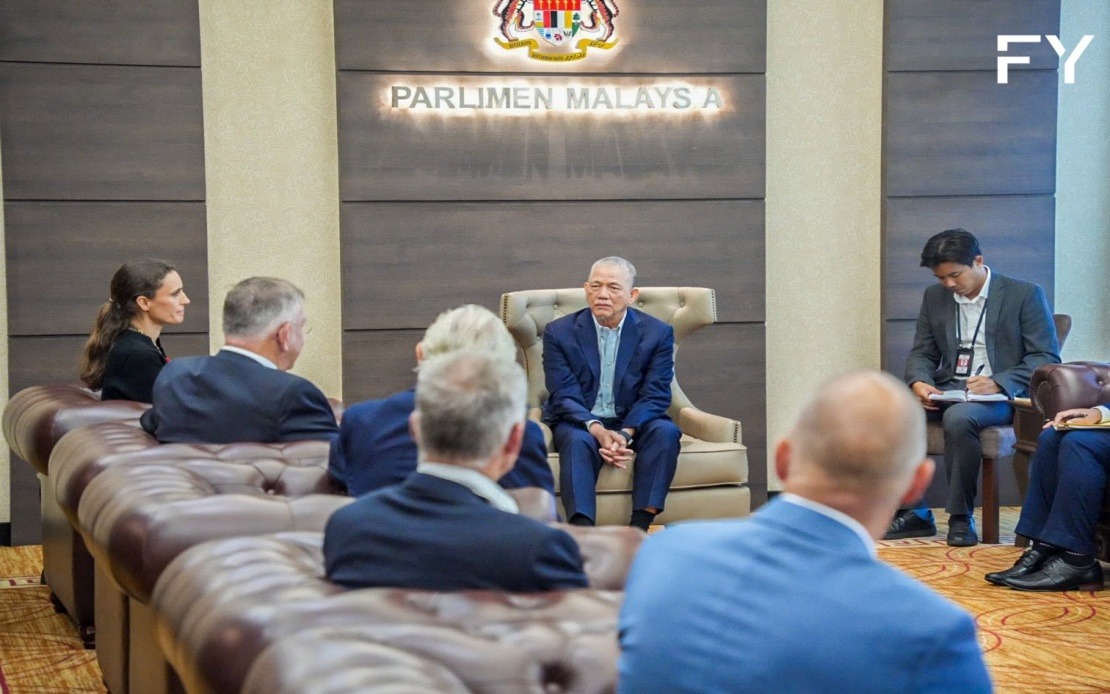
Malaysia is actively courting German small and medium enterprises to channel investment into green technology, renewable energy, and water management sectors, according to Deputy Prime Minister Datuk Seri Fadillah Yusof. The initiative reflects the government's commitment to positioning the nation as a destination for sustainable industrial development while aligning with its broader environmental and economic modernisation goals.
Fadillah made the remarks during a parliamentary visit from German Ambassador to Malaysia Silke Riecken-Daerr and representatives of the German SME Business Association. The timing of the delegation's visit underscores Germany's continued strategic interest in Southeast Asia, particularly in markets that are actively pursuing green industrialisation. For Malaysia, the outreach represents an opportunity to tap German expertise in renewable energy technologies and water treatment systems, both critical areas as the country confronts mounting water scarcity and energy demand challenges.
Germany already maintains substantial economic ties with Malaysia through its large industrial presence. More than 800 German companies currently operate across the Malaysian economy, concentrated primarily in mechanical engineering and advanced manufacturing technology. This extensive network provides a foundation upon which newer green technology partnerships can be built, as German firms can leverage existing supply chains, regulatory familiarity, and local partnerships to expand into sustainability-focused sectors.
The attraction of German SME investment specifically addresses a gap in Malaysia's industrial ecosystem. While large multinational corporations have traditionally driven foreign direct investment inflows, small and medium enterprises often bring specialised technical capabilities, innovative solutions, and agile business models that can rapidly prototype and deploy new green technologies. German SMEs, in particular, have earned international recognition for their engineering prowess and commitment to sustainability standards, qualities increasingly demanded by global supply chains and conscious consumers.
Water management and treatment represents one of Malaysia's most pressing infrastructure needs. With urban population growth, industrial expansion, and climate variability placing stress on the country's water resources, German companies specialising in advanced filtration, recycling, and treatment technologies could provide critical solutions. Several Malaysian states have experienced severe water disruptions in recent years, making this sector especially strategically important for policymakers seeking to secure long-term supply reliability.
The renewable energy dimension of the partnership aligns with Malaysia's own climate commitments and national energy transition targets. As the country moves toward reducing carbon emissions and diversifying away from fossil fuels, German expertise in solar panel manufacturing, wind energy systems, and energy storage solutions becomes increasingly valuable. Germany's Energiewende, or energy transition, has established it as a global leader in renewable integration and grid management, knowledge that can be adapted to Malaysia's tropical climate and electrical infrastructure requirements.
Beyond direct investment, the two nations identified Technical and Vocational Education and Training as a crucial area for collaboration. Germany's dual education system, which combines classroom learning with apprenticeships in industry, has produced one of the world's most skilled and employment-ready workforces. For Malaysia, accessing this model could strengthen its own TVET infrastructure, addressing persistent skills gaps that employers report in advanced manufacturing, engineering, and clean technology sectors. Such knowledge transfer would have multiplier effects across the Malaysian economy.
Fadillah's emphasis on human capital development reveals sophisticated thinking about investment attraction. Rather than seeking only immediate capital flows, the government is pursuing partnerships that build institutional capacity and workforce competence. This approach acknowledges that Malaysia's long-term competitiveness depends not just on attracting factories, but on developing the skilled talent required to operate and innovate within them.
The outreach to German SMEs also reflects broader regional competition for green technology investment. Neighbouring countries including Singapore, Indonesia, and Thailand are similarly positioning themselves as hubs for sustainable manufacturing and clean energy development. Malaysia's proactive engagement with German business associations and its government endorsement of the sector signals that it intends to compete seriously in this space rather than remain passive.
For German enterprises, Malaysia presents a compelling investment case. The country offers relative political stability, established industrial infrastructure, proximity to major Southeast Asian markets, and government support for green initiatives. Regulatory frameworks governing renewable energy and environmental standards are progressively strengthening, while tax incentives for sustainable industries remain competitive in the region.
The bilateral relationship extends beyond commerce into strategic considerations. Germany and Malaysia share interests in maintaining rules-based international trade, sustainable development, and regional stability. Investment partnerships rooted in green technology create mutual dependencies and collaborative frameworks that strengthen broader diplomatic ties. This multidimensional engagement model reflects how modern economic diplomacy operates.
Fadillah's confidence in strengthening Malaysia-Germany relations through strategic cooperation suggests the government views this partnership as foundational rather than transactional. If German SMEs successfully establish operations in Malaysia's green sectors, they could catalyse supply chain development, inspire domestic competitors to upgrade capabilities, and position the country as a regional hub for clean technology. For Malaysian policymakers, this represents a carefully calibrated effort to attract not just investment, but transformative economic partnerships that align with global sustainability imperatives.