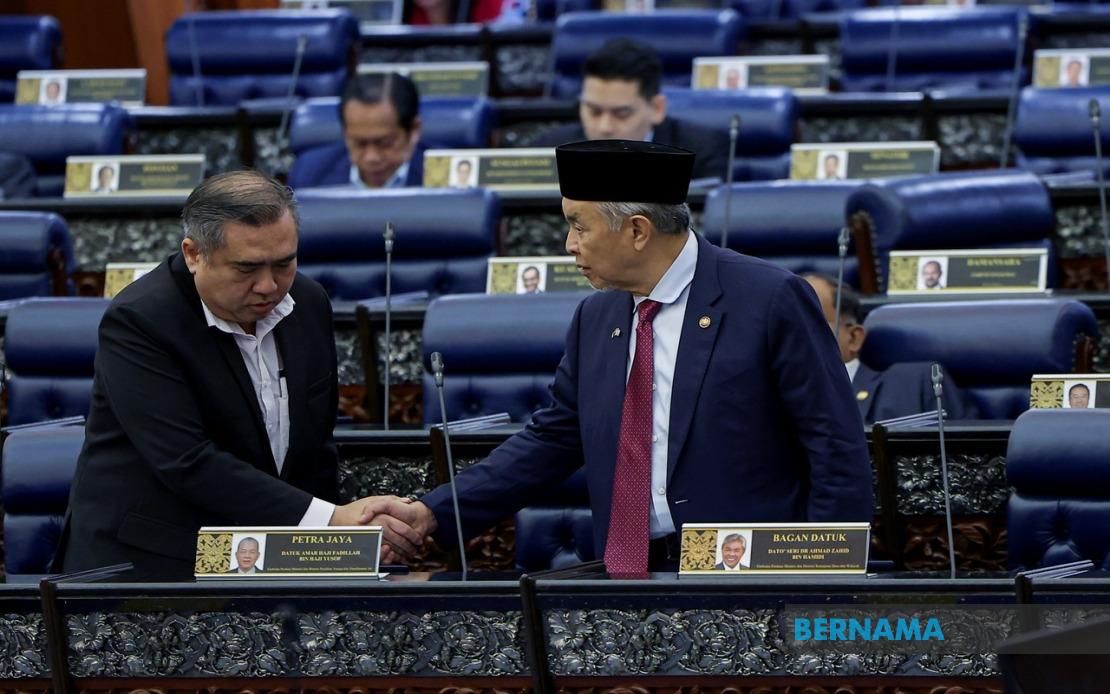
Transport Minister Anthony Loke has introduced the Road Transport (Amendment) Bill 2026 for its first reading in the Dewan Rakyat, signalling a major overhaul of how Malaysia handles road safety enforcement. The legislation aims to expand the regulatory reach and enforcement mechanisms of the existing Road Transport Act, addressing growing concerns about traffic violations and dangerous driving behaviour on Malaysian roads. The second reading is scheduled for the current parliamentary session, meaning the bill could advance toward enactment within months.
At the heart of the proposed changes lie significantly elevated financial penalties for common traffic breaches. Violations such as failing to display vehicle registration plates, operating a motor vehicle without a valid licence, exceeding speed limits, breach of vehicle standards and safety requirements, ignoring traffic signals and instructions, and participation in illegal street racing would all attract minimum fines of RM500, up from the current RM300 floor. This represents a 67 percent increase in baseline penalties, reflecting government determination to create stronger economic disincentives for rule-breaking on public roads.
The bill contains particularly stringent measures targeting one of Malaysia's most persistent road safety problems: driving with a suspended or revoked licence. Current law allows for imprisonment of up to one year or fines reaching RM5,000. Under the amendments, individuals convicted of this offence would face up to three years in prison or fines between RM3,000 and RM10,000, substantially escalating the consequences for this reckless behaviour. This provision reflects recognition that drivers operating under suspension represent a direct and ongoing threat to public safety, having already demonstrated serious breaches of road regulations.
Particularly noteworthy are the proposed penalties for street racing and speed-testing on public roads, a phenomenon that has generated considerable public concern and media attention across Malaysia. The new Section 42A would establish a dedicated offence framework where first-time offenders face fines of RM2,000 to RM10,000, imprisonment up to two years, or both. Repeat offenders would confront substantially harsher treatment: fines between RM5,000 and RM20,000 combined with mandatory imprisonment of at least five years. This escalating penalty structure aims to eliminate the behaviour through both individual deterrence and incapacitation of habitual offenders.
Beyond traffic violations, the bill addresses administrative and procedural matters that have historically complicated enforcement efforts. Compoundable offences—those where violators can settle matters through fixed payments rather than court proceedings—would see maximum compound amounts increase from RM300 to RM500, bringing financial consequences more in line with inflation and actual road safety priorities. Additionally, individuals making false statements related to road transport matters would face substantially increased penalties: fines up to RM200,000 or imprisonment for up to ten years. Such stringency reflects the government's view that deception in traffic and transport administration undermines the entire regulatory system.
The amendments also enhance the operational powers available to enforcement personnel. Police officers and dedicated road transport officers would gain broader authority to manage traffic flow, redirect vehicles, and exercise control over road conditions. While such enhanced powers create greater capacity to respond to congestion and emergencies, they also represent an expansion of discretionary authority that could reshape daily driving experiences, particularly in urban areas where traffic enforcement operations concentrate.
A new provision addressing micromobility vehicles—the rapidly proliferating e-scooters and similar devices causing documented safety concerns in major cities—would establish procedures for detention and disposal of such equipment. This responds to urban mobility challenges that existing transport legislation had not adequately addressed, providing clearer frameworks for managing vehicles that occupy ambiguous regulatory territory.
The bill also introduces criminal liability for obstructing or assaulting enforcement officers, classification of such offences as arrestable crimes where police need not obtain warrants. This addresses safety concerns for road enforcement personnel who increasingly face confrontation and hostility during their duties. However, such provisions warrant careful implementation to prevent expansion beyond legitimate obstruction to encompass everyday disputes between motorists and enforcement agents.
Additionally, Clause 22 would transfer regulatory authority to the Transport Minister regarding fees for entry permits issued to foreign motor vehicles. This administrative change reflects growing cross-border traffic and the need for streamlined permit frameworks as intra-ASEAN vehicle movement increases.
The cumulative effect of these amendments would substantially alter the economic and legal calculus for Malaysian road users. Those accustomed to modest penalties for traffic infractions would face notably higher costs for violations. For drivers considering reckless behaviour such as street racing or operating under suspension, the consequences would become genuinely threatening rather than inconvenient. The legislation reflects a deliberate policy shift toward deterrence-based road safety, operating on the premise that significantly increased consequences will modify driver behaviour.
Regional context matters here: neighbouring countries have pursued similarly aggressive traffic enforcement strategies with documented success in reducing serious accidents. Singapore's exemplary road safety record correlates closely with harsh penalties and rigorous enforcement. Thailand and Indonesia have implemented penalty escalation measures amid rising traffic fatalities. Malaysia's Road Transport Amendment Bill 2026 positions the country within this regional enforcement paradigm, attempting to leverage financial and criminal penalties to achieve outcomes that education campaigns and engineering solutions alone have not delivered.
For Malaysian motorists, compliance rather than confrontation with enforcement authorities becomes considerably more rational under these new frameworks. Commercial operators, particularly those in ride-sharing and delivery sectors, would face substantially different cost-benefit calculations regarding driver conduct and vehicle maintenance. The changes also signal government commitment to public safety as a policy priority, with measurable investment in enforcement infrastructure and legal tools.