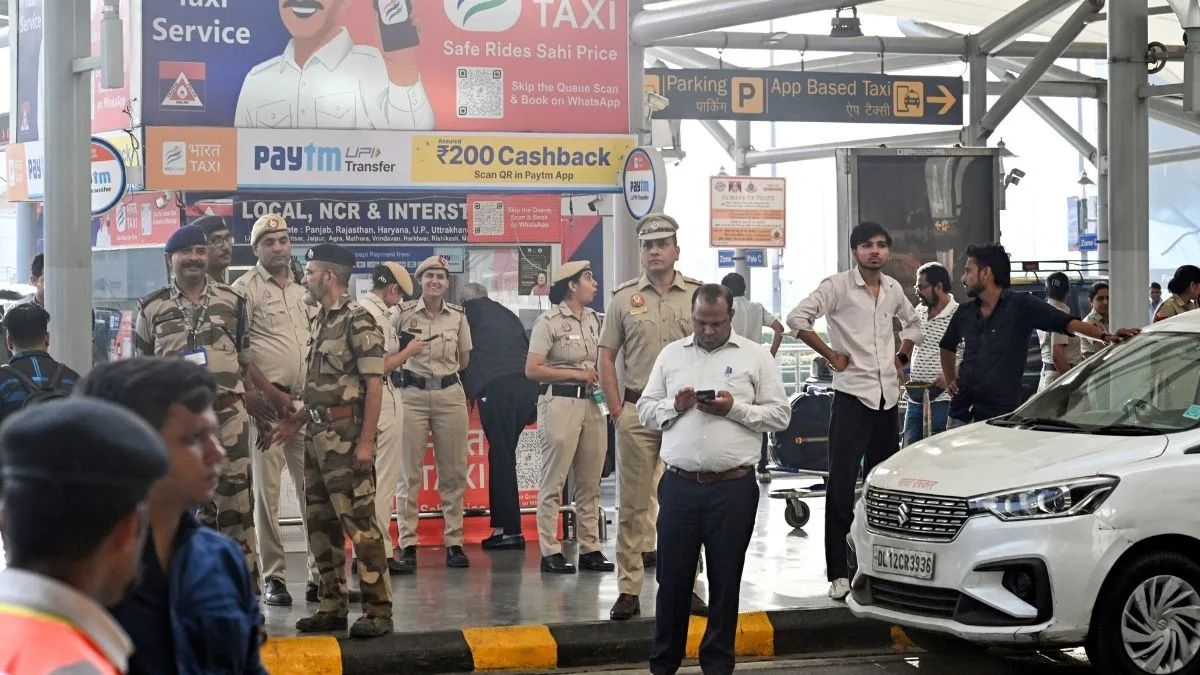
In a significant cross-border law enforcement operation, Malaysia has deported two individuals suspected of operating as financiers and coordinators for the banned Khalistan Zindabad Force, with the pair arrested immediately upon landing at Delhi's Indira Gandhi International Airport. The deportation represents a concrete outcome of intelligence-sharing and operational coordination between the Royal Malaysia Police and Indian security agencies, demonstrating regional cooperation in combating transnational terror networks that increasingly leverage Southeast Asia as a logistics and financing hub.
Punjab Police identified the arrested men as Gurvinder Singh from Ambala and Manjit Singh from Patiala, both accused of orchestrating financial support for terror activities from their base in Malaysia. According to Punjab's Director General of Police Gaurav Yadav, the investigation revealed that the duo played instrumental roles in channelling funds and coordinating operational activities on behalf of the proscribed organisation. The deportation emerged from what police characterised as an intelligence-led operation designed to dismantle overseas terror support networks that feed resources back into Punjab.
The investigation into the two suspects originated from inquiries into a series of incidents targeting critical infrastructure across Punjab. In January this year, a blast struck near the Sirhind area in Fatehgarh Sahib district, followed by another attempted explosion in April near Shambhu in Patiala. These incidents prompted security agencies to launch a comprehensive probe that eventually identified an operational module allegedly connected to the banned organisation. The investigations uncovered substantial quantities of weaponry and explosives, including an RPG launcher, improvised explosive devices, RDX, hand grenades, and sophisticated firearms, indicating the sophistication and dangerousness of the network being dismantled.
The financial trail proved crucial in expanding the investigation beyond Punjab's borders. As police tracked the flow of money supporting the terror modules, they discovered that funds were being routed through international channels rather than originating domestically. This discovery shifted investigative focus overseas, eventually leading security agencies to identify Malaysia as a significant hub where handlers and facilitators were coordinating financial support for terror activities back home. The realisation that terror operations were being sustained through transnational financial networks underscored the borderless nature of contemporary terror threats facing South Asia.
For Malaysia, the case highlights the country's emerging role as a transit point and operational base for various militant networks seeking to evade detection in South Asia. Malaysia's position as a major financial and trading hub, combined with its large diaspora communities and relatively porous oversight of informal money transfer systems, has attracted international militant organisations seeking to establish overseas support structures. The deportation of these two operatives signals that Malaysian authorities are taking seriously their responsibility to prevent the country's territory from being weaponised for terror financing and coordination against neighbouring states.
The investigation exposed what police described as an international network of handlers, financiers, and facilitators operating from abroad to support terror-related activities in Punjab. According to DGP Yadav, the accused leveraged overseas bank accounts and financial channels to provide sustained support to elements affiliated with the banned organisation. This modus operandi reflects evolving tactics among proscribed groups, which increasingly recognise the vulnerability of domestic funding mechanisms to law enforcement scrutiny. By establishing overseas bases, these networks achieve geographical distance from source country authorities while maintaining operational continuity.
Following their arrival in India, both individuals appeared before a court in Patiala, which remanded them into police custody for detailed interrogation. The questioning phase represents a critical juncture in the investigation, as authorities seek to map the complete architecture of the terror support network. Police are particularly focused on identifying other individuals connected to the wider conspiracy, understanding the full scope of financial transactions, and determining whether these two operatives maintained connections with other terror modules or organisations. Each piece of information extracted during interrogation potentially opens new investigative threads.
The case underscores the importance of inter-agency and cross-border coordination in disrupting terror networks. The cooperation between Punjab Police, central security agencies in India, and the Royal Malaysia Police demonstrates how regional partnerships can yield tangible results in neutralising transnational threats. For Southeast Asian law enforcement agencies, the deportation serves as a reminder that terror financing and coordination activities occurring within their jurisdictions can have direct consequences for neighbouring countries' security. Conversely, for Indian authorities, it validates the strategy of pursuing leads internationally rather than limiting investigations to domestic territory.
Punjab has emerged as a particular focus for international terror networks seeking to resume operations after years of relative dormancy. The succession of incidents targeting railway infrastructure and civilian areas suggests deliberate attempts to rekindle violence in the state. By intercepting this Malaysia-based support network, authorities have disrupted one funding channel, though investigators believe additional facilitators and associates remain at large. Police have committed to continuing comprehensive investigations aimed at identifying and apprehending other members of the conspiracy, whether operating in Malaysia, elsewhere in Southeast Asia, or back in Punjab itself.
For Malaysia, the episode raises important questions about the adequacy of current oversight mechanisms for financial transactions and the monitoring of foreign nationals suspected of terror-related activities. While the deportation demonstrates willingness to cooperate with Indian authorities, Malaysian officials will need to conduct their own assessment of how two operatives managed to establish and maintain a terror financing operation from Malaysian territory. This may prompt enhanced scrutiny of informal financial channels, cross-border money transfers, and networks of individuals linked to militant organisations operating across South Asia. The broader message for the region is that terrorism support infrastructure cannot remain invisible indefinitely, and that international cooperation, when activated effectively, can successfully identify and disrupt such networks before they inflict major damage.