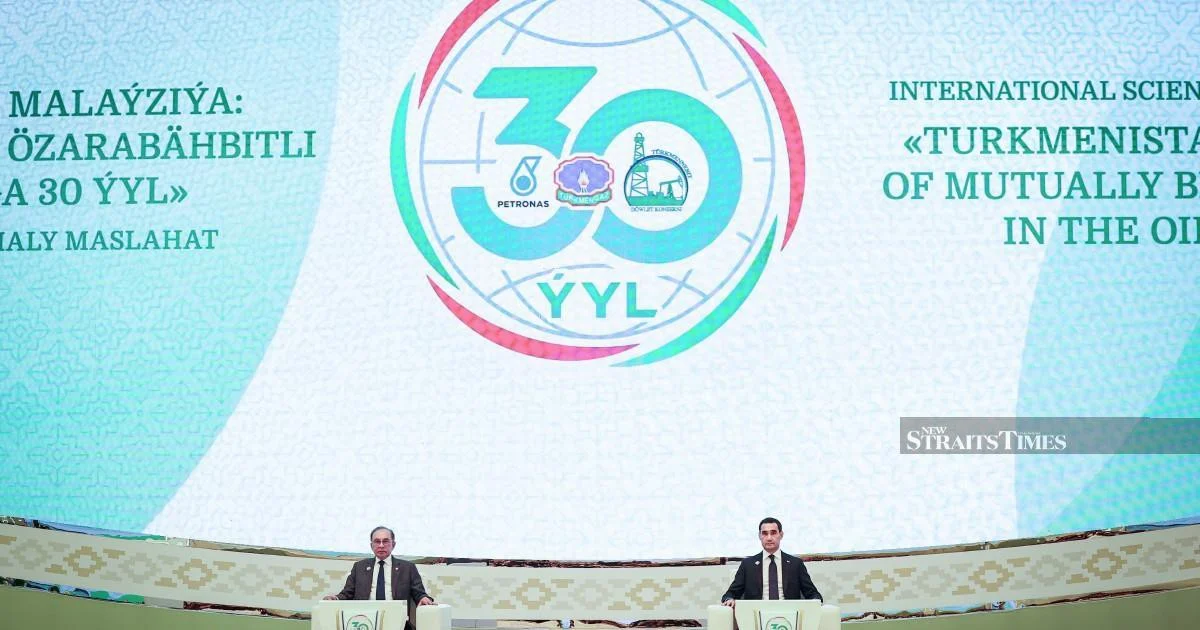
Prime Minister Datuk Seri Anwar Ibrahim's recent diplomatic engagements across Russia and Turkmenistan represent a watershed moment for Malaysia's energy strategy, delivering tangible results that extend far beyond ceremonial exchanges. The visit, spanning both nations last week, successfully established frameworks for deeper cooperation in the hydrocarbon sector—a critical development as Malaysia navigates evolving global energy markets and seeks to secure reliable, long-term supplies of crude oil and natural gas.
The significance of these breakthroughs cannot be understated within the context of Southeast Asia's energy landscape. Malaysia, traditionally reliant on domestic reserves that are steadily depleting, faces mounting pressure to ensure energy security while simultaneously supporting economic growth and industrial expansion. By engaging directly with major hydrocarbon producers in Central Asia and Eastern Europe, the government has moved decisively to reduce supply-chain vulnerabilities and create alternative procurement channels that insulate the nation from market volatility and geopolitical disruptions.
Russia, as one of the world's largest oil and natural gas exporters, offers Malaysia access to substantial reserves and competitive pricing structures that could materially improve the nation's energy economics. The agreements forged during Anwar's visit lay the groundwork for potential investment partnerships, technology transfers, and joint ventures that could leverage Malaysian expertise in downstream operations and refining capabilities. Such arrangements would position Malaysian companies to participate in Russian energy infrastructure projects while simultaneously bringing Russian expertise and capital into Malaysia's energy sector.
Turkmenistan's role in this tripartite energy arrangement is equally consequential. The Central Asian nation possesses among the world's largest proven reserves of natural gas, with production capacity that remains substantially underutilised in regional markets. Establishing formal trade mechanisms and commercial relationships with Turkmen authorities opens pathways for Malaysia to access this resource base, particularly as liquefied natural gas (LNG) becomes increasingly central to Asia-Pacific energy strategies. For Turkmenistan, Malaysian partnerships represent opportunities to diversify export markets and reduce historical over-reliance on Russian and Chinese purchasers.
The broader diplomatic context amplifies the importance of these achievements. Malaysia's pivot toward expanded engagement with Russia and Turkmenistan reflects a deliberate foreign policy recalibration emphasising pragmatic, interest-based relationships unconstrained by regional bloc affiliations. This approach aligns with the government's stated commitment to balancing Malaysia's international partnerships and avoiding excessive dependence on any single geopolitical actor. By cultivating ties with multiple energy suppliers across different continents, Malaysia strengthens its negotiating position and creates redundancy within its supply networks.
Domestically, these agreements carry profound implications for Malaysia's energy independence trajectory. Securing additional hydrocarbon sources will ease pressures on domestic production facilities, allowing Petronas and other national champions to optimise their operational portfolios while maintaining adequate supplies for local consumption and export commitments. Moreover, reliable access to Russian and Turkmen oil and gas could reduce Malaysia's energy import bills, freeing capital for investment in renewable energy infrastructure and technological modernisation—essential components of the nation's longer-term sustainability agenda.
The economic multiplier effects extend through Malaysia's industrial ecosystem. Petrochemical manufacturers, power generation operators, and industrial consumers relying on stable energy inputs will benefit from diversified supply chains and competitive pricing. Downstream sectors including fertiliser production, steel manufacturing, and cement production—industries where energy represents a significant cost component—stand to improve their cost competitiveness in regional and global markets. Enhanced energy security simultaneously buttresses Malaysia's attractiveness to foreign direct investment, particularly from industries with substantial energy requirements.
These breakthroughs also position Malaysia advantageously within broader Southeast Asian energy architecture. As the region's sole OPEC member and a significant natural gas producer, Malaysia has traditionally punched above its weight in regional energy diplomacy. Deepening relationships with major Eurasian suppliers enhances Malaysia's ability to facilitate connections between ASEAN nations and non-regional energy partners, potentially establishing the country as a strategic hub for energy trade and cooperation. This positioning could translate into enhanced influence over regional energy pricing, infrastructure development, and policy frameworks.
The timing of these diplomatic initiatives merits consideration alongside global energy market dynamics. Heightened geopolitical tensions, sanctions regimes affecting traditional energy suppliers, and accelerating energy transition imperative all conspire to create both challenges and opportunities for nations like Malaysia. By establishing direct channels with Russia and Turkmenistan now, Malaysia positions itself to capitalise on emerging opportunities while avoiding reactive scrambling for supplies during periods of market tightness or supply disruption. The agreements likely include provisions for stable pricing arrangements and supply volumes, insulating Malaysia from extreme market volatility.
Looking forward, the substantive outcomes from Anwar's visits will require careful follow-through across multiple governmental and commercial actors. Translating diplomatic agreements into functioning commercial relationships demands effective coordination between Petronas, the Ministry of International Trade and Industry, and respective counterparts in Russia and Turkmenistan. Regulatory frameworks governing foreign energy investments must be clarified, and financing mechanisms for potentially large-scale infrastructure projects must be established. These implementation challenges, though substantial, appear manageable given the apparent commitment both Anwar's government and partner nations have demonstrated.
The success of these energy diplomacy initiatives extends credit to Anwar's administration not merely for negotiating agreements, but for recognising that Malaysia's energy future depends upon active, sustained engagement with multiple suppliers and strategic flexibility in global energy markets. In an era of supply-chain fragmentation and heightened competition for resources, such proactive diplomacy directly translates into national economic resilience and geopolitical relevance.