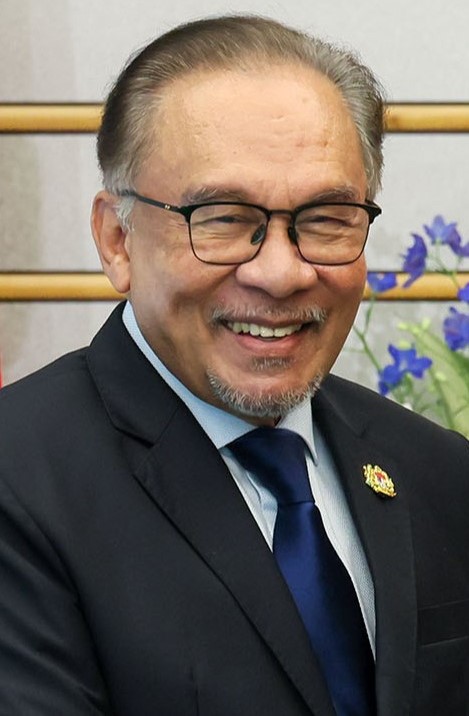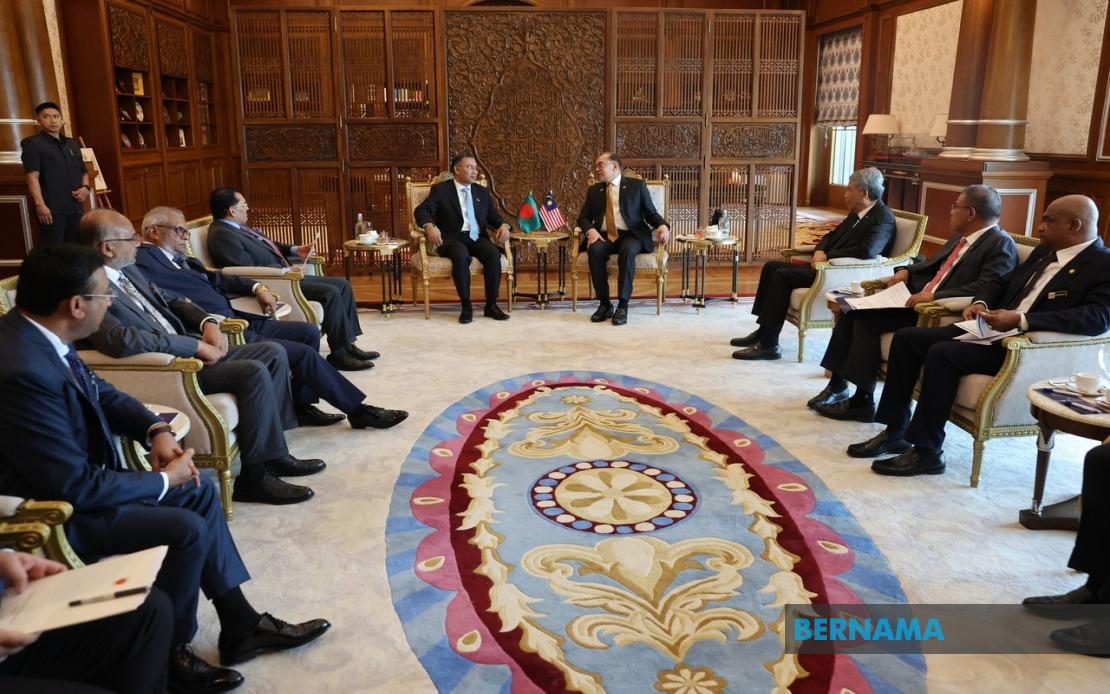
Prime Minister Datuk Seri Anwar Ibrahim and Bangladesh Prime Minister Tarique Rahman have committed to deepening bilateral cooperation on resolving the Rohingya refugee challenge through established ASEAN frameworks and direct engagement with Myanmar authorities. The commitment, announced during Rahman's official visit to Putrajaya, reflects both nations' recognition that durable solutions to the displacement crisis require coordinated regional action rather than unilateral responses. The two leaders acknowledged the humanitarian dimensions of hosting displaced populations whilst exploring pathways toward sustainable repatriation to Myanmar, a process that has remained intractable despite years of diplomatic efforts.
Rahman, who arrived in Malaysia for a two-day state visit marking his first official bilateral trip abroad since assuming office in February 2026, expressed profound concern about conditions faced by Rohingya populations sheltered in Bangladesh. The Bangladesh Prime Minister specifically commended Malaysia's sustained backing for efforts aimed at ensuring that any return of displaced persons occurs under conditions that guarantee their safety, protect their human dignity, and establish viable livelihoods upon repatriation. This acknowledgement underscores Malaysia's evolving role as both humanitarian responder and diplomatic intermediary within Southeast Asian refugee discussions.
The mechanism proposed by both leaders delegates responsibility for orchestrating Myanmar engagement to their respective foreign ministries whilst leveraging broader ASEAN institutional structures. This approach represents a strategic pivot toward multilateral problem-solving rather than relying on bilateral pressure. By channelling diplomatic efforts through ASEAN forums, Malaysia and Bangladesh aim to distribute responsibility across the regional organisation whilst maintaining visibility and collective leverage. The involvement of ASEAN mechanisms may prove significant for Myanmar, which maintains complex relationships with various member states and has sometimes resisted direct criticism of its military junta's policies.
Beyond the Rohingya question, the bilateral engagement addressed substantial economic and strategic dimensions of the Malaysia-Bangladesh relationship. During substantive talks held ahead of the joint press conference, both leaders examined opportunities for cooperation spanning trade and investment promotion, human resource development, semiconductor manufacturing, energy infrastructure, agricultural collaboration and educational exchanges. This comprehensive scope demonstrates that bilateral relations extend far beyond humanitarian concerns, encompassing the full spectrum of modern state-to-state engagement.
Commercial ties between the two nations have strengthened considerably, with 2025 trade reaching RM12.18 billion, equivalent to USD2.84 billion. Malaysia exported goods valued at RM10.08 billion to Bangladesh, predominantly petroleum products that reflect the energy-intensive nature of Bangladesh's manufacturing sector. Bangladesh reciprocated with RM2.10 billion in exports, predominantly comprising textiles, apparel and footwear products where the country maintains significant competitive advantages. This imbalance, while favouring Malaysian exporters, reflects broader patterns of Malaysian energy exports to South Asian markets requiring petroleum inputs for industrial production.
Bangladesh's ranking as Malaysia's 28th largest trading partner globally carries particular significance when contextualised within South Asian trade patterns. The nation ranks second only to India as a Malaysian trading partner, export destination and import source within the South Asian region. This positioning reflects Bangladesh's emergence as both a significant market for Malaysian goods and a valued source of labour-intensive manufactured products. The trade relationship's growth trajectory suggests expanding economic interdependence that creates additional incentives for political and diplomatic cooperation on shared challenges.
The two governments formalised their commitment through institutional arrangements, including a Memorandum of Understanding governing cultural cooperation. This cultural dimension proves significant for managing diverse populations within both nations and fostering people-to-people understanding. Additionally, Exchanges of Notes addressed counter-terrorism research collaboration and investment promotion mechanisms. The counter-terrorism focus reflects both nations' concerns regarding transnational extremist networks operating across South and Southeast Asia, whilst investment facilitation agreements aim to reduce bureaucratic barriers and encourage private sector engagement.
For Malaysia, the visit holds particular resonance given the nation's historical role as a refuge for displaced populations and its position as a non-UNHCR signatory hosting substantial irregular migrant and refugee populations. The Rohingya presence in Malaysia, whilst smaller in absolute numbers than the camps concentrated in Bangladesh, represents a longstanding challenge for Malaysian authorities managing irregular migration, integration, and humanitarian obligations without formal international refugee frameworks. Rahman's visit acknowledges Malaysia's burden-sharing in addressing this transnational crisis.
The emphasis on ASEAN mechanisms reflects broader regional trends toward collective rather than isolated responses to transnational challenges. ASEAN's consensus-based approach, whilst often criticised for lacking enforcement capacity, provides diplomatic cover for member states engaging with Myanmar on sensitive issues. By anchoring discussions within ASEAN platforms, Malaysia and Bangladesh position their efforts as representing regional consensus rather than external pressure, a distinction that matters significantly given Myanmar's defensive posture toward international criticism of its treatment of ethnic minorities.
The Rohingya crisis remains fundamentally rooted in Myanmar's unresolved ethnic conflicts and the military junta's unwillingness to address historical grievances or provide security guarantees for returning populations. Bangladesh currently hosts approximately 900,000 registered Rohingya refugees in sprawling camps, whilst Malaysia harbours smaller but significant undocumented populations. Neither country possesses either the resources or political capacity to permanently absorb these populations, making Myanmar's repatriation infrastructure development essential to any durable solution. Rahman and Anwar's commitment to ASEAN-mediated dialogue represents acknowledgement that external diplomatic pressure, applied collectively through regional mechanisms, offers the only realistic pathway toward progress.
The timing of Rahman's visit occurs amid broader regional reassessment of Myanmar's position following the military coup in 2021 and subsequent escalation of ethnic conflicts. ASEAN's cautious approach to Myanmar, balancing criticism with continued engagement, reflects member states' desire to maintain influence over outcomes without precipitating complete isolation of the junta. Malaysia's willingness to anchor Rohingya discussions within ASEAN frameworks signals acceptance of this gradualist diplomatic approach, despite the humanitarian costs of prolonged displacement.