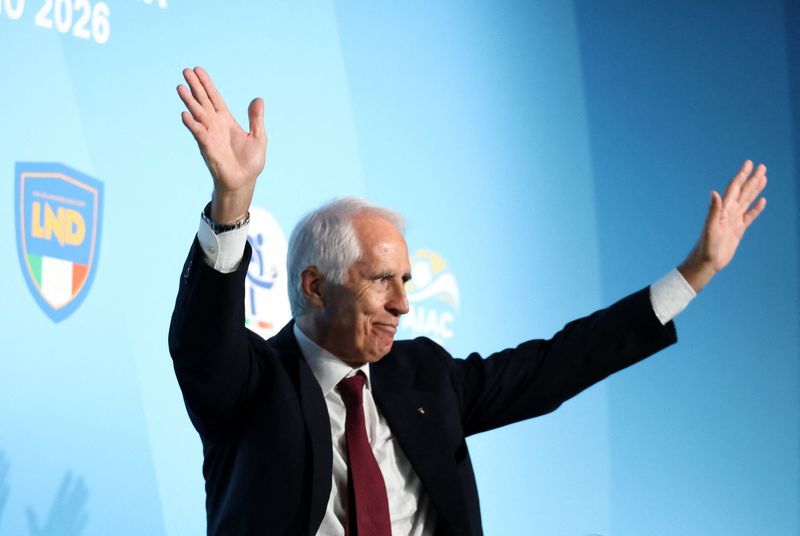
Giovanni Malago has stepped into one of European football's most demanding roles after his election as president of the Italian Football Federation on Monday, burdened with the task of rescuing Italian soccer from its deepest crisis in four decades. The 67-year-old businessman emerged victorious with 68.58% support at the FIGC assembly in Rome, succeeding Gabriele Gravina, who resigned following Italy's shock failure to qualify for the World Cup in April—a calamity that marked the nation's third consecutive absence from the tournament.
Malago arrives at the federation having recently earned widespread acclaim for his work as head of the organising committee for the Milano Cortina Winter Olympics in February, where he oversaw an event that ran smoothly despite mounting international scrutiny of Italy's ability to host major sporting occasions. His appointment represents a significant shift in the federation's leadership, with voters choosing him over Giancarlo Abete in a decisive mandate that reflects widespread frustration with the previous administration and the comprehensive collapse of Italian football's international standing.
The incoming federation president brings a distinctive background to the role, combining his experience as former head of the Italian National Olympic Committee with his previous involvement in futsal, providing him with broad exposure across multiple sporting disciplines. Yet his election comes at a moment of existential crisis for Italian football. The national team's playoff defeat to Bosnia & Herzegovina in April triggered immediate upheaval, with head coach Gennaro Gattuso resigning and legendary goalkeeper Gianluigi Buffon stepping down from his position as national team delegation head. The fallout extended beyond the national setup, as Italian clubs subsequently crashed out of European competitions, leaving the nation's football infrastructure in tatters.
Malago's appointment signals recognition that the federation requires leadership experienced in managing large-scale operations and navigating institutional complexities. Speaking after his election victory, he acknowledged the weight of expectation while projecting determination: "I am not afraid but I am highly mindful of the responsibilities. The expectations are absurdly high but that is also the case within the Federation itself." His words reflected the mood among Italian football administrators and supporters alike, where frustration has given way to a demand for comprehensive transformation rather than incremental reform.
The new federation president has identified several immediate priorities demanding urgent attention. Chief among these is the appointment of a new men's national team coach, a decision that will shape Italy's footballing direction for years to come. Beyond this headline task, Malago has signalled his intention to pursue a fundamental overhaul of youth development systems, a long-overdue reckoning that addresses structural weaknesses identified by prominent figures within Italian football. Roberto Baggio, the former striker and national icon, had previously warned that Italy's talent development apparatus had become obsolete, a critique that resonated throughout the sport as the underlying cause of recent disappointments.
Looking further ahead, Malago must also accelerate preparations for Euro 2032, which Italy will co-host alongside Turkey. This tournament represents a golden opportunity to rebuild national pride and showcase Italian football's potential recovery, making the intervening years crucial for establishing new foundations and identifying emerging talent. His electoral address reflected an understanding of this temporal urgency, emphasizing that the federation must transcend mere administrative functions and instead serve as a catalyst for inspiration and transformation across Italian sport.
In his pre-election remarks, Malago articulated a philosophy suggesting he grasps the psychological dimensions of Italian football's predicament. "The Football Federation must not just administer; it must be a source of inspiration. It is the largest social institution in the country, and not just in terms of numbers," he declared, indicating awareness that Italian football extends far beyond competitive outcomes to encompass national identity and social cohesion. This broader perspective suggests a leader willing to engage with the emotional and cultural aspects of restoring Italian football rather than focusing exclusively on tactical or technical matters.
Malago's handling of what he terms the nation's footballing heritage proves particularly revealing about his approach. Rather than treating Italy's extraordinary history—four World Cup victories and innumerable European honours—as nostalgic baggage, he proposes channelling it constructively. "Our roots must not be a source of nostalgia or a burden; we must turn them into an incentive to look toward a new season—one that is courageous, victorious, humble yet ambitious," he explained, suggesting a determination to reconcile past glories with future ambitions without becoming paralysed by historical expectations.
The scale of institutional damage facing Malago cannot be overstated. Italy's triple World Cup qualification failures represent not merely sporting disappointment but a fundamental erosion of confidence in the federation's competence and vision. Gravina's tenure, which began in 2018 with considerable optimism following a momentary recovery that saw Italy win Euro 2020, ended in ignominy. Before departing, the outgoing federation chief offered a candid assessment, acknowledging that he should have resigned earlier, a confession that underscores the depth of institutional decay preceding Malago's arrival.
Malago's closing statement after his election—"Alone I can do nothing, together we can do everything"—signals his recognition that rebuilding Italian football demands consensus across multiple stakeholders. The federation, the national team's coaching staff, club executives, youth development specialists, and the broader footballing community must align around a coherent vision. This collaborative imperative reflects the scale of transformation required and distinguishes Malago's approach from potential alternative strategies relying on top-down restructuring.
For Malaysian and Southeast Asian observers, Italy's crisis offers instructive lessons about how even nations with deep footballing traditions can lose competitive edge through institutional dysfunction and failure to adapt youth development systems to modern demands. Malago's appointment and his stated priorities represent an attempt to restore a fallen giant through systemic reform rather than cosmetic change, a process that will unfold across the coming years leading toward Euro 2032. Whether he can successfully navigate the competing pressures of restoring short-term competitive credibility while simultaneously rebuilding long-term infrastructure will define not only his tenure but Italian football's trajectory for the remainder of this decade.

