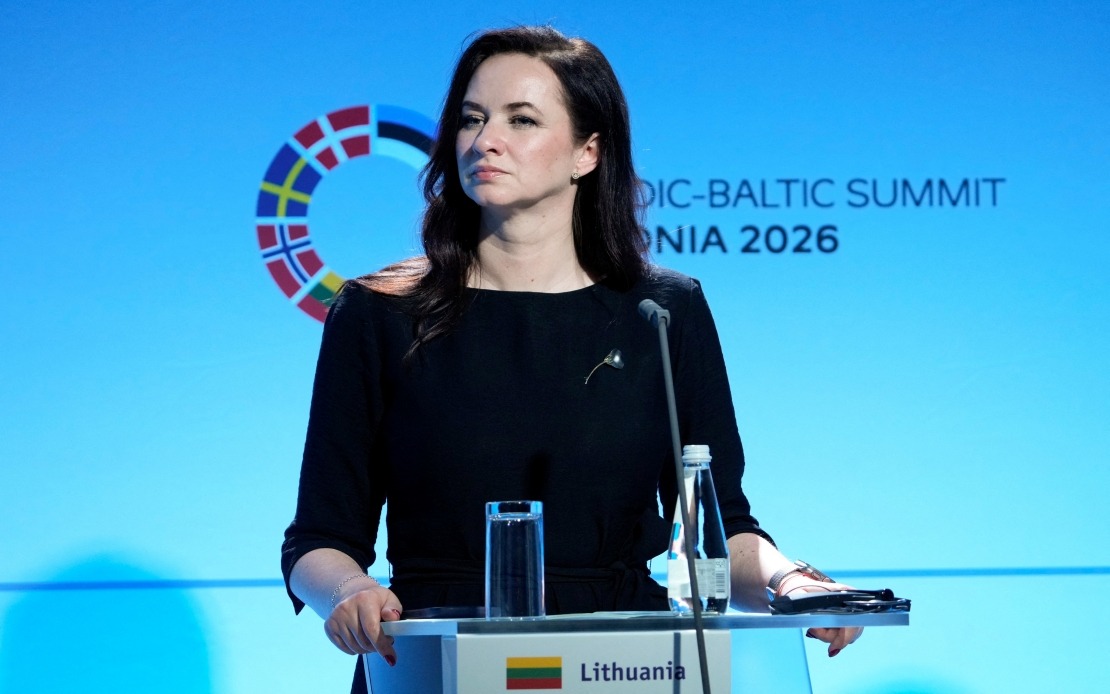
Lithuania faces a period of governmental transition following Prime Minister Inga Ruginiene's resignation announcement on Tuesday, setting in motion a formal process to establish a successor administration. The move comes as the ruling coalition undergoes internal restructuring, marking a significant shift in the country's political landscape months after its 2024 parliamentary elections.
Under Lithuania's constitutional framework, President Gitanas Nauseda holds responsibility for initiating the replacement process. He has been granted a 15-day window to nominate a candidate for the prime ministerial position, after which the selected nominee must obtain approval from the Seimas, Lithuania's unicameral legislature. This procedural timeline reflects the carefully calibrated institutional checks that govern executive formation in the Baltic nation.
Mindaugas Sinkevicius, who leads the Lithuanian Social Democratic Party, stands as the frontrunner for the nomination. Political observers and party leadership have signalled strong consensus around his candidacy, suggesting an expectation that parliamentary approval will follow. Should he secure parliamentary endorsement, Sinkevicius would then face his own demanding timeline: 15 days to assemble his Cabinet and outline the new government's governing platform, followed by an additional fortnight to submit the complete ministerial lineup for parliamentary ratification.
The incoming administration will represent the third governing coalition that the Social Democrats have assembled since voters went to the polls in late 2024. This pattern of coalition realignment underscores the fragmented nature of Lithuanian parliamentary politics, where single-party majorities remain elusive and coalition management proves perpetually challenging. Each iteration reflects shifting political calculations and changing strategic priorities among coalition partners.
The outgoing government, which assumed office in August following the departure of former Prime Minister Gintautas Paluckas, has now concluded its brief tenure. During that final Cabinet session held on Tuesday, ministers unanimously approved the resignation resolution, lending procedural legitimacy to the transition. Ruginiene acknowledged the administration's accomplishments while recognising the substantial obstacles it had navigated during its time in office.
President Nauseda has formally accepted the government's resignation and invoked standard constitutional provisions requiring the outgoing Cabinet to continue functioning in a caretaker capacity. This transitional arrangement ensures governmental continuity and prevents an administrative vacuum during the formation process. The caretaker government will maintain essential services and handle routine administrative functions, though it operates under constraints preventing major policy initiatives.
Lithuania's frequent governmental reshuffles reflect broader dynamics within East European democracies, where coalition governments must constantly balance competing interests among diverse parliamentary factions. The successive transformations of Social Democratic-led administrations highlight the difficulty of sustaining unified coalitions in parliaments with multiple significant blocs. For regional observers, Lithuania's political instability offers instructive lessons about the challenges of managing fragmented legislative environments.
The timing of this transition occurs amid Lithuania's ongoing role as a NATO member and European Union participant, positioned strategically on the European Union's eastern frontier. Political instability, while manageable, requires careful handling given the country's geopolitical sensitivities and security commitments. Neighbouring states and international partners will monitor the new government's formation to assess continuity in foreign and security policy orientation.
The Social Democrats' capacity to construct viable governing coalitions repeatedly suggests party strength despite coalition challenges. However, each successive realignment raises questions about underlying policy coherence and the durability of programmatic consensus among coalition parties. The forthcoming government's policy agenda will demonstrate whether the new arrangement can sustain greater institutional stability than its predecessors or whether further fragmentation lies ahead.
For Malaysian observers of European governance, Lithuania's situation illustrates how even established democracies with decades of parliamentary experience navigate complex coalition dynamics. The contrast between single-party dominant systems prevalent in Southeast Asia and Europe's coalition-dependent structures highlights distinct institutional approaches to balancing representation and governmental stability. Lithuania's transparent procedural handling of governmental transitions, while sometimes appearing tumultuous, reflects institutional mechanisms designed to manage power transfers through established constitutional channels rather than extra-legal means.