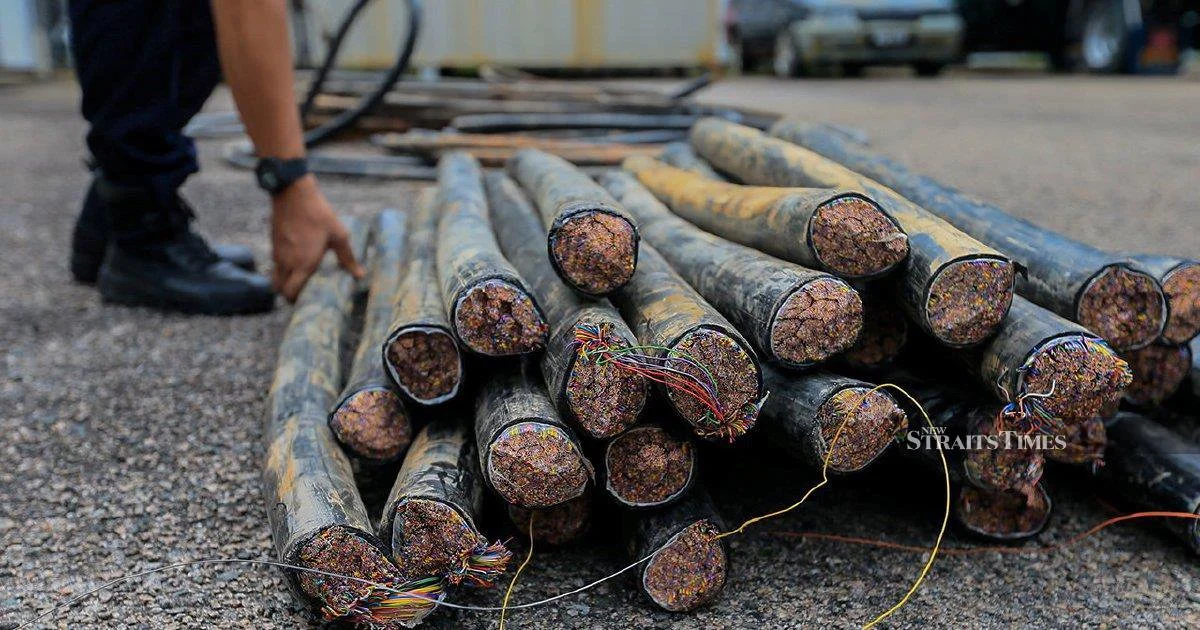
The Kuala Lumpur police have achieved a notable reduction in cable theft incidents, recording 71 cases between January and May 2025 against 205 reported throughout the entirety of 2024, marking a substantial improvement in controlling one of the city's persistent street crimes. The declining trend reflects intensified law enforcement operations and targeted strategies implemented to dismantle theft networks that have long plagued the capital's infrastructure.
So far this year, authorities have apprehended 85 suspects connected to cable theft activities, representing a concerted effort to interrupt the criminal supply chains that feed stolen copper and aluminium into illicit recycling markets. The arrest rate suggests that police have shifted toward proactive investigation methods, moving beyond reactive responses to reported incidents and instead targeting the networks that organise and profit from these crimes. Each arrest disrupts not only individual perpetrators but the logistics that enable repeated offences across different neighbourhoods.
Cable theft has long represented a particularly vexing problem for Malaysian cities because of its dual impact: it creates immediate public inconvenience through disrupted telecommunications and power supply, while simultaneously degrading urban infrastructure and deterring investment in residential areas. The thefts typically target telecommunications cables, electrical conduits, and copper wiring from both government and private installations, with criminals operating under cover of darkness or during low-traffic periods. The speed with which stolen materials can be converted to cash through unscrupulous metal dealers has made the crime especially attractive to organised groups and opportunistic individuals alike.
The improvement in KL's statistics carries particular significance for Southeast Asia's region, where cities including Jakarta, Bangkok, and Manila contend with similarly troublesome cable theft epidemics. Malaysia's apparent progress offers a potentially instructive model for other metropolitan authorities wrestling with comparable challenges. The combination of increased street-level enforcement, intelligence-led operations targeting receiving networks, and what appears to be improved community reporting mechanisms has created measurable results within a compressed timeframe.
Understanding the mechanics of cable theft networks reveals why the January-to-May performance matters. These operations typically involve a tier structure: street-level thieves who execute the physical theft, transport intermediaries who move stolen materials to collection points, and metal dealers who process and sell goods onward. Dismantling even one layer disrupts the entire chain's profitability. The 85 arrests suggest police have moved beyond apprehending street operatives and begun targeting middlemen and receivers, fundamentally altering the crime's economics.
The reduction in reported cases likely reflects multiple contributing factors operating simultaneously. Enhanced police patrols in high-incidence areas have created genuine deterrence, as potential offenders recognise increased apprehension risk. Improved street lighting and surveillance camera installation in vulnerable locations have supplemented human presence. Telecommunications and utilities companies have also invested in protective infrastructure, burying cables in certain areas or installing physical barriers around exposed conduits, making theft more time-consuming and riskier for perpetrators.
Community engagement appears to have strengthened reporting mechanisms, enabling residents and businesses to alert authorities more quickly when thefts occur. This faster response capability allows police to pursue leads while they remain warm, potentially enabling arrests at recovery sites or during material sales. The psychological dimension matters too: when communities believe police will respond effectively, they invest greater effort in observation and reporting rather than viewing such crimes as inevitable urban phenomena beyond intervention.
The comparative statistics—71 cases over five months versus 205 over twelve months—suggest an annualised rate of approximately 170 cases if current trends hold, representing a 17 percent reduction from 2024 levels. Extrapolating further, this trajectory indicates Kuala Lumpur could experience measurable infrastructure stabilisation and reduced insurance losses across affected utilities and telecommunications operators. For residents, diminished service interruptions mean improved reliability of essential communications and electrical supply.
However, sustainability remains the critical challenge ahead. Cable theft frequently intensifies during economic downturns when desperation drives opportunistic crime or when metal prices spike, increasing the street value of stolen materials. Maintaining the 85-arrest-per-five-months pace, or ideally accelerating it, will require consistent resource allocation and continued intelligence focus. Police and utilities companies must resist complacency when incident numbers decline, as organised criminal groups often adapt tactics rather than abandon profitable activities entirely.
The involvement of scrap metal dealers in processing stolen materials represents perhaps the most promising intervention point. By implementing stricter licensing requirements for dealers, implementing electronic transaction logging for cable purchases, and cross-referencing suspicious acquisition patterns with police databases, authorities can attack demand-side economics that make cable theft viable. Several metropolitan areas worldwide have reduced such theft through dealer-focused regulations, creating paper trails that leave criminals exposed.
Looking forward, the KL police achievements suggest that persistent crime need not remain intractable with sufficient tactical coordination and sustained enforcement pressure. The current declining trajectory demonstrates that communities don't simply accept infrastructure crime as inevitable. As other Southeast Asian cities grapple with similar challenges, the Kuala Lumpur experience offers concrete evidence that strategic intervention yields measurable results within timeframes that citizens notice and appreciate, ultimately strengthening public confidence in law enforcement effectiveness.