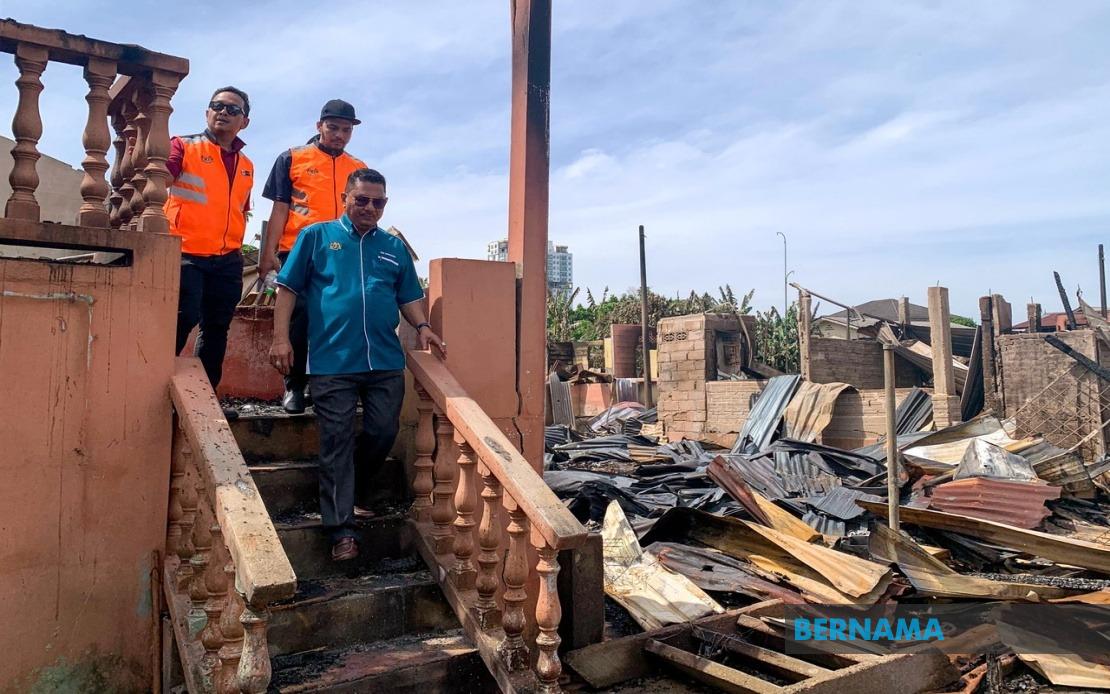
Investigations into a devastating fire that gutted 27 houses in Kampung Gok Kapur, Kota Bharu on June 8 have determined that the blaze originated from the deliberate burning of a stack of papers inside a kitchen. The Kelantan Fire and Rescue Department (JBPM), through its specialised Fire Investigation Forensic Unit, traced the incident to an act of negligence that spiralled rapidly out of control, ultimately displacing more than a hundred residents from their homes.
Kelantan JBPM director Farhan Sufyan Borhan elaborated on the findings, explaining that the fire began when an open flame source—specifically a gas lighter—was applied directly to papers stacked in the kitchen area of one residential structure. While the immediate cause appears straightforward, the investigation underscores how quickly a seemingly contained activity can transform into a catastrophic event. The ignition of the paper pile created sufficient heat and flames to ignite nearby combustible materials within the kitchen and adjoining spaces.
The speed at which the fire spread across multiple structures highlights the vulnerability of densely-populated residential areas, particularly where houses are built in close proximity to one another. Once the flames breached the confines of the initial property, they rapidly consumed the external walls and roofs of neighbouring dwellings. The tropical climate of Kelantan and the likely construction materials used in the village—timber and other combustible substances common in rural Malaysian homes—enabled the fire to advance with alarming velocity before emergency responders could contain it.
Authorities determined that negligence played a critical role in the disaster. The decision to burn papers directly inside the kitchen, using an open flame method rather than safer disposal alternatives, represented a serious lapse in fire safety judgment. This finding carries important implications for public awareness campaigns across Malaysia, where informal paper-burning and waste disposal practices remain common in both rural and urban communities. The incident serves as a stark reminder of the dangers posed by outdoor and indoor burning practices that bypass proper waste management channels.
The investigation process involved extensive physical evidence collection and detailed witness statements from those present during and after the fire. The methodical approach adopted by the forensic unit enabled investigators to reconstruct the sequence of events with reasonable certainty, pinpointing the exact location where the fire began and identifying the implement used to ignite the materials. This evidence has now been compiled into a formal report destined for police and relevant authorities for consideration of potential legal action.
The consequences for the affected community were severe and immediate. A total of 110 villagers lost their homes in the incident, forcing families to abandon their belongings and seek emergency shelter. Local authorities coordinated a rapid response, establishing a temporary evacuation centre at the nearby Mukim Banggol Mosque to provide basic accommodation and services for the displaced residents. While the absence of casualties represented a fortunate outcome given the fire's intensity and spread, the psychological and economic toll on the community remained substantial.
For Malaysian households and communities, the Gok Kapur incident underscores persistent gaps in fire safety culture. Many residents across the peninsula continue to employ traditional waste disposal methods without fully appreciating the risks involved. The use of open flames in or near residential structures, particularly in kitchens where cooking equipment and stored food items create additional hazards, remains disturbingly common. The fact that a routine household activity escalated into a neighbourhood-wide disaster illustrates how quickly domestic environments can become tinderboxes when basic safety protocols are neglected.
The JBPM's advisory to the public reflects broader concerns about residential fire prevention. The department explicitly urged citizens to exercise caution when handling open flame sources and to refrain entirely from burning activities within or immediately adjacent to occupied homes. These recommendations align with Malaysian fire safety codes, yet the persistence of such incidents suggests that public education and enforcement mechanisms require strengthening. Rural communities in particular may lack regular access to fire safety training and awareness initiatives that are more readily available in urban centres.
Looking forward, the transfer of the investigation report to police authorities raises questions about potential prosecutions and accountability measures. Malaysian fire safety legislation provides provisions for addressing negligence that results in property damage and displacement of residents. However, the outcomes of such cases often depend on prosecutorial discretion and evolving interpretations of negligence standards. The handling of this case may establish precedent for how similar incidents are addressed within the Kelantan jurisdiction and potentially influence fire safety enforcement practices statewide.
The incident also highlights the importance of community-level fire prevention infrastructure. Access to adequate water supply, functional fire hydrants, clear evacuation routes, and neighbourhood awareness programmes can substantially mitigate both the frequency and severity of residential fires. Rural settlements like Kampung Gok Kapur may face particular challenges in accessing such infrastructure, creating vulnerabilities that require targeted intervention from state and federal authorities tasked with disaster risk reduction and emergency management.