The Malaysian Ministry of Human Resources (KESUMA) is rolling out a comprehensive reskilling initiative designed to cushion the impact of ongoing global supply chain disruptions on the nation's workforce. Speaking during an event in Johor Bahru on June 23, Minister Datuk Seri R. Ramanan outlined plans to deploy Technical and Vocational Education and Training (TVET) programmes that will equip displaced workers with marketable skills for Malaysia's evolving job market. The intervention comes as manufacturing hubs across Southeast Asia continue grappling with logistics snarls, supplier bottlenecks, and shifting international trade patterns that have left thousands vulnerable to redundancy.
The initiative specifically targets individuals whose employment has been jeopardised in three critical economic sectors: services, manufacturing, and construction. These industries form the backbone of Malaysia's economy but have proven particularly exposed to the ripple effects of global supply chain fragmentation. Rather than offering short-term income support alone, KESUMA's approach emphasises equipping affected workers with fresh capabilities that align with emerging economic opportunities, reflecting a policy shift toward human capital development as a stabiliser during economic turbulence. The distinction between upskilling—deepening expertise in related fields—and reskilling—transitioning to entirely new sectors—gives workers flexibility to pursue pathways suited to their circumstances and aspirations.
Crucially, the programme is not a standalone TVET offering but forms part of a broader ecosystem involving the Social Security Organisation (PERKESO). Through PERKESO's MYFutureJobs platform, displaced workers will access structured job matching services designed to create connections between their newly acquired skills and genuine employment vacancies. This intermediary function is vital: many reskilling programmes fail when graduates cannot translate certifications into actual job offers. By embedding employment assistance directly into the framework, KESUMA is attempting to close the gap between training completion and labour market absorption, a persistent challenge in vocational education across the region.
The job matching component incorporates a vetting process ensuring that placements represent genuine fits between worker capabilities and employer requirements, rather than merely pushing individuals into any available position. This deliberate approach acknowledges that mismatched placements often result in high turnover and worker dissatisfaction, ultimately wasting both public investment and individual effort. For Malaysian employers facing skill shortages amid supply chain uncertainties, access to a pool of reskilled workers presents an opportunity to plug talent gaps without bearing full training costs themselves.
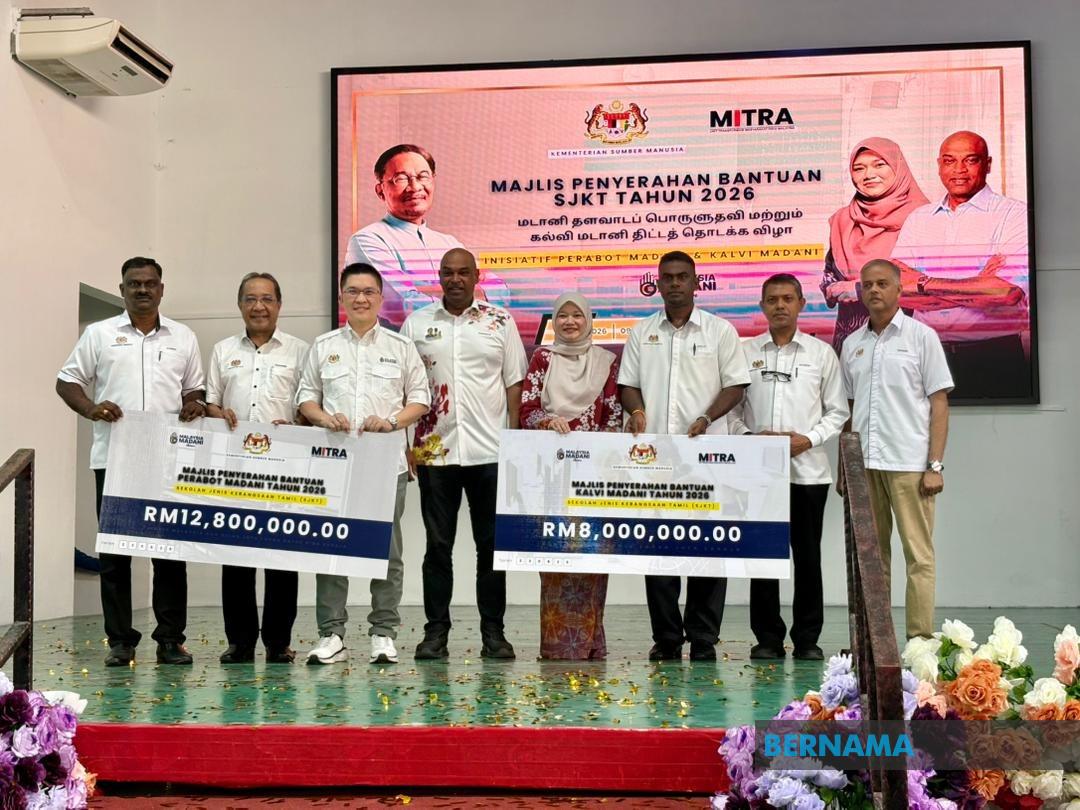
Parallel to the reskilling initiative, KESUMA announced two separate programmes targeting vulnerable student populations, both unveiled during the launch event in Johor Bahru attended by Education Minister Fadhlina Sidek and Deputy Education Minister Wong Kah Woh. The RM12.8 million MADANI Furniture Initiative will supply 14 types of high-quality furniture and equipment—tables, chairs, cabinets, and fans—to 361 government-aided Tamil vernacular schools (SJKT) across Malaysia, benefiting nearly 40,000 pupils and over 5,000 teachers. The phased rollout, scheduled to conclude by August, addresses a persistent infrastructure gap in vernacular education that has long constrained learning environments in underserved communities.
The companion initiative, the KALVI MADANI Programme, represents a more comprehensive intervention in educational equity. Allocating RM8 million, this scheme targets approximately 10,410 Indian pupils across 315 selected Tamil vernacular schools with free tuition classes, nutritional support, learning kits and devices, and teacher welfare initiatives. The multi-pronged approach acknowledges that educational disadvantage rarely stems from a single cause; by simultaneously addressing nutrition, learning materials, teaching quality, and pedagogical support, the programme attempts to remove barriers that cumulate to depress educational outcomes. For Malaysian policymakers, such integrated schemes offer lessons in tackling systemic inequality more effectively than narrowly focused interventions.
These educational initiatives reflect broader governmental recognition that workforce resilience extends beyond immediate job recovery to encompassing pipeline development—ensuring that tomorrow's labour force is equipped from childhood with foundational skills and confidence to adapt to economic change. Tamil vernacular schools, serving communities that have historically experienced lower social mobility in Malaysia's multilingual education ecosystem, represent a strategic investment point. By improving physical learning infrastructure and providing material support during critical formative years, KESUMA signals commitment to widening economic participation beyond entrenched pathways.
The timing of these announcements carries particular significance for Malaysia's regional positioning. As Southeast Asia competes for foreign direct investment and seeks to develop high-value manufacturing and services capabilities, workforce agility becomes a competitive asset. Nations offering rapid reskilling infrastructure, embedded employment support systems, and early investment in educational equity demonstrate institutional capacity to adapt labour supplies dynamically to shifting economic demands. Malaysia's multifaceted approach—addressing displaced workers, students from disadvantaged backgrounds, and infrastructure gaps simultaneously—positions the country as relatively proactive within the regional context, where many peers rely on more reactive, temporary relief measures.
However, sustaining these initiatives at scale presents ongoing fiscal and administrative challenges. TVET programmes require continuous curriculum updates to remain relevant as technological change accelerates; job matching platforms demand sophisticated data management and active engagement with employers; and educational initiatives depend on effective downstream implementation at school level. The supply chain crisis that prompted this reskilling drive itself demonstrates how quickly external shocks can overwhelm planned interventions. Whether KESUMA can maintain programme momentum and quality as displacement pressures potentially intensify will significantly influence the initiative's ultimate impact on affected workers and students.