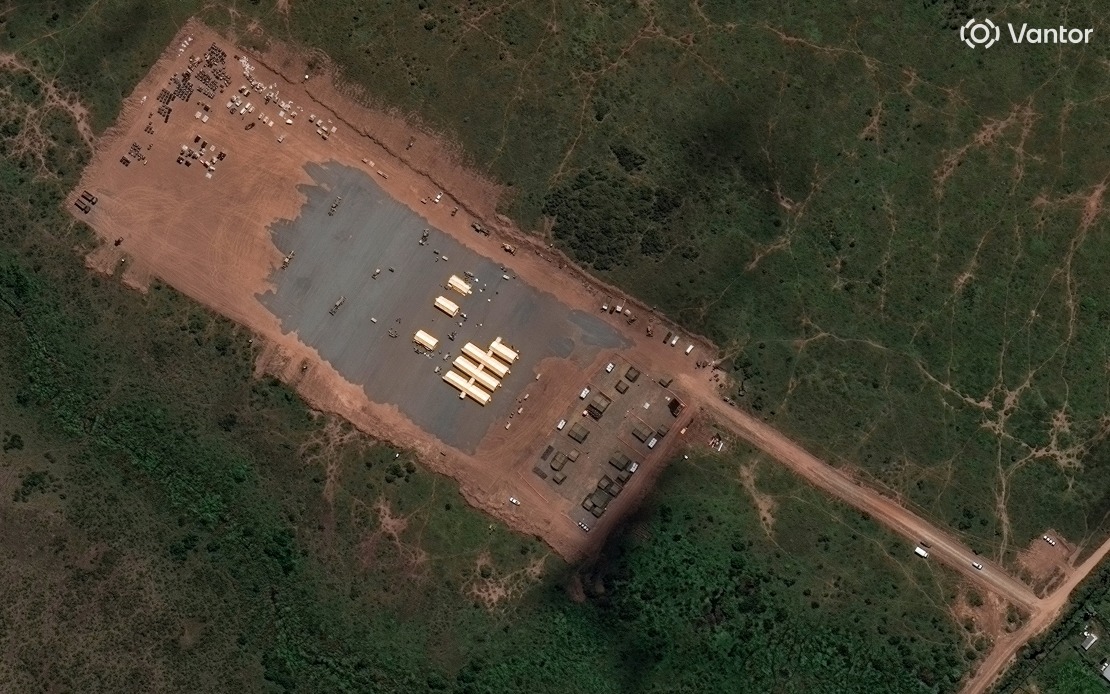
Kenya's High Court has delivered a sharp rebuke to the government's Ebola preparedness strategy, finding Health Minister Aden Duale in contempt for continuing construction of a controversial quarantine facility despite explicit court orders halting the project. High Court Judge Patricia Nyaundi issued the ruling on Monday, determining that Duale had wilfully disregarded judicial directives issued on May 28 and reaffirmed on June 2, maintaining oversight of construction activities at Laikipia Air Base in violation of those orders. The minister faces potential sanctions and has been directed to appear before the court on Tuesday to present mitigation arguments ahead of sentencing, marking an escalation in a dispute that has become one of Kenya's most divisive public health controversies.
The planned facility represents a 50-bed isolation and quarantine centre positioned approximately 8 kilometres west-northwest of Nanyuki in Laikipia County, roughly 200 kilometres north of Nairobi. According to government statements, the installation would serve as a medical response hub for Americans who might be exposed to Ebola virus during operational activities related to ongoing outbreaks in the Democratic Republic of the Congo and neighbouring regions. This positioning underscores Kenya's strategic role as a major East African logistics, diplomatic and commercial hub, where international personnel regularly transit and operate, creating potential exposure pathways for infectious diseases.
The controversy intensified dramatically when President William Ruto publicly revealed that he had authorised the facility at the explicit request of United States President Donald Trump, characterising the arrangement as an extension of longstanding bilateral health collaboration. This disclosure transformed the dispute from a domestic public health matter into a geopolitical question, raising concerns among opposition figures, civil society organisations and constitutional advocates about sovereignty, transparency and democratic accountability in major infrastructure decisions. The Katiba Institute, a constitutional rights watchdog, successfully petitioned the High Court to suspend the project, arguing that it violated multiple constitutional requirements, including adequate public participation, environmental assessment protocols and proper legislative oversight.
Government defenders have countered that the facility represents a critical component of Kenya's Ebola containment strategy, emphasising the country's vulnerability given its central position in African transportation networks and its historical role in disease surveillance and response. Officials have argued that regional health security demands preemptive capacity building, particularly given the unpredictable nature of viral outbreaks and the potential for rapid transmission across porous borders. The United States Embassy in Nairobi has consistently maintained that the installation poses no epidemiological threat to nearby populations and constitutes part of a comprehensive regional effort to strengthen detection, isolation and emergency response mechanisms against Ebola transmission.
Yet these official justifications have failed to persuade significant segments of Kenyan society. Laikipia County residents have mounted sustained protests against the facility, with demonstrators arguing that authorities have systematically ignored both community concerns and successive court orders. Civil rights groups, regional political leaders and environmental advocates have raised fundamental questions about whether such a strategic health installation should proceed without exhaustive public consultation, independent risk assessment and full parliamentary debate. The opacity surrounding the project's scope, operational protocols and oversight mechanisms has fuelled suspicion among critics who question whether adequate safeguards exist to protect local populations.
The human cost of this impasse has proven tragic. Police forces, eyewitnesses and human rights monitors have documented at least three deaths during demonstrations protesting the facility's construction. These fatalities underscore the intensity of public opposition and suggest that the conflict has evolved beyond legal and administrative channels into direct confrontation between state authorities and community members. The violence raises broader questions about the government's approach to dissent and whether concerns raised by ordinary citizens have received adequate consideration before expensive, sensitive infrastructure projects proceed.
This judicial intervention carries significant implications for how Kenya balances competing interests: international health partnerships and regional security responsibilities against constitutional requirements for transparency, public participation and judicial supremacy. The contempt finding suggests that the judiciary is prepared to enforce its orders even against senior government figures, a potentially important development for constitutional governance. However, the underlying tension between legitimate health security imperatives and democratic accountability mechanisms remains unresolved, requiring political resolution rather than purely legal adjudication.
For Southeast Asian nations observing Kenya's experience, the case offers instructive lessons about managing infectious disease preparedness in an interconnected world. Malaysia, as a similar regional transport hub with significant international flows of people and goods, faces comparable epidemiological risks and may eventually consider comparable bilateral health arrangements with partner nations. The Kenyan precedent suggests that such arrangements, however justified on public health grounds, require careful engagement with domestic legal frameworks, transparent communication with affected communities and genuine parliamentary oversight to maintain public legitimacy and avoid constitutional conflicts.
The contempt finding has set the stage for further judicial proceedings that will determine whether Duale faces personal sanctions, potentially including fines or custodial measures. These developments may influence how other government officials approach judicial orders in future disputes, establishing important precedents about accountability. Yet the core question—whether the Ebola facility ultimately proceeds, in what form, and under what conditions—remains unresolved, suggesting that political negotiation and legislative action may prove necessary to move beyond the current legal deadlock and establish a more consensual path forward.