%22%2F%3E%3C%2Fpattern%3E%3C%2Fdefs%3E%3Crect%20width%3D%22100%25%22%20height%3D%22100%25%22%20fill%3D%22url(%23ph237zdg)%22%2F%3E%3Crect%20width%3D%22100%25%22%20height%3D%22100%25%22%20fill%3D%22url(%23ph237zdp)%22%2F%3E%3Ctext%20x%3D%2250%25%22%20y%3D%2250%25%22%20text-anchor%3D%22middle%22%20dominant-baseline%3D%22central%22%20fill%3D%22rgba(255%2C255%2C255%2C0.95)%22%20font-family%3D%22Georgia%2C%20'Times%20New%20Roman'%2C%20serif%22%20font-weight%3D%22700%22%20font-size%3D%22272%22%20letter-spacing%3D%22-0.02em%22%3EJohor%3C%2Ftext%3E%3C%2Fsvg%3E)
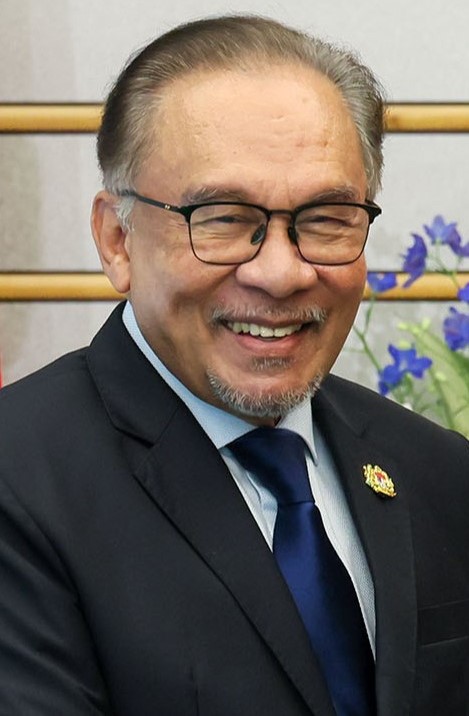
Prime Minister Datuk Seri Anwar Ibrahim held a significant audience with Johor's Regent, Tunku Mahkota Ismail, in an engagement that demonstrated the continued alignment between the state government and federal leadership. The meeting, which took place in the state capital, served as a visible reaffirmation of the collaborative working relationship that has characterised recent dealings between Putrajaya and Johor's administration.
The Johor Regent, who holds considerable influence in state affairs and serves as an important custodian of the state's traditions and interests, extended the invitation to Malaysia's premier, underlining the protocol and respect that governs relations between the monarchy and executive branch. Such audiences represent more than ceremonial courtesy; they provide crucial opportunities for senior figures to discuss matters affecting the state's development and the nation's broader governance agenda.
Johor's significance in Malaysia's political and economic landscape cannot be overstated. As the country's second-largest state by economic output and population, decisions made in Johor's administration ripple across the wider region. The state is home to the Iskandar Malaysia development corridor, a major economic zone that attracts substantial foreign direct investment, and hosts critical port facilities, manufacturing hubs, and agricultural sectors that contribute meaningfully to national GDP. When the federal Prime Minister engages directly with Johor's leadership, it signals priority attention to these economic engines.
The timing of the meeting carries its own significance. Federal-state relations have historically required careful navigation in Malaysia's federal system, where state governments maintain substantial autonomy over land, agriculture, and local governance matters, while the federal government oversees defence, foreign policy, and certain economic sectors. A public audience of this nature suggests that any potential friction points have been managed constructively, and both levels of administration are functioning as aligned partners rather than competing interests.
For the federal government, strengthening ties with Johor is strategically important. The state has consistently delivered electoral support to the federal coalition, and maintaining robust relations helps sustain this political foundation while ensuring state-level cooperation on national priorities such as infrastructure development, economic diversification, and social programmes. The Regent's willingness to grant such an audience reflects the state's openness to federal initiatives and collaborative governance.
From Johor's perspective, the engagement allows the state leadership to directly present its priorities and concerns to the Prime Minister, ensuring that Johor's interests receive consideration in federal planning and resource allocation. Issues ranging from infrastructure investment to labour policy to interstate commerce can be addressed through high-level dialogue, making such meetings invaluable for state advocacy.
The relationship between Putrajaya and Johor has evolved considerably over recent years, particularly as Malaysia has navigated political transitions and economic challenges. The current alignment appears to reflect a pragmatic recognition that federal and state governments achieve better outcomes through partnership than through institutional competition. This cooperative spirit extends to areas such as border management, cross-state development initiatives, and coordinated responses to economic opportunities in the southern corridor of Peninsular Malaysia.
For Malaysian businesses and investors, such demonstrations of federal-state harmony provide reassurance that Johor remains a stable, well-governed location for investment. Political tension between Putrajaya and state capitals can create uncertainty in regulatory environments and slow decision-making on development projects. Clear evidence of collaborative governance structures, as reflected in high-level meetings between the Prime Minister and Johor's Regent, helps maintain business confidence in the state's institutional stability.
The broader Southeast Asian context also makes Malaysia's federal coherence noteworthy. In an increasingly competitive region where foreign investors assess both political stability and governance quality, Malaysia's ability to maintain functional relationships between central and state authorities is a competitive advantage. Johor, positioned as a gateway to Singapore and commanding increasing importance in regional trade and logistics networks, benefits particularly from this perception of stable, coordinated governance.
Looking ahead, this audience suggests that collaborative federal-state engagement will likely continue to characterise the Johor-Putrajaya relationship. The Regent's role as a respected institution within the state, combined with the Prime Minister's need for broad-based political support, creates mutual incentives for maintaining constructive dialogue and partnership frameworks.
The meeting ultimately illustrates how Malaysia's constitutional monarchy and federal system function at their best: with clear delineation of responsibilities, mutual respect between institutions, and pragmatic recognition that national progress requires alignment between federal and state authorities. For Johor, one of Malaysia's most economically significant states, such demonstrations of partnership with federal leadership carry practical implications for the state's continued development and prosperity.