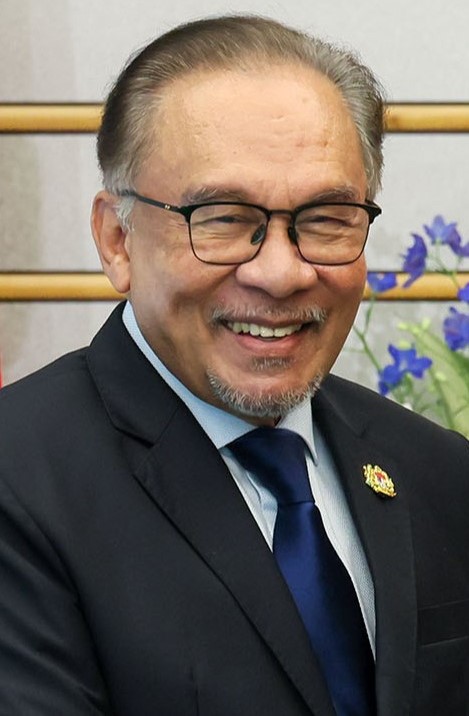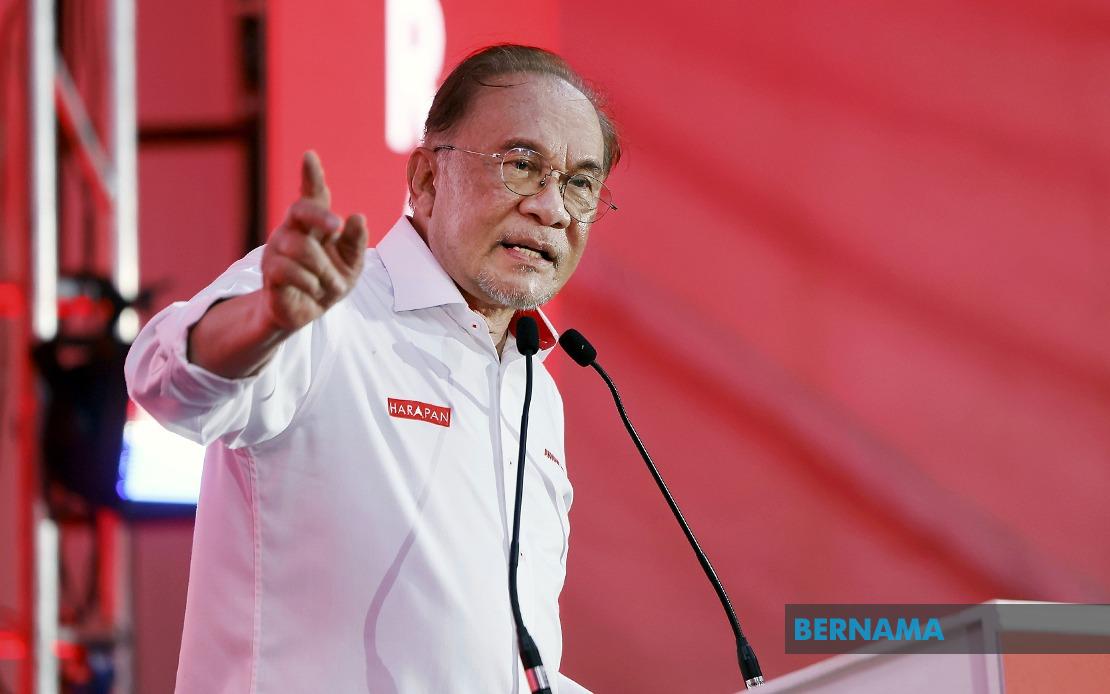
Prime Minister Datuk Seri Anwar Ibrahim presented a fiscal accounting of Federal-state relations at a political gathering in Tangkak, revealing that Johor has drawn more resources from Kuala Lumpur's coffers than it has paid in. Speaking at a Pakatan Harapan candidate announcement ceremony for the Johor State Election, Anwar underscored that between 2023 and 2025, Johor contributed approximately RM14 billion in revenue to the Federal government. Yet over the same period, the Federal government channelled RM16 billion back to the state through an array of development initiatives, operational spending, and welfare programmes.
The two-billion-ringgit surplus—presented as evidence of the MADANI Government's investment priorities—represents a deliberate messaging strategy as the ruling coalition mobilises for state-level contests. Anwar, who holds the dual portfolio of Prime Minister and Finance Minister, framed this reallocation as essential context for understanding the scope of Putrajaya's commitment to Johor's advancement. The comparison draws a direct line between Federal revenue collection and development returns, a narrative device intended to counter perceptions that wealthier, industrialised states like Johor might be shortchanged by redistributive fiscal policies favouring less developed regions.
Operating expenditure figures further illustrate the trajectory of spending directed toward the state. Under the previous government, Johor's annual operating allocations hovered between RM6 billion and RM7 billion. This baseline has risen sharply under the current administration, with 2026 projections showing RM8.7 billion in operational funding. The increase of approximately RM1.7 billion to RM2 billion annually represents a material boost to the state's capacity to deliver public services, from healthcare and education to transport and municipal governance. Such growth in operational capacity translates into visible improvements in everyday administration—teacher salaries, hospital equipment, road maintenance—matters that resonate directly with voters assessing government performance.
Development expenditure has expanded even more dramatically, climbing from RM2.3 billion in 2022 to RM4.8 billion in 2026, more than doubling over a four-year span. These funds underpin infrastructure projects, economic development zones, and long-term investments that shape a state's competitive position. For Johor, which faces stiff competition from Selangor in attracting manufacturing, logistics, and technology investment, enhanced development spending signals Federal backing for the state's industrial ambitions. The doubling of development allocations within a single electoral cycle represents either genuine policy shift or strategic timing designed to influence voter sentiment before elections—a distinction that observers remain divided upon.
The Prime Minister's presentation also situated Johor within Malaysia's broader budgetary hierarchy. According to Anwar's data, Johor ranks as the third-largest recipient of combined operating and development expenditure allocations nationally, trailing only Sabah and Sarawak. This positioning acknowledges a political reality: the two East Malaysian states command disproportionate fiscal attention owing to their geographic remoteness, infrastructure deficits, and strategic importance in Malaysia's federal coalition mathematics. Johor's third-place standing suggests it remains a priority within the peninsula, competing with states like Selangor and Perak for developmental resources. However, the gap between Johor and the top two recipients invites scrutiny regarding how equitably development spending is distributed across the federation.
Johor's performance in receiving welfare assistance payments also featured in Anwar's accounting. The state was identified as the second-largest beneficiary of Sumbangan Tunai Rahmah (STR) and Sumbangan Asas Rahmah (SARA)—cash assistance programmes targeting lower-income households. Only Selangor exceeded Johor in these assistance allocations, a reflection partly of population scale but also of policy emphasis. For the Government, highlighting substantial welfare distributions reinforces messaging about social safety nets and cost-of-living support during an economically strained period. For voters, the visibility of these programmes—cash transfers reaching household bank accounts—often registers more powerfully than abstract infrastructure investments.
The fiscal narrative carries particular weight in Johor's electoral context. The state has historically been a stronghold for the Barisan Nasional coalition, though recent national political realignments have introduced uncertainty. By demonstrating concrete financial commitments and allocations exceeding revenue contributions, the MADANI Government seeks to reinforce Johor's stake in the stability of Federal administration under its leadership. This argument proves especially potent among middle-class constituencies and business communities that perceive direct connections between national stability and state prosperity.
However, the presentation warrants scrutiny regarding its underlying assumptions. The comparison between RM14 billion contributed and RM16 billion returned assumes these figures are calculated on comparable methodological bases—a detail Anwar did not elaborate. Revenue contribution typically refers to direct taxes, customs duties, and other Federal collections, while allocations encompass operational budgets, development projects, and transfer payments. These categories are not perfectly symmetrical, and the apparent surplus could reflect accounting conventions rather than genuine fiscal generosity. Moreover, no state thrives on receiving less in development investment than it contributes in revenue; the true question lies in whether Johor's return ratio aligns with national norms and state development needs.
The timing of Anwar's announcement—immediately preceding state elections—underscores the political calculation embedded in fiscal reporting. Malaysian electoral cycles have increasingly become occasions for showcasing budgetary allocations and developmental projects, with competing coalitions presenting competing narratives about their fiscal management and prioritisation. For Johor voters, the claims will be weighed against their lived experience of development pace, public service quality, and economic opportunity.
Beyond Johor's immediate electoral context, Anwar's emphasis on Federal-state fiscal flows reflects broader tensions within Malaysia's federal system. Wealthier states like Selangor and Johor generate substantial revenue but also harbour expectations of developmental investment commensurate with their economic contributions. Poorer states, particularly in East Malaysia, command larger allocations relative to revenue contributions, justified by development imperatives and political considerations. Balancing these competing claims remains a perpetual challenge for Federal budgeting, one that no presentation of figures fully resolves. Anwar's framing suggests the MADANI Government believes it has navigated this balance favourably, at least in Johor's case—a position voters will assess in coming weeks.