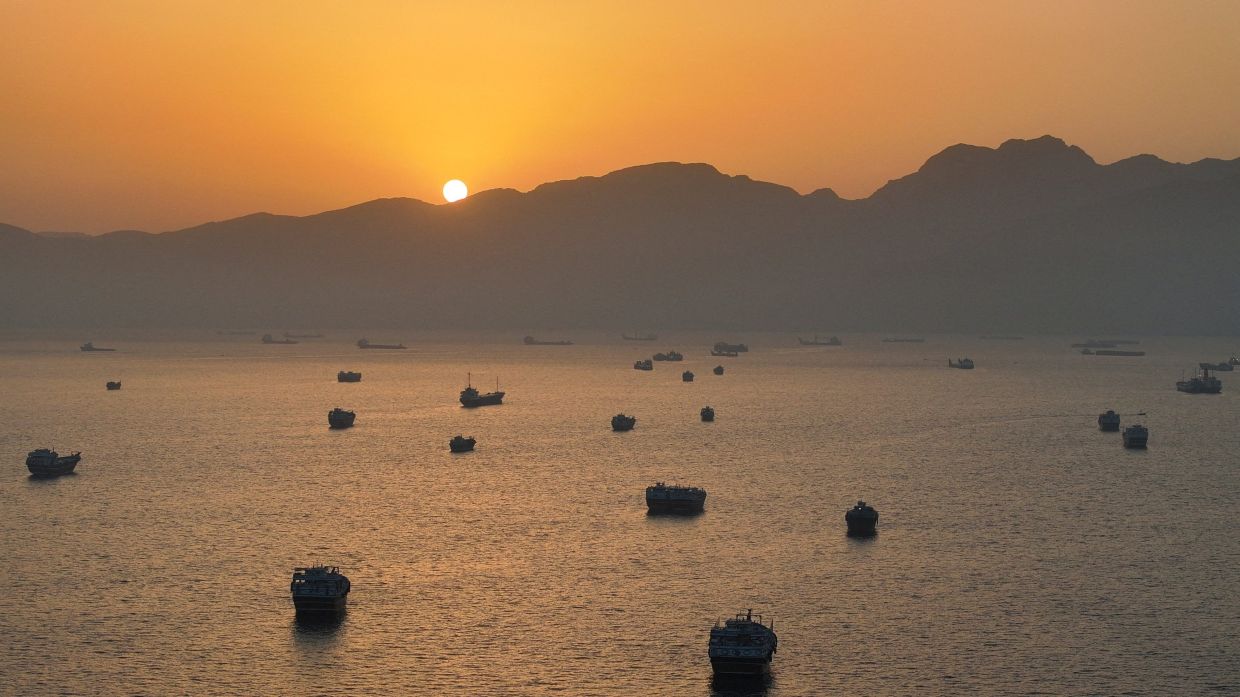
The steady departure of major oil tankers from the Strait of Hormuz this week signals a significant shift in regional logistics following a breakthrough interim agreement between Iran and the United States. Three Very Large Crude Carriers and Suezmax vessels, collectively carrying approximately 5 million barrels of crude oil, have begun exiting the strategically vital waterway, representing the latest batch of vessels to resume normal transit after months of disruption caused by Middle East tensions. The movement, confirmed by shipping data analysts, demonstrates how diplomatic developments can rapidly reshape energy supply chains and alter global commodity markets within days.
The South Korean-flagged VL Breeze, one of the largest crude carriers in the world, has cleared the strait with a cargo of 2 million barrels composed of Qatari condensate and crude from Abu Dhabi. The vessel, under charter to South Korean refiner Hyundai Oilbank, is now sailing toward Daesan in South Korea, where it will discharge its cargo into domestic refineries. This particular shipment carries significance for Seoul's energy security, as South Korea remains heavily dependent on Middle Eastern crude imports to sustain its massive petrochemical and refining sectors. The resumption of such direct Gulf-to-Korea routes illustrates how regional stability improvements translate into tangible benefits for Asian energy consumers.
Two additional vessels are following similar patterns toward different destinations across the region. The Plata Carrier, operating under Liberian registry but chartered by India's state-owned Indian Oil Corporation, is transporting 2 million barrels of Saudi Arabian crude westward through the strait. The Suezmax-class Prudent Warrior, also Liberian-flagged, carries 1 million barrels of Iraqi Basrah crude destined for Sohar in Oman. These movements reveal the interconnected nature of Asian energy markets, with supplies destined for refineries spanning the Indian subcontinent to Southeast Asian processing facilities. The fact that both vessels are successfully navigating the passage suggests that security conditions have improved sufficiently to permit normal commercial operations.
The scale of the backlog being gradually resolved underscores the severity of disruptions that accumulated before diplomatic progress. Analysts tracking vessel movements estimated that nearly 90 million barrels of crude oil remained stranded within the Persian Gulf region during the height of restrictions and uncertainty. This massive inventory accumulation reflected not merely supply interruptions but broader market psychology, as shipping companies and oil traders delayed operations due to perceived risks and unpredictable transit conditions. The gradual release of this backlog has begun exerting downward pressure on global crude prices, providing some relief to oil-importing nations that have absorbed higher costs during the extended period of uncertainty.
South Korea's maritime authorities reported that four vessels operated by Korean shipping companies have now successfully transited the strait, with one heading directly to South Korea and others proceeding to third countries. However, the situation remains far from normal operations, as eighteen of the twenty-six vessels originally stranded at the outset of Middle East conflict hostilities remain within the Gulf region. This implies that while momentum is building, significant portions of the global merchant fleet remain effectively trapped, unable or unwilling to undertake the passage despite improving circumstances. The extended timeline for clearing this backlog suggests that confidence in sustained stability remains incomplete among shipping operators and cargo owners who continue to exercise caution.
The precise routing protocols being employed by departing vessels reflect sophisticated coordination among regional authorities. Oman, working alongside the International Maritime Organization, has designated temporary maritime corridors positioned both north and south of the conventional shipping lane to provide alternative passages for vessels seeking to exit the region. These designated routes represent a pragmatic response to genuine safety concerns, offering psychological reassurance to crews and operators that transit has been actively managed and surveyed for hazards. However, the extent to which individual vessel operators are utilising these formal corridors versus undertaking independent transits remains somewhat unclear, suggesting that shipping decisions continue to reflect varying risk assessments across the industry.
Significantly, liquefied natural gas operations are also beginning to recover, signalling broader energy market normalisation. Two empty LNG carriers—the Shandong Redwood and Milaha Qatar—have recently transited westward through the strait specifically to load cargoes from Qatar's liquefaction terminals. This brings the total number of empty LNG vessels known to be loading at Qatar to nine, marking the highest concentration since regional hostilities commenced. The resumption of LNG activity carries particular importance for global energy markets, as liquefied natural gas commands premium prices and serves diverse markets across Europe, Asia, and elsewhere, making supply continuity from Qatar materially consequential for gas-dependent economies.
Qatar's leadership has signalled accelerating recovery in LNG production, with Prime Minister Sheikh Mohammed bin Abdulrahman al-Thani indicating that the Gulf state expects to restore normal production capacity within several weeks. This timeframe, while modest in absolute terms, represents significant optimism regarding both regional security normalisation and the technical capacity to ramp up facilities that may have operated below maximum output during the preceding disruption period. Qatar's LNG sector contributes substantially to global gas supply, and restoration of full production would meaningfully ease energy costs across multiple continents where demand for clean-burning gas continues growing.
The implications for Southeast Asian energy markets warrant particular attention, as the region includes major crude importers and refiners that have absorbed the economic impacts of supply disruptions and elevated prices. Malaysia, Indonesia, Thailand, and Singapore collectively operate substantial refining capacity dependent on steady crude supplies from the Gulf region. The resumption of tanker transits promises not merely price relief but supply certainty, enabling refineries to optimise their operational planning and procurement strategies without the premium costs associated with supply risk. For energy-intensive industries throughout Southeast Asia—from petrochemicals to power generation—the gradual normalisation of Gulf logistics represents a material improvement in cost structures and competitiveness.
Looking forward, the pace at which the remaining 18 stranded vessels clear the strait will provide a reliable indicator of whether regional stabilisation is proving durable or whether underlying tensions might yet re-emerge. Should departures continue accelerating toward the pre-conflict baseline of normal operations, global energy markets would likely experience sustained downward price pressure as the accumulated supply inventory gradually reaches destination refineries. Conversely, any deterioration in security conditions or diplomatic progress could quickly reverse these gains, causing vessel operators to revert to cautious holding patterns and pushing prices upward once more. The next few weeks will therefore prove instrumental in determining whether the interim Iran-US understanding can sustain momentum sufficient to restore the Strait of Hormuz to its historical role as a predictable, relatively frictionless global energy artery.