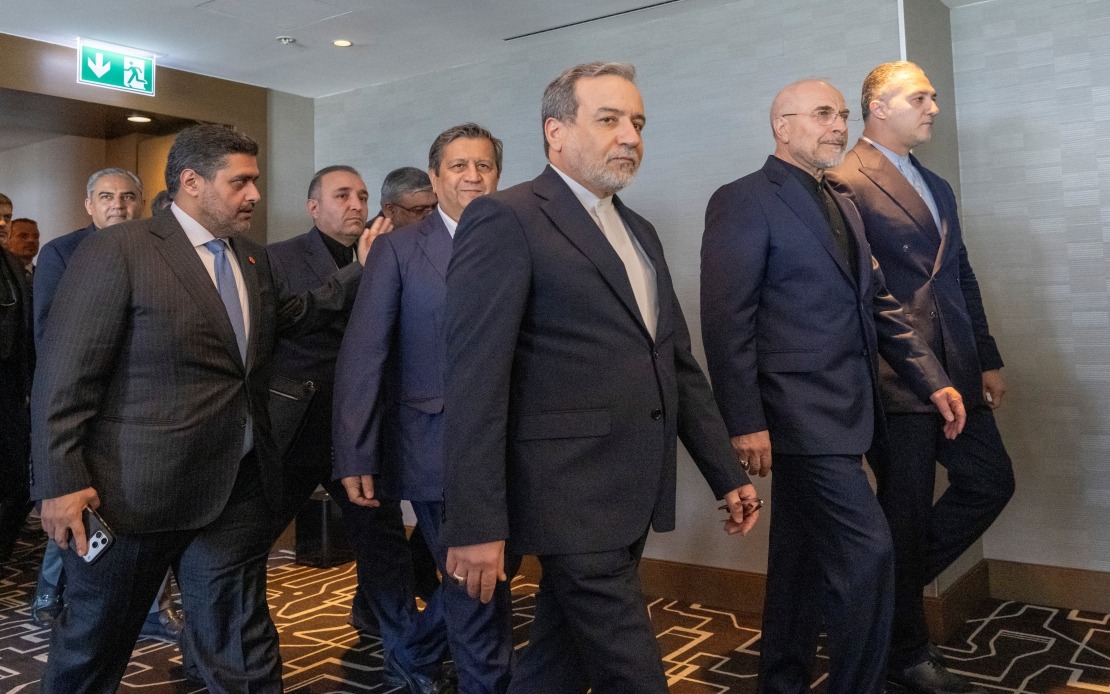
Iran's parliamentary delegation has departed Switzerland after an intensive round of negotiations with American officials, marking a significant diplomatic engagement between the two adversaries. The Iranian team, headed by Parliament Speaker Mohammad Bagher Qalibaf who also serves as the country's chief negotiator, concluded the Lake Lucerne Summit in Burgenstock on Monday and returned to Tehran, signalling the completion of a critical phase in talks aimed at resolving longstanding tensions.
The nearly 18-hour dialogue represents one of the most substantive engagements between Tehran and Washington in recent years. Rather than face-to-face meetings, the negotiations proceeded through mediators, reflecting the diplomatic sensitivities and mutual distrust that continue to characterize relations between the Islamic Republic and the United States. This indirect format, while cumbersome, has become the established mechanism for serious discussions between the two nations.
Mediator nations Qatar and Pakistan provided encouraging assessments of the summit's outcome, reporting that discussions had transpired in what they characterised as a "positive and constructive atmosphere." The mediators specifically noted that the talks had generated "encouraging progress," language carefully chosen to project optimism without overcommitting either side to specific outcomes. For regional observers and international stakeholders monitoring this engagement, such assessments carry weight as indicators of whether genuine movement toward resolution is occurring.
Central to the progress cited by mediators was agreement on several structural mechanisms designed to facilitate ongoing negotiations. The two delegations established a high-level committee tasked with overseeing the negotiation process, lending institutional weight and consistency to what had previously been ad hoc discussions. Complementing this oversight body, technical working groups were formed to address specific substantive issues that have long divided the nations, allowing specialists to engage in granular problem-solving on discrete matters.
Perhaps most significantly, both sides committed to a 60-day roadmap intended to culminate in a final agreement. This timeline represents a concrete benchmark against which progress can be measured and suggests that negotiators envision a realistic pathway to resolution within roughly two months. The establishment of such a deadline, while not guaranteeing success, demonstrates mutual commitment to moving beyond perpetual dialogue toward concrete outcomes.
The timing and location of these talks carry geopolitical implications for Southeast Asia and the broader Indo-Pacific region. Any resolution between Iran and the United States would reshape energy markets, security calculations, and economic relationships across Asia. Malaysia and other Southeast Asian nations have watched Iran-US relations closely given their impact on oil prices, regional stability, and the balance of power in the Middle East. Normalisation or even modest de-escalation could create new trade and investment opportunities while reducing the risk of conflict that might disrupt regional shipping lanes and energy supplies critical to the region's economies.
The substantive content of these negotiations remains largely opaque to outside observers, with the precise issues under discussion protected by confidentiality agreements between the parties and mediators. Historical precedent suggests that topics likely include Iran's nuclear programme, sanctions relief, regional proxy activities, and mutual security guarantees. The devil, as always, lies in the details, and technical working groups tasked with addressing these matters face formidable obstacles rooted in years of mutual recrimination and competing strategic interests.
For Malaysian and Southeast Asian observers, the development bears watching for several reasons. Energy security remains paramount given the region's dependence on Middle Eastern oil and gas supplies. Any escalation involving Iran could threaten freedom of navigation through critical chokepoints and destabilise markets already volatile from geopolitical tensions. Conversely, a thaw in Tehran-Washington relations could stabilise these flows and contribute to regional economic stability.
The continuation of technical talks scheduled for later in the week suggests negotiators view the Lake Lucerne Summit as a foundation rather than conclusion. This phased approach, wherein senior political leaders establish parameters and direction before specialists tackle implementation details, follows established patterns in major international negotiations. The decision to continue work on outstanding issues indicates neither side deemed the process complete, though the positive mediation reports suggest significant ground has been gained.
Qatar and Pakistan's roles as mediators deserve recognition in the context of regional diplomacy. Both nations maintain relationships with Iran while possessing channels to the United States, positioning them uniquely to facilitate communication and build trust. Their public characterisation of the talks as constructive lends international credibility to the process and may encourage other stakeholders to view ongoing negotiations with cautious optimism.
The broader strategic context cannot be ignored. Iran faces international isolation and economic pressure from sanctions, creating incentives for diplomatic breakthrough. The United States, managing multiple regional challenges and international commitments, may view a negotiated settlement with Iran as preferable to indefinite confrontation. These converging interests, while not guaranteeing success, suggest both parties see value in the current dialogue.
Looking ahead, the 60-day timeline will test whether the momentum established at Lake Lucerne can translate into substantive agreements on the complex issues separating the two nations. Technical working groups must now navigate disagreements that have resisted resolution for years. The extent to which they can find compromise or creative solutions will determine whether Qalibaf's delegation and future American negotiators can announce genuine progress when the roadmap's timeline approaches completion. For regional stability and Malaysian economic interests tied to Middle Eastern peace, the outcome of these quiet diplomatic efforts in Switzerland carries consequences that extend far beyond Iran and America.