Indonesia's ambitious free nutritious meal programme, one of President Prabowo Subianto's signature policy initiatives, has become a flashpoint for public discontent, sparking competing waves of protests across the archipelago that reflect deeper anxieties about governance, fiscal management, and social welfare priorities. Since its launch in January last year, the scheme—designed to combat childhood malnutrition and stunting through distribution to approximately 83 million beneficiaries including schoolchildren and pregnant women—has consumed at least Rp 335 trillion in budget allocation this year. Yet rather than cementing support for the administration's welfare agenda, the programme has exposed fault lines between those questioning its efficiency and cost against those whose livelihoods and nutritional security depend directly upon it.
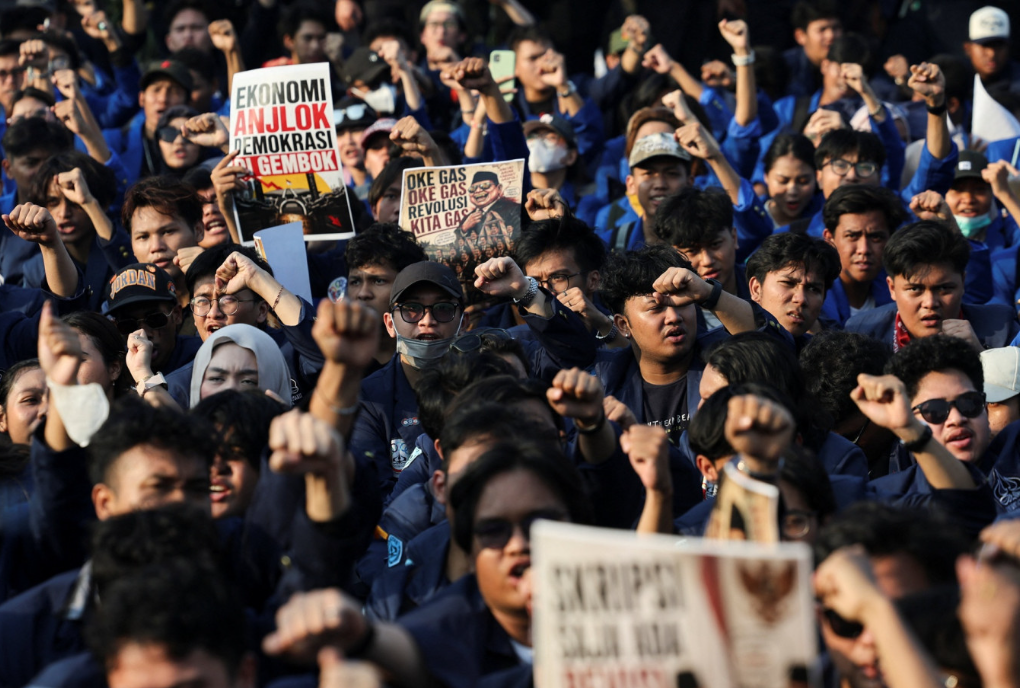
Student-led opposition movements have crystallised across major population centres, crystallising concerns that extend well beyond the programme itself. In Bali, hundreds of university students gathered outside the regional legislative council demanding a comprehensive audit by the Supreme Audit Agency (BPK), framing their protest as part of a broader challenge to what they describe as wasteful government expenditure at a time when austerity measures are being implemented elsewhere in the budget. Their counterparts in Jakarta mobilised in even greater numbers, with thousands of students affiliated with the Indonesian Islamic Student Movement (PMII) rallying outside the House of Representatives to call for complete replacement of the leadership of the National Nutrition Agency (BGN), which oversees implementation. These demonstrations, occurring just days after earlier student protests at the same venue, suggest that opposition sentiment is not isolated but part of an organised campaign to force policy revision.
The credibility crisis facing the programme stems significantly from corruption allegations that have captured public attention and eroded confidence in its management. Three senior officials from the BGN were arrested in connection with alleged embezzlement, an event that fundamentally altered the political context surrounding the initiative. Students have seized upon these investigations to demand systemic accountability, arguing that the sheer scale of funding—measured in trillions of rupiah—creates substantial opportunity for diversion and misappropriation. The corruption narrative has proven particularly potent because it validates concerns about governance capacity and raises questions about whether projected beneficiaries are actually receiving the intended nutrition or whether resources are being siphoned at various points in the supply chain.
Food safety complications have compounded concerns about implementation quality. Documented cases of foodborne illness linked to meal distribution have generated parental anxiety and provided additional ammunition to critics questioning whether the programme's operational infrastructure is adequate to handle feeding such an enormous population safely. These incidents suggest that the rapid scaling of meal production and distribution may have outpaced the development of quality assurance mechanisms necessary to protect vulnerable recipients, particularly young children whose immune systems are not fully developed. For families already skeptical about government capacity to execute complex social programmes effectively, these safety lapses confirm their doubts.
Yet the picture is considerably more complicated than simple opposition versus support. Thousands of Indonesians have mobilised to defend the programme's continuation, revealing how the initiative has created constituencies whose material interests are now bound up with its survival. In Batam, approximately 1,500 kitchen workers staged demonstrations protesting proposed efficiency measures, specifically the reduction of meal distribution from six days to five days weekly and suspension during school holiday periods. For these workers, frequently paid on a daily basis, the income from programme employment represents an essential source of household cash flow that cannot easily be replaced. Suspension during the four-week school holiday threatens immediate family financial security, while the targeted reduction in service days directly translates to proportional income loss.
Beyond workforce concerns, broader economic constituencies have articulated support for the programme's continuation based on its documented stimulative effects throughout agricultural supply chains. In Bandar Lampung, residents gathered in support, articulating how the massive meal programme absorbs significant volumes of locally-produced commodities including rice, corn, cassava, fruits and vegetables. By creating consistent, large-scale demand for agricultural output, the initiative has functioned as an implicit agricultural support policy, helping stabilise commodity prices that had previously been volatile. Farmers and agricultural traders have therefore become tacit supporters of the programme, recognising that its cancellation would reduce demand for their products and potentially depress prices they receive at market.
The government has responded to mounting pressure through a combination of defensive rhetoric and policy adjustment rather than wholesale programme abandonment. Muhammad Qodari, head of the Government Communications Agency, has publicly committed to programme continuation while promising improvements rather than suspension, effectively signalling that the administration will not reverse course despite critical scrutiny. Simultaneously, the BGN has undertaken visible belt-tightening measures, reducing the annual budget allocation from the initial Rp 335 trillion to Rp 228.4 trillion while introducing operational efficiencies. The decision to suspend meal distribution during the late June to mid-July school holiday period represents the most visible compromise, as does the targeting of 76 schools in affluent areas deemed capable of meeting nutritional needs without subsidised meals.
These adjustments reflect the government's recognition that completely dismantling the programme would prove politically catastrophic, given the now-formed constituency of direct beneficiaries and indirect economic participants. Yet they also represent an implicit acknowledgment that the programme as originally conceived—with its massive fiscal footprint and expansive beneficiary population—may be unsustainable given broader budgetary constraints and the government's stated commitment to fiscal consolidation. The compromise position attempts to preserve the initiative's core mandate while reducing its financial burden, though this middle path risks satisfying neither critics demanding complete overhaul nor supporters seeking programme expansion.
The political stakes underlying these competing mobilisations extend beyond nutritional policy to encompass fundamental questions about the appropriate role of the state in managing social welfare provision. Student protesters invoke concerns about economic strain and budgetary integrity, implicitly questioning whether such expansive cash transfers to meal provision represent the most efficient use of constrained public resources compared to alternative poverty reduction approaches. Meanwhile, programme beneficiaries and supporting constituencies frame the initiative not merely as welfare provision but as essential public investment in human capital development and agricultural sector stabilisation. These competing narratives reflect different philosophical orientations toward state responsibility, market mechanisms, and the appropriate relationship between citizen entitlements and fiscal capacity.
For regional observers monitoring Indonesia's policy trajectory, the free meal programme controversy illustrates the tensions inherent in attempting to simultaneously pursue ambitious social spending, corruption investigations, and fiscal consolidation. The scale of the initiative—reaching 83 million people—means that decisions about its scope have implications extending well beyond Indonesia's borders. Southeast Asian neighbours watching Indonesia's implementation of large-scale social welfare programmes will draw conclusions about feasibility and sustainability, potentially influencing their own policy experimentation. The combination of genuine operational challenges, corruption investigations, and competing economic interests means that resolution will require not merely technical adjustments but political negotiation among multiple constituencies whose interests cannot all be simultaneously satisfied.
Looking ahead, the trajectory of the free meal programme will likely depend on whether the BGN can demonstrate sustained improvement in operational quality and cost-effectiveness, whether corruption investigations can be concluded transparently, and whether competing demands on government resources force further prioritisation decisions. The intensity of contemporary mobilisations—both supportive and critical—suggests that this policy domain will remain contested terrain, subject to continuous pressure for either expansion or contraction depending on emerging evidence and political calculations. For Malaysian observers, the Indonesian experience offers instructive lessons about the challenges of scaling ambitious nutritional interventions across diverse geographic and demographic contexts while maintaining political credibility and fiscal sustainability.

